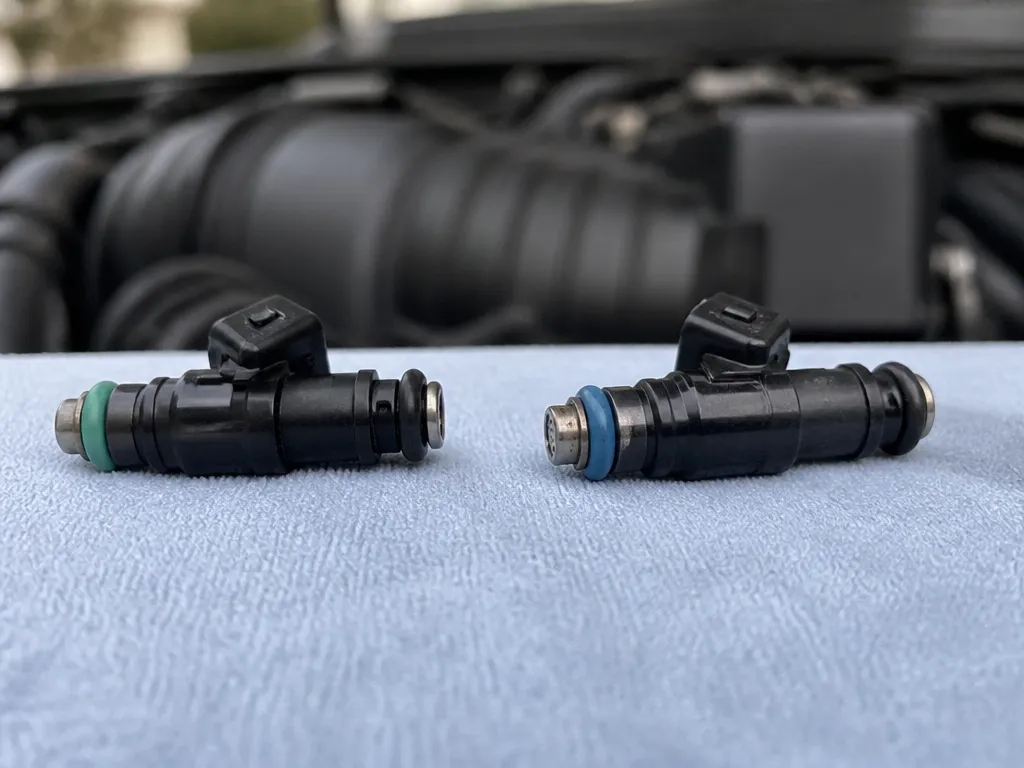
Swapping injectors on a 5.3 Vortec and wondering why “2-hole” and “4-hole” sets matter? You are probably seeing rough idle, a misfire counter, or fuel trims that will not settle after replacing parts, and the internet keeps debating hole count. This comparison will break down what changes inside the spray, when the injectors are truly interchangeable, and how to confirm fitment by part number.
Hole count is a clue to injector design, but the real match is flow rate, connector/driver style, and calibration. Expect spray atomization differences that can affect idle quality and cold start, and plan on ECM reprogramming only when the injector family or scaling changes.
2-hole vs. 4-hole injectors on a 5.3 Vortec: the number of holes changes spray atomization. A 4-hole injector usually makes a finer, more even pattern, which can help idle and emissions, while a 2-hole design can be coarser. Swapping works only if the part number, flow rate, and electrical connector match.
1. 2 Hole Vs 4 Hole Injectors 5.3 Vortec
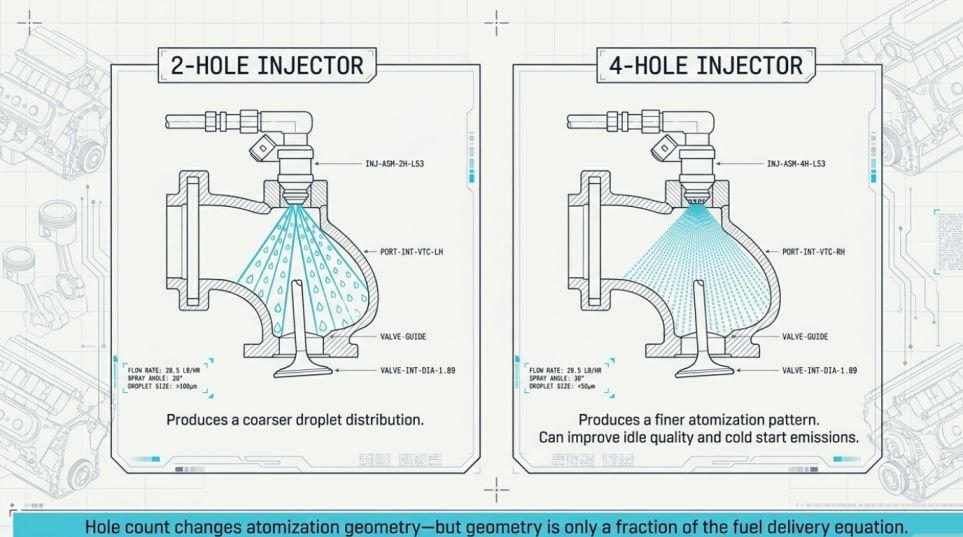
Two-hole vs four-hole injector designs matter on a 5.3L Vortec because injector spray pattern changes how fuel atomizes in the port, which can shift idle quality, part-throttle drivability, and emissions behavior. Many GM 5.3 applications use different injector flow and pintle/jet designs across years, so matching the correct style and electrical calibration is critical before swapping anything.
On a typical GM port-injected Vortec setup, the “2-hole” or “4-hole” description refers to the number of nozzle orifice jets in the injector tip. More orifices can help create finer atomization at certain duty cycles, but the ECU still expects the correct injector flow rate (cc/min or an equivalent calibration) and proper connector/pintle behavior. When switching from 2-hole to 4-hole (or vice versa), you need the exact injector part number match or a known-good cross-reference that preserves flow and electrical specs, not just the nozzle count.
Tradeoffs In Real-world Drivability
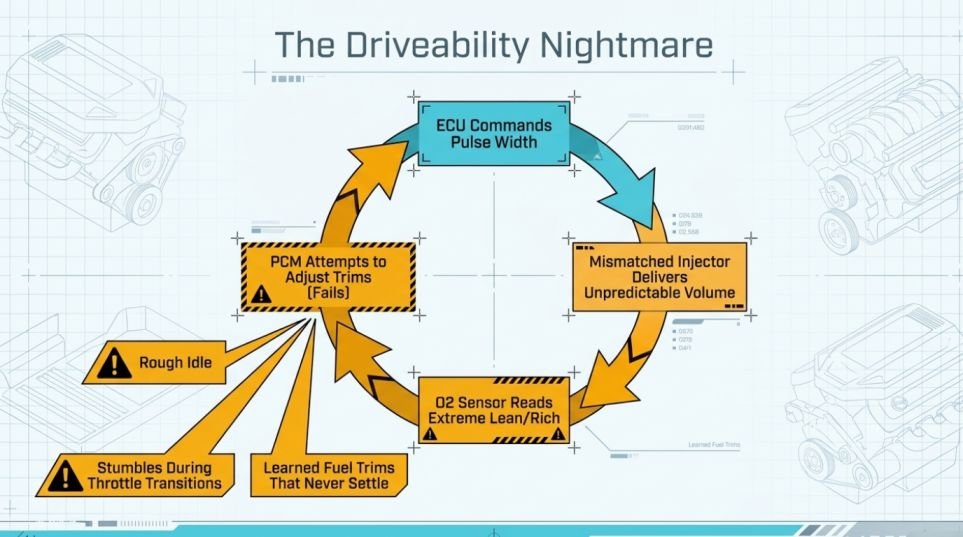
More orifices can improve atomization, but it does not automatically fix drivability. If the injector’s actual flow rate or spray behavior is off from what the PCM was calibrated for, the engine compensates by adjusting pulse width, and you can end up with learned trims that never settle.
For example, a 5.3 that originally came with one injector design can feel fine at steady throttle, then stumble during transitions where fuel demand changes quickly.
In practice, the nozzle count is only one clue, so the safest approach is to compare the full injector listing for your exact truck or SUV configuration. If you are chasing symptoms like persistent P0171/P0174 or a rough idle complaint, verifying fuel pressure and checking injector balance with scan data matters as much as physical design. If you’re not sure which injector type your engine uses from the factory, have a shop pull the VIN-specific parts data and confirm the expected flow calibration before you spend money on an injector swap.
Reader takeaway: Treat “2 hole vs 4 hole” on a 5.3 Vortec as a secondary detail, and prioritize exact part number match for flow and calibration to avoid drivability issues.
2. 3 Vortec Injector Interchange Rules
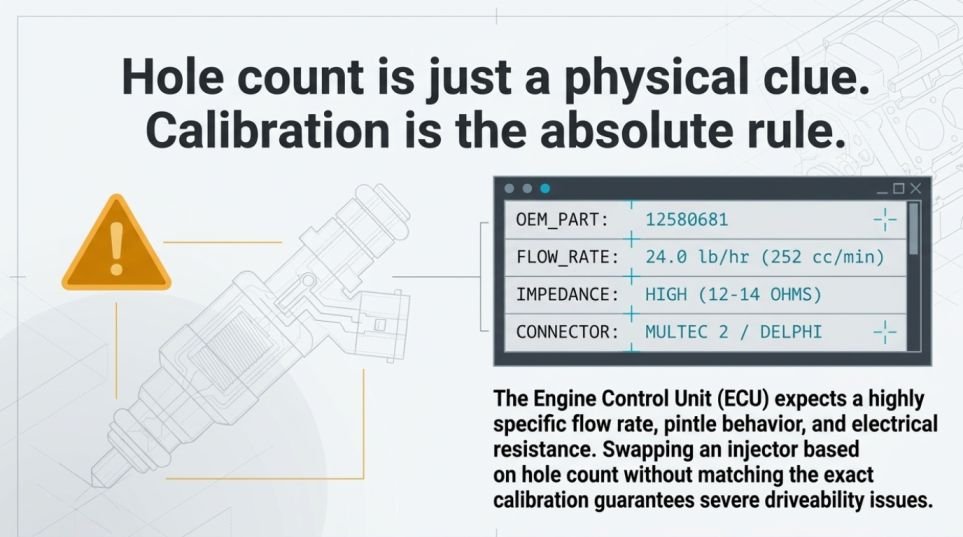
Injector interchange on a 5.3 Vortec is touchy because the “2-hole” versus “4-hole” injector change affects spray pattern and flow behavior, which the PCM trims for. Swapping the wrong style can lead to drivability issues like rough idle or a chronic fuel trim imbalance even when the connector and rail fit. This is why injector part-number matching matters as much as physical compatibility when you are mixing old and newer Vortec setups.
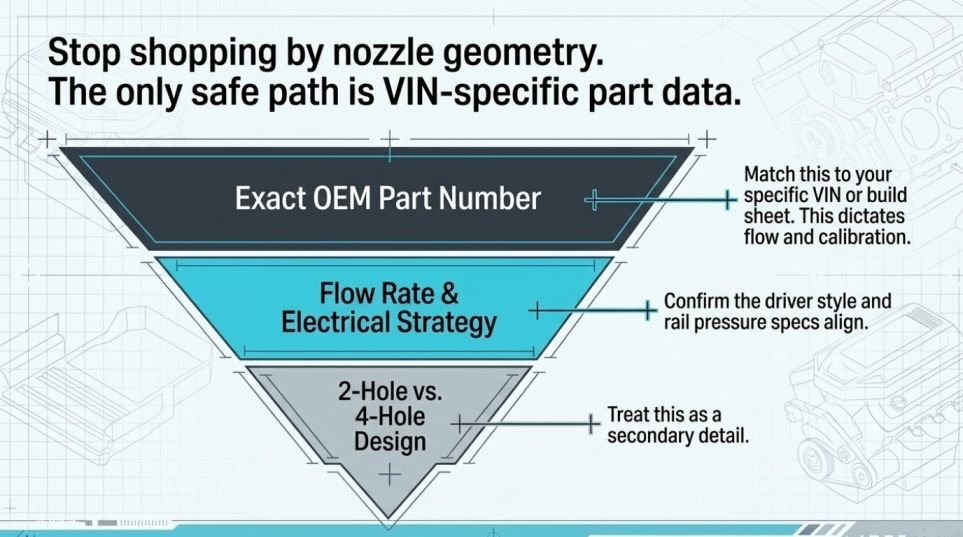
In practice, start by matching the exact OEM injector part number and then confirm the electrical connector style and fuel rail pressure specification your truck uses.
For example, many “direct swaps” fail because the injector is mechanically similar, but the nozzle count and internal calibration differ, so the PCM’s learned corrections never settle. If you are buying used injectors, budget extra time to verify the label and do not assume a different nozzle count is interchangeable.
When sourcing, compare the injector specifications before you buy.
When Mixing Happens And What To Do About It
Mixing 2-hole and 4-hole injectors is only “safe” when the replacement part number is a verified OEM-equivalent for your exact year and engine code, not just a similar-looking injector. If one injector was replaced earlier, the truck may run fine until temperature changes and the PCM’s fueling trims push the remaining cylinders harder. A shop will usually confirm the injector type and coding with scan data and fuel trim behavior after installation, since weak evidence from appearance alone leads to misdiagnosis. For hands-on injector work, relieve fuel pressure properly and replace the injector seals, since a small leak can cause a hard start or a fuel smell under the hood.
Fuel Injector Fitment Checklist
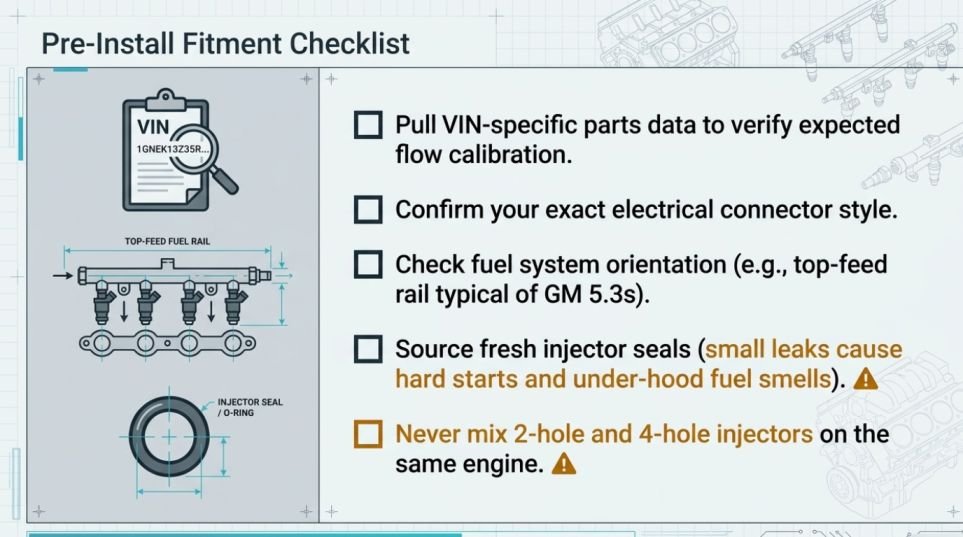
Injector swapping on a 5.3 Vortec is one of those jobs where a small mismatch can mean poor spray pattern, wrong resistance, and a drivability complaint. This item belongs in the list because “2-hole vs. 4-hole” usually drives the injector index, electrical calibration, and sealing parts you must match to the specific intake and fuel rail setup.
Start by matching the exact injector part number from your VIN or build sheet to what you are installing, since 2-hole and 4-hole injectors can be physically similar but still differ in flow and calibration. Confirm the electrical connector style, the fuel rail/inlet orientation, and whether your fuel system uses a top-feed rail typical of many GM 5.3 applications.
In practice, many “fitment” mistakes happen because the injector body looks right, yet the pintle design and driver strategy are not.
Before you buy or bolt anything in, verify the injector specifications.
For example, if you are moving from a 2-hole to a 4-hole injector design, treat it as a calibration-level change until you confirm compatibility via the manufacturer part numbers and the ECU/injector coding strategy your vehicle uses.
What To Double-check After The Install
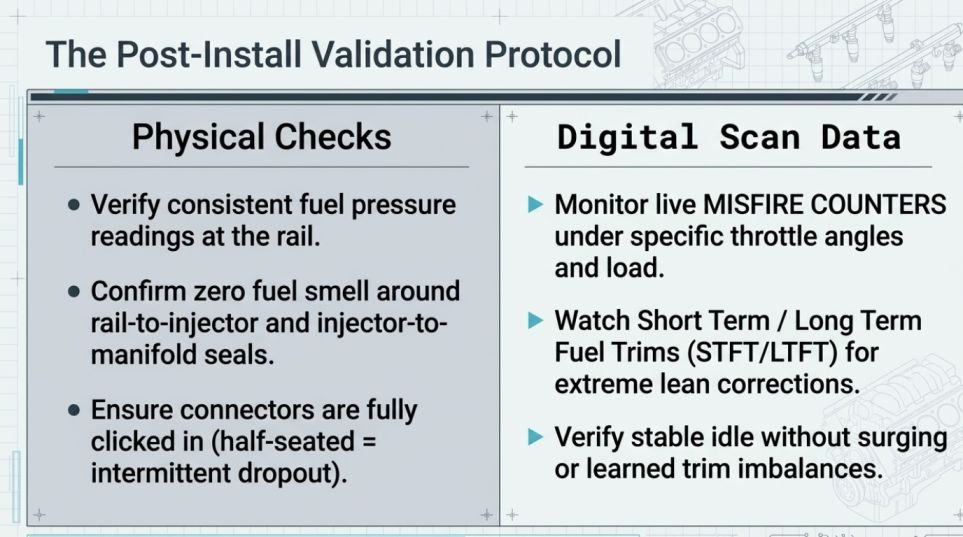
After the injectors are installed, look for evidence that fitment is truly correct: consistent fuel pressure readings, no fuel smell around the rail-to-injector and injector-to-manifold seals, and stable idle without misfire under load. If you have an OBD-II scan tool, record misfire counters and fuel trims before and after, because a small injector mismatch can show up as lean correction or repeated misfire codes under specific throttle angles. Tighten components to the factory torque and ensure the connectors click fully, since even a half-seated connector can cause intermittent injector dropout. When fitment is uncertain, having a shop compare the exact part numbers and perform a basic fuel system health check is the fastest path to avoiding repeat labor.
Quick Summary
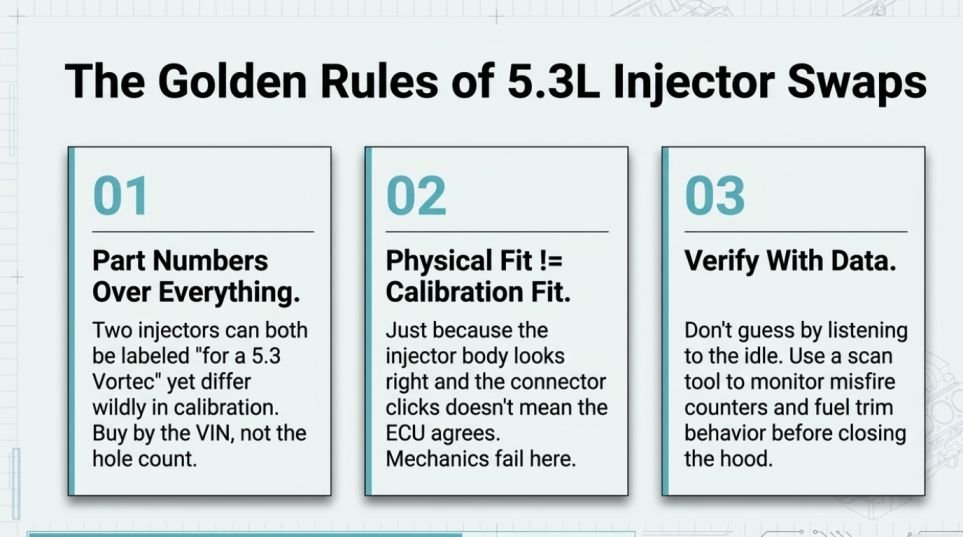
The article explains that on a GM 5.3 Vortec, “2-hole” versus “4-hole” injector design changes the spray atomization, which can affect idle quality, cold start, and emissions behavior. It also stresses that the ECU expects more than just matching nozzle count, because the injectors must match by exact injector part number and flow rate, plus the correct electrical connector and driver requirements. The real trigger for trouble is a mismatch, even when the physical swap seems to fit.
It warns that if you swap the wrong injector style, the PCM can compensate by adjusting pulse width, and you may see rough idle, surging, and fuel trim imbalance that never settles for weeks. The article advises confirming fitment using markings and the recorded injector codes from the injector body, then verifying the rail and inlet setup before ordering. Reprogramming is only needed when the injector family or scaling changes, so the safest takeaway is to match the exact part number, not just “2-hole” or “4-hole.”
| Topic | What Changes | What Must Match | What You May Notice If Wrong |
|---|---|---|---|
| 2-hole vs 4-hole (5.3 Vortec) | Spray atomization pattern, with 4-hole typically producing a finer, more even pattern | Exact injector part number, flow rate/scaling, and electrical connector/driver style | Rough idle, surging, chronic fuel trim imbalance, misfire counter activity |
| Reprogramming | Only becomes relevant if injector family or scaling changes | VIN-specific expected calibration for your truck configuration | Less stable drivability if ECM and injector scaling do not align |
Frequently Asked Questions
What Does “2-hole Vs 4-hole” Mean For 5.3 Vortec Fuel Injectors?
It refers to the injector nozzle tip having two or four spray orifices. That changes the injector’s spray pattern and droplet distribution, which can affect how the engine mixes fuel at different loads.
Can I Replace My 5.3 Vortec 2-hole Injectors With 4-hole Injectors?
Sometimes yes, but you should not swap by hole count alone. You need to match the part number (and usually the electrical connector, flow calibration, and ECU fuel strategy) to avoid drivability issues.
Will Using The Wrong 2-hole Or 4-hole Injectors On A 5.3 Vortec Cause Rough Idle Or Misfires?
Yes, it can. If the injector calibration or control characteristics do not match what the ECU expects, you can see symptoms like rough idle, unstable fuel trims, and misfire codes, especially under light load.
Do 2-hole Vs 4-hole 5.3 Vortec Injectors Affect Fuel Economy And Throttle Response?
They can, but the real-world outcome depends more on whether the injector is the correct replacement for your exact engine and tune. If matched correctly, you might notice smoother operation; if not matched, you can end up with worse economy due to incorrect fuel delivery.
Is There An “Easier” Upgrade Choice For A 5.3 Vortec, 2-hole Or 4-hole Injectors?
From a practical standpoint, the easiest upgrade is usually whichever injector set matches your original equipment part number. Even if the alternates are compatible, the right choice saves you from rechecking calibration, flow rates, and connector or harness fit.
What Mistake Do People Make When Shopping For 2-hole Vs 4-hole Injectors For A 5.3 Vortec?
The common mistake is buying by number of holes and ignoring the injector’s part number and specs. Always cross-check the exact replacement part number for your application, because two injectors can both be “for a 5.3 Vortec” yet differ in calibration.

- 2 Hole Vs 4 Hole Injectors 5.3 Vortec: Swap Rules + Fitment Check - September 12, 2026
- What Oil Does 2012 Honda Civic Use: What Oil Does Honda Civic Use & Spec - September 12, 2026
- 2014 Ram 2500 5.7 Hemi Sparkplugs: Ram 5.7 Hemi Sparkplugs: Oe Vs Fitment, Swap Steps - September 12, 2026