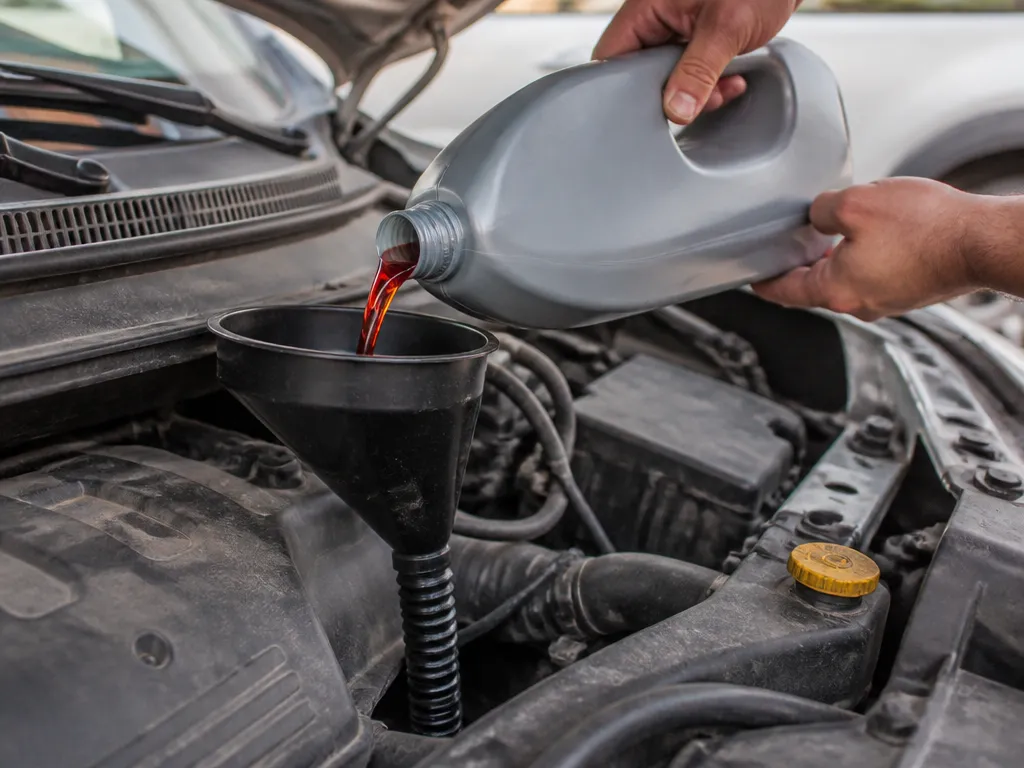
My 2017 Grand Caravan is due for a transmission service, and I keep running into the same problem: the capacity numbers people quote are all over the map. If you’re trying to add fluid after a pan drain, or you want the right amount for a full change, you need the correct procedure and type, not guesswork.
2017 Grand Caravan transmission fluid capacity varies by transmission model and whether you’re doing a pan drain/refill or a full replacement, so the safe approach is to confirm your transmission first, then fill to the correct level at temperature. This article will give the capacity ranges, the check method, and what to watch for so you avoid low or overfilled.
In practice, pan drain/refill adds less fluid, while a full change can require more and varies by how much drains from the torque converter. Use the correct ATF spec and verify level with the correct hot-temperature procedure.
2017 Grand Caravan Transmission Fluid Capacity
2017 Grand Caravan transmission fluid capacity depends on whether you are doing a pan drain and refill or a service that exchanges more fluid. A pan drain typically returns only the fluid that is sitting in the pan and cooler circuit, while a full change exchanges most of the fluid through the transmission cooler lines or via a machine. Because the Grand Caravan uses more than one transmission variant, exact total capacities can vary, so you need the correct transmission ID to get the right number.
Typical Capacity By Service Type (What You Can Expect)
In practice, the amount you refill after a pan drain is usually a smaller number than what you end up adding during a complete exchange. This is why techs often say “count the removed fluid,” then set the final level with the correct temperature and check procedure. For owners, the key is matching the service type to the capacity range for your transmission.
| Service type | What gets replaced | Typical refill amount |
|---|---|---|
| Pan drain and refill | Fluid in the pan and limited cooler circuit | ~4 to 6 quarts (fluid refill) |
| Partial exchange | Fluid exchange via cooler line method, but not all capacity | ~6 to 9 quarts (depends on how much is exchanged) |
| Full exchange (best-effort) | Most fluid exchanged, final level set by check procedure | ~10 to 13 quarts (depends on transmission variant) |
Typical values are ranges because different transmission codes and setup details change the total.
Why Exact Capacities Vary On A 2017 Grand Caravan
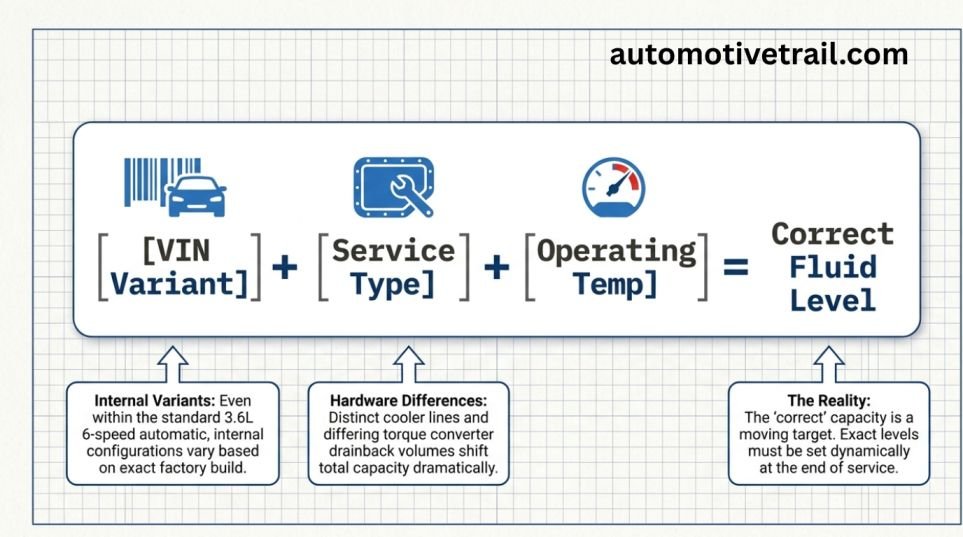
Transmission fluid capacity varies because the Grand Caravan can be equipped with different internal transmission variants and different cooler and line configurations. Even when two transmissions look similar, the check procedure can require a specific fluid temperature range and exact gear position before you can trust the dipstick or check plug reading.
Confirming The Correct Fill Amount Before You Pour
Before adding fluid, match the procedure to how the shop or DIY plan is performing the service. The best outcome is when the mechanic sets the final level using the correct check method, then adjusts by small amounts until the reading is right at operating temperature.
For the smoothest shift feel, correct level matters more than hitting a “perfect” quarts number. Overfilling can aerate fluid and cause harsh shifts, while underfilling can lead to overheating and delayed engagement.
VIN and Transmission Codes

The exact transmission build determines which capacity and service procedure apply. Identify the transmission code from the VIN, then match it to the correct OEM service data.
Read the VIN and Find The Transmission Code
Chrysler uses VIN character positions to indicate key build details, including the transmission configuration. On most 2017-era vehicles, the transmission code is derived from a specific VIN position plus the build information tied to your exact vehicle, which is why two vans with the same trim can still get different fill amounts.
Practical move: decode the VIN using the VIN plate/build sheet information through the Chrysler/Mopar dealer parts system (your VIN lookup will pull the transmission as-equipped). After that, confirm the transmission type in the transmission pan area by checking the casting code or the stamped ID on the transmission if access is easy.
Common 2017 Grand Caravan Transmission Codes And Mapping
Most 2017 Grand Caravans with the 3.6L engine use Chrysler’s 6-speed automatic transmission. The fluid specification and capacity are shared across many vehicles, but the exact fill amount can still differ based on the transmission variant and how the fluid level is set during service.
For mapping, you’re looking for the OEM transmission identifier that the VIN decode returns, not just “6-speed.” In practice, the dealer lookup will list the transmission model, and that model is what you cross-reference for the correct fluid capacity and the correct temperature/level-check procedure.
| VIN-derived identifier | What to do with it |
|---|---|
| Transmission model/code from Mopar VIN lookup | Use it to pull OEM fluid capacity and the correct level check method (dipstick vs. check plug). |
| Physical transmission ID/casting confirmation | Use it to confirm the VIN decode is correct, especially if service history shows a transmission replacement. |
Where To Verify Oem Specs For Your Vin
The most reliable OEM verification is the dealer parts and service lookup that keys off your VIN. The next best source is the exact factory service information for your VIN range, since capacities and level-check steps can change with transmission variant and fluid temperature requirements.
Dealer VIN lookups are worth the time here, because using a generic “Grand Caravan transmission capacity” number is how you end up with an overfilled or underfilled transmission after a service.
Mopar ATF+4 Fluid Requirement

The 2017 Grand Caravan uses Chrysler-approved ATF+4 automatic transmission fluid. For any service where you drain and refill (or replace a fluid filter), you should stick to Mopar ATF+4 to match the transmission’s friction material and hydraulic calibration.
Capacity differences you may see from shop to shop usually come from partial drain versus pan drop service, not from a different fluid spec. Even when someone uses an “equivalent” ATF, the key is that it explicitly meets the Chrysler ATF+4 specification for compatibility.
Oem-required Spec And Acceptable Atf+4 Matches
Mopar ATF+4 is the OEM requirement because it is engineered for the Grand Caravan’s transmission clutches and valve body behavior. The “ATF+4” label matters, but the safe shortcut is the packaging statement that it meets Chrysler (MS-9602 and related ATF+4 spec) used by Mopar.
| What you’re holding | What to look for on the label | Service confidence |
|---|---|---|
| Mopar ATF+4 | ATF+4 and Mopar branding | Highest |
| Third-party ATF marketed as ATF+4 | Explicit “meets Chrysler ATF+4” statement | Usually acceptable; verify spec wording |
| Generic “multi-vehicle ATF” | Does not specifically claim ATF+4/Chrysler spec | Risky, avoid |
Temperature And Viscosity Considerations During Refills
ATF+4 is designed to meet transmission performance across wide temperatures, but the fill level check must be done at the correct operating temperature. Overfilling and underfilling are both easy to do if you check level cold or if the transmission is not set to the proper gear position after running.
Temperature affects how much fluid drains back into the pan and valve body. That is why ATF+4 compatibility alone is not enough; the refill has to land at the correct level at proper warm operating conditions.
Mechanic tip: When switching between Mopar ATF+4 and a verified ATF+4 equivalent, you do not “mix by guesswork.” Match the spec, then ensure the transmission is filled using the correct warm-level method so you do not chase level errors caused by temperature and fluid drainback.
Check Fill Level Procedure
Transmission fluid level on a 2017 Dodge Grand Caravan is temperature-dependent, so checking it cold is the fastest way to get the level wrong. The correct procedure is to warm the ATF to operating range, run the engine with the shifter in the specified position, then read the level at the check point (dipstick or fill/check plug depending on the transmission).
Warm-up And Temperature Reference

Warm fluid matters because ATF expands when it heats up, and the Grand Caravan’s level check is designed around that expansion. Drive the van until the transmission is fully warmed, or run it with light loads until you reach a stable hot idle.
Practice varies by setup, but the safe rule is this: check level only after the fluid has reached operating temperature, then let it idle long enough for the fluid to settle in the pan and valve body. If you have a scan tool with transmission temperature readout, use it and follow the service temperature window shown in the factory procedure.
Pro tip: If the level check is done at the wrong temperature, correcting it after the fact can lead to overfilling or underfilling again. Get the temperature close first, then adjust once.
Engine Running, Gear Position, And Settling Time
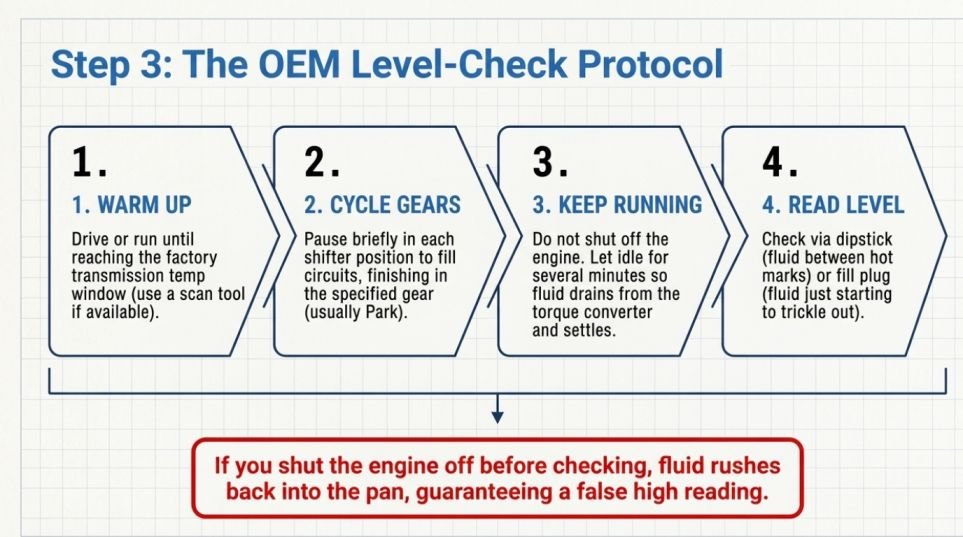
Start the engine and keep it running during the check. Move the shifter through each range, pause briefly in each position, then finish in the specific gear stated by your transmission check procedure (often Park for many units with a dipstick-style level or a fill plug check procedure that specifies Park, but confirm your exact configuration).
Let the transmission idle for several minutes before pulling the dipstick or removing the check/fill plug. This allows fluid to drain from the torque converter and internal passages back to the pan so the reading is steady.
| Configuration | Check point you use | What to watch |
|---|---|---|
| Dipstick-equipped AT | Transmission dipstick | Fluid line should be between the hot range marks (or at the target mark when warm). |
| Plug-style AT | Check/fill plug on the transmission case | Correct level usually corresponds to fluid just starting to run out of the check opening. |
Dipstick Vs Fill Plug Approach (Do It By The Transmission You Have)
Grand Caravan transmissions can use either a dipstick or a plug-based level check, and the wrong method gives a wrong “capacity” on the real-world car. Use the style installed on your specific van, then follow the procedure for that style.
After any level correction, re-check once more at operating temperature. Small adjustments matter because overfilling can aerate fluid and underfilling can starve lubrication, both of which show up as shifting complaints later.
Adding Fluid Safely And Increments

Add transmission fluid slowly and only after you reach the correct operating temperature during the level-check method. With the engine idling and the selector in the correct position, add in small amounts so you can stop as soon as the fluid is at spec, since overfilling can aerate fluid and create shifting issues.
Add In Small Measured Increments
Pouring in one big splash is how owners end up overfilled. Use measured increments (for example, add about 100-200 ml, then re-check) because automatic transmissions change fluid volume as temperature and internal level equalize.
For accuracy, keep your container and funnel clean and track what you added. If you overshoot, drain back to the correct level rather than “hoping it settles,” since excess can spill out the vent, contaminate the underbody, or affect line pressure control.
Tip from the shop floor: A small amount added at the wrong temperature can still look “right” on the first check, then end up overfull once the fluid equalizes.
Re-check After Reaching Target Temperature
Re-checking is where most mistakes happen. Transmission fluid level must be verified at the temperature used in the correct procedure, with the engine running and the vehicle on the level surface you used during the check.
After each top-up, wait for circulation, then repeat the level check using the same method (dipstick or check plug, depending on the transmission setup). If the level is still below target, add another small measured increment and repeat.
| Situation | What to do |
|---|---|
| Fluid level is below mark at correct temperature | Add small measured increments, then re-check at the same operating conditions. |
| Fluid level is above mark at correct temperature | Do not drive to “burn it off.” Drain back to the correct level using proper procedure. |
| Level reading is inconsistent between checks | Let the fluid settle, confirm correct gear position, and repeat after temperature stabilizes. |
Tools, Safety, And Contamination Prevention
Use only the correct transmission fluid type for the transmission installed in the 2017 Grand Caravan, since mixing fluid types can cause seal issues and shifting problems. Use a clean funnel, clean rags, and a new gasket if your check or fill access uses a seal that requires replacement.
Work carefully around hot components, and support the vehicle securely if you need access from underneath. Prevent contamination by keeping the funnel and fill tube clean, covering the bottle opening between pours, and never reusing fluid that has been exposed to dirt or air.
Professional help is smart if you find repeated overfill or level swings after top-ups, since that can point to an incorrect temperature workflow, a level-sensor/check-plug issue, or internal condition. A transmission specialist can confirm the correct method for your specific transmission variant and verify fill level without guesswork.
Common Pitfalls And Signs
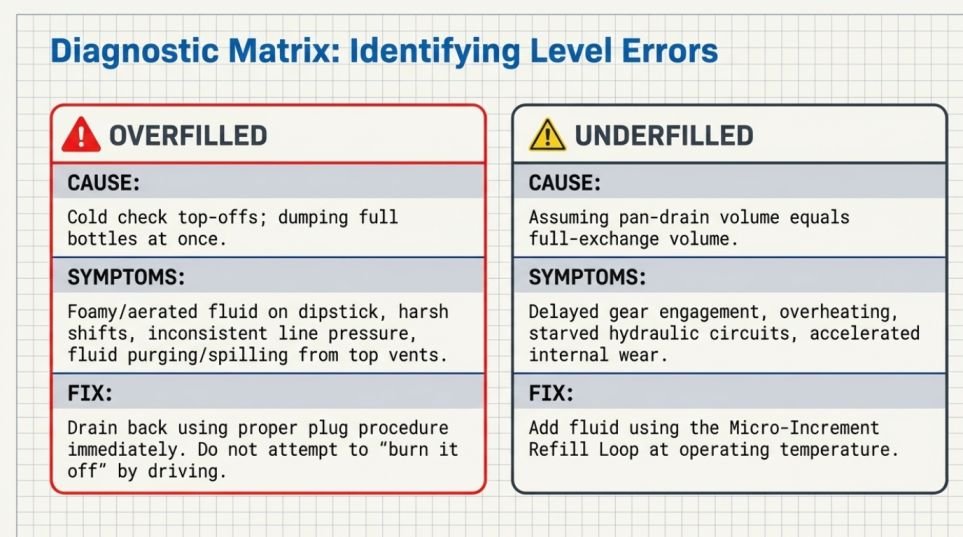
Overfilling and underfilling the transmission fluid are two common ways Grand Caravan owners end up with shifting complaints after a service. The risk is worse if the level check is done cold, with the wrong gear selected, or using the wrong procedure for the transmission type (dipstick vs. check plug).
Overfill Risks And Symptoms
Overfilled fluid gets whipped by rotating parts and aerates, which can make line pressure and shift timing feel inconsistent. Fluid expansion from heat also matters, so a level that seems fine on a driveway can be too high once fully warmed.
For example, adding fluid to correct a low reading after a cold check often leads to overfill because fluid level rises significantly as the transmission warms up. If you see a higher-than-normal level and the fluid looks foamy, stop adding and re-check using the correct warm procedure.
Underfill Risks And Symptoms
Underfilled fluid reduces lubrication and can starve hydraulic circuits, which raises wear risk and can trigger overheating. The transmission can shift poorly even when the fluid is only slightly low, especially during towing or stop-and-go driving.
Underfill is also easy to create after repairs if a shop drains the pan only, installs a new filter, and then assumes the “full change” amount is required. Pan drain/refill and a full transmission fluid change do not remove the same volume, so the level-setting step is what matters.
What To Do If The Level Is Inconclusive
When the level reading is unclear, treat it like a measurement error problem, not a “guess the quantity” problem. Most level inaccuracies come from temperature, gear selection, and whether the engine is running during the check.
When you cannot confidently confirm the transmission type or you keep getting conflicting readings, a professional inspection is the safest route. A tech can verify temperature, check procedure, and fluid condition quickly, and that beats repeated trial-and-error fluid additions.
Quick Summary

2017 Grand Caravan transmission fluid capacity depends on the transmission variant and whether you are doing a pan drain and refill or a full exchange, so a single exact number is risky without confirming the transmission ID by VIN. Pan drain/refill typically adds less because it mostly affects the fluid sitting in the pan and limited cooler circuit, while a full change exchanges more fluid through the cooler lines and can draw down the torque converter.
For quick planning, the article provides practical refill ranges by service type: pan drain and refill is usually about 4 to 6 quarts, partial exchange runs about 6 to 9 quarts, and a best-effort full exchange is about 10 to 13 quarts, with the exact amount still varying by transmission code and how much drains from internal passages.
| 2017 Grand Caravan service type | Typical fluid added range (as refilled) | What it replaces |
|---|---|---|
| Pan drain and refill | ~4 to 6 quarts | Fluid in pan and limited cooler circuit |
| Partial exchange | ~6 to 9 quarts (varies) | Fluid exchange via cooler line method, not all capacity |
| Full exchange (best-effort) | ~10 to 13 quarts (varies) | Most fluid exchanged, final level set by check procedure |
Frequently Asked Questions
How Many Quarts Of Transmission Fluid Does A 2017 Grand Caravan Take?
The exact capacity varies by whether you are doing a dry-fill (from empty) or a drain-and-fill (replacing only what comes out). Also, different transmission units can change the spec, so use the transmission label and the service information for your exact build.
What’s The Difference In Fluid Capacity For A Drain-and-fill Versus A Complete Fluid Change On A 2017 Grand Caravan?
On a drain-and-fill, you only replace the fluid that drains out of the pan and torque converter path, so you typically use less fluid than a total exchange. A complete exchange uses more fluid because it replaces what is in the system, and many shops use a measured refill to stay within spec.
How Do I Verify The Correct 2017 Grand Caravan Transmission Fluid Capacity Before Buying Fluid?
Verify your transmission type first by checking the transmission identification on the unit or your VIN build data. Then match it to the correct service spec for your exact operation (drain-and-fill vs full refill) so you buy the right amount.
Can I Overfill The Transmission Fluid On A 2017 Grand Caravan, And What Happens?
Yes, overfilling can cause shifting issues and may lead to overheating, foaming, or aeration, depending on conditions. Use the correct temperature and procedure for your transmission, since the reading is not just “dipstick cold equals correct.”
Should I Use The Dealer Dipstick And How Much Fluid Should Be Added To Reach The Right Level On A 2017 Grand Caravan?
Use the correct procedure and temperature listed for your transmission, because some require running the vehicle and checking at a specific temp. If you add fluid, do it in small amounts and re-check, since even a little can move the level a lot when the system is warm.
What’s The Most Common Mistake When Topping Off Transmission Fluid On A 2017 Grand Caravan?
The most common mistake is adding fluid while ignoring the proper check condition, like checking at the wrong temperature or using the wrong refill method. Another frequent error is assuming the total-capacity number applies to a drain-and-fill, which can lead to buying the wrong quantity and inconsistent results.
- Top 10 Ranking Tire Brand for Minivan: Reviewed 2026 - October 5, 2026
- Model Y Tesla Long Range Automatic Wagon Tyre Fitment And Ratings - October 3, 2026
- What Is The Benefit Of Larger Rear Tyres On A Zero-turn Mower - October 3, 2026