You searched “trans. oil capacity on 09 Elantra” because your dipstick reading is off, a pan leak has you thinking about a refill, or you just want to buy the right ATF before you touch anything. The problem is the 2009 Elantra automatic can differ by variant, so the correct total fill and drain-and-fill amounts matter.
2009 Elantra automatic transmission ATF capacity is not one universal number, and the exact spec depends on the transmission variant and how the fluid level is set. You’ll get the correct ATF type/spec from Hyundai guidance, plus how to check the level at the right temperature, and step-by-step drain-and-fill steps so you don’t overfill or underfill.
2009 Elantra automatic transmission ATF capacity: exact capacity (total vs drain-and-fill) and the required ATF spec vary by transmission variant and whether you’re draining through the pan or performing a service procedure that changes the total system amount. Plan to confirm your transmission code/VIN and follow the Hyundai manual for your exact setup, then verify level at operating temp.
1. Trans. Oil Capacity On 09 Elantra

The “trans. oil capacity on 09 Elantra” item belongs in this list because the correct fluid quantity depends heavily on transmission type and whether you are doing a drain and fill versus a full service, which changes the amount of old fluid removed. Knowing the right capacity helps prevent overfilling (which can aerate fluid and hurt shifts) or underfilling (which can starve the pump under load).
On a 2009 Elantra, verify the transmission code or VIN build because the capacity is not identical across the automatic and manual variants, and even within automatics there can be differences by configuration.
In practice, the most reliable way is to use the factory service info or the fill procedure tied to the trans type, since many “capacity” numbers online refer to dry-fill or “total system” rather than what you get with a drain and fill. A drain and fill typically replaces only part of the total fluid volume, so the “capacity” you want is the amount specified for the procedure you’re doing.
For example, a transmission fluid service at a shop is often priced by the amount needed, and the final invoice may differ based on whether they do a simple drain and fill or a more complete fluid exchange.
How To Pin Down The Exact Capacity For Your Car
Start by identifying the transmission type for your specific 2009 Elantra using the VIN, then match it to the correct fluid spec and the exact service method you plan. Drain and fill procedures usually end with a measured level check at a set fluid temperature and vehicle attitude, while “total capacity” numbers can mislead you into overfilling. If you are working from a printed spec sheet, confirm whether it says “with filter” or “dry fill,” because those tags change the number. When in doubt, use the level-check method from the service procedure and add in small increments only after you reach the proper temperature range.
Reader takeaway: treat “trans fluid capacity” as conditional, then confirm your transmission type and service method so you can fill to the correct level, not just a random total-capacity figure.
2. ATF Type For 2009 Elantra

ATF choice matters on a 2009 Elantra because Hyundai specifies different transmission fluids depending on the gearbox design, and using the wrong fluid can affect shift quality and internal clutch operation. For many owners researching “trans. oil capacity on 09 Elantra,” the fluid type is the other half of the fill spec puzzle, since capacity alone does not guarantee compatibility.
For example, 2009 Elantra models can be equipped with either an automatic or a manual transmission, and the fluid type changes completely between those systems. If your Elantra is automatic, you need an ATF that matches Hyundai’s requirement for that transmission family; if it is manual, you will use a gear oil instead of ATF. The safest way to get the correct type is to cross-check your VIN in the owner’s manual supplement or a Hyundai parts catalog, then buy that exact fluid spec rather than relying on “universal” ATF labels.
Why The Fluid Spec Beats Brand Guessing
In practice, two ATFs can look similar on the shelf but differ in additive packages, friction modifiers, and viscosity behavior under heat. That matters because automatic transmissions rely on precisely tuned friction characteristics to keep clutch engagement smooth and prevent shudder, harsh shifts, or slow engagement when the fluid is warm. If you are trying to pair a specific ATF with your “trans. oil capacity on 09 Elantra” fill plan, remember that capacity tells you how much to add, while the spec tells you what will survive the job. When the manual or parts list is unclear, getting the correct fluid code from a dealer parts counter with your VIN is the fastest way to avoid costly trial-and-error.
3. Total Fill Vs Drain-fill

On a 2009 Elantra, the difference between total-fill capacity and drain-fill amount matters because many DIY fluid changes only replace what comes out of the pan, leaving a large portion of fluid in the torque converter and cooler lines. That is why people can do a “service fill” and still end up with the factory level not matching their expectations. Knowing which number you are using prevents overfilling, a common cause of shifting problems after the job.
For an automatic transmission service, the drain-fill figure is typically smaller than the total-fill specification since the converter does not drain completely by gravity.
In practice, shop manuals and service procedures often call for checking the level with the engine running at a specific temperature and shifter position, which is the only way to confirm you have the correct amount after partial replacement.
A drain-fill service can replace a portion of the old fluid, so the “capacity” number alone will not tell you the new fluid condition or how close you are to the target level.
Why Shops Talk About “How Much You Can Actually Get Out”
Gravity draining an automatic transmission usually leaves some fluid in the torque converter and internal passages. That is why a drain-fill can be noticeably lower than the total-fill capacity listed for complete servicing. Some shops do a controlled fluid exchange to move closer to total replacement, but the method used and whether the converter is part of the process will change the effective quantity. For a 2009 Elantra, the correct final level is determined by the temperature and the selector position during the check.
4. Pan Drop Procedure
Dropping the transmission pan is in this list because it is the most practical way to access the filter, drain remaining fluid, and physically inspect the pan for debris when servicing the transmission system. On a 2009 Hyundai Elantra, the exact steps and torque values vary by transmission type (automatic vs. manual, and automatic variants), so pan-drop work is usually treated as a service procedure that you match to your specific unit. This approach also helps you confirm whether fluid condition and metal shavings look normal or concerning before you refill to spec.
Plan on having a new pan gasket or sealant per your transmission design, plus a drain pan, shop rags, and a basic torque wrench. Wear eye protection and expect fluid to spill when the last pan bolts release. The typical workflow is: raise the vehicle safely, drain fluid, unbolt the pan in a pattern that keeps it level, then let it drip for a few minutes before cleaning mating surfaces.
- Scrape old gasket material carefully without gouging the case
- Replace the filter if it is integral to a service kit
- Use OEM-style replacement bolts, since some pans use different lengths
What To Inspect While The Pan Is Off

In practice, the pan gives you more information than the dipstick alone. Look for clutch material, dark sludge, and metal flakes on the magnets (if equipped), and note whether debris is “glittery” versus chunk-like. If you see large pieces, heavy ferrous buildup, or the filter is clogged, continuing with a basic fluid refill can be a short-term fix, and you may need further diagnostics. For sealed or partially-adapted control strategies, a professional scan tool may be needed to address shift complaints after servicing, especially if the transmission previously ran low on fluid or had contamination.
5. VIN Variant Differences
VIN variant differences matter because the 2009 Elantra can be built with different transmissions and gear ratios, and those combinations often call for different fluid types and refill volumes. Even when the vehicle is the same model year, the VIN will tell you which exact transmission family you have, which is what determines the correct trans fluid capacity and specification. Using the wrong spec can lead to inaccurate fill levels and poor shifting quality.
For example, the VIN decode can point to whether the car is equipped with an automatic versus a manual, and whether it has a specific automatic transmission code used by Hyundai for that build.
In practice, shops typically confirm the transmission code in the service system before quoting a capacity, because “Elantra 2009” by itself is too broad. Expect the biggest jumps in capacity between transmission types, and smaller differences within the same type based on cooler lines and fill procedure.
Why The VIN Can Change The Fill Number
Transmission fluid capacity numbers can vary due to internal design (pump and cooler circuit volume) and how the service information defines “full.” If your build uses an automatic with a different valve body or cooler routing, the fluid trapped in passages and the amount remaining during a drain can change. That is why a VIN-linked transmission code is more reliable than guessing based on the engine only. When the shop prints the service spec, they usually also indicate the correct filling temperature and procedure, and those details affect the final level more than people expect.
6. Checking Fluid Level
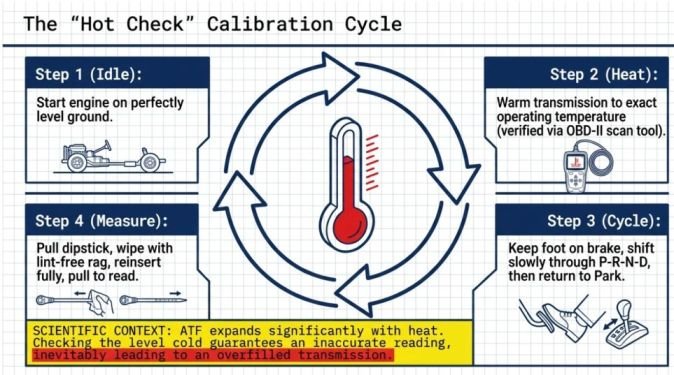
Transmission fluid level matters because the 2009 Elantra’s automatic transmission uses fluid as the hydraulic medium for clutch packs and torque converter operation. An incorrect level can cause harsh engagement, delayed shifts, or overheating, so checking it is the quickest way to catch a problem before it turns into a repair. For this model, you also need to follow the right temperature and position checks, since fluid expands as it warms up.
Start the check on level ground, with the engine running, and warm the transmission until it reaches normal operating temperature, then keep the shifter steady through Park, Reverse, Neutral, and Drive before returning to the final position for the dipstick reading (often Park on many Hyundai automatics). Pull the dipstick, wipe it clean with a lint-free rag, reinsert fully, then pull again to read the level against the marks. Do not overfill, since too much fluid can aerate and foam, which worsens shift quality. If you find low fluid, topping up requires using the correct spec fluid for the trans, and a persistent low level usually points to a leak that should be inspected.
What The Dipstick Reading Tells You
The dipstick reading on the 09 Elantra is mainly about hydraulic volume, but the fluid condition matters too. Fresh, healthy fluid is usually red or light brown and smells relatively mild; dark fluid, a burnt odor, or visible debris suggests the transmission has been running hot or suffering clutch wear. A fluid level that’s slightly below full can come from normal expansion differences if the check was done too cold, while repeated low readings after correct warm temperature checks point toward a seal, pan gasket, or cooler line leak. When the fluid smells burnt, or you see metal-like particles, it is smart to have a professional check line pressure and scan for stored shift-related codes, since topping off alone will not fix internal wear.
7. Tools And Materials

Correct tools matter for an automatic transmission fluid service on an 09 Elantra because the level is temperature-sensitive and the fill procedure depends on the exact drain and fill design. Having the right metric sockets, a clean funnel, and a way to verify fluid temperature helps you avoid overfilling, which can cause shifting issues. A proper ATF is also critical since different Hyundai/Kia automatic transmissions use different fluid specifications.
In practice, expect to use metric hand tools and at least one long-reach option to reach the transmission pan area comfortably.
For example, a 3/8-inch drive ratchet with metric sockets commonly covers the pan and related fasteners, while a drain pan sized for several quarts prevents mess if the unit dumps fully. Use a clean catch pan with a lid or cover, since used ATF is messy and should be handled as hazardous waste where required.
For the fluid and consumables, plan on sourcing the exact ATF specification called for by the service information for your specific 09 Elantra transmission code. Replace any pan gasket or seal that the procedure requires (many setups need a gasket-style replacement), and have shop towels and nitrile gloves ready.
- ATF that matches the manufacturer spec for your transmission
- New pan gasket and any required sealing washers or O-rings
- Clean funnel and lint-free wipes
- OBD-II scan tool capable of reading transmission fluid temperature (if available)
Temperature And Measurement Tools
Transmission fluid level checks on many Hyundai automatics are done at a specific fluid temperature, because the ATF expands and contracts with heat. A basic approach is to use a scan tool that can display transmission fluid temperature, then follow the temperature range listed in the service information before finalizing the level. If you do not have live data, the risk is that you set the level too high or too low, and both can lead to complaints like delayed engagement or harsh shifts. A fast, clean workflow also matters, because prolonged time with the vehicle off can skew temperature-based checks.
8. Overfill And Underfill Cautions

On a 2009 Hyundai Elantra, the transmission fluid level matters because both underfill and overfill can change internal pressure and cause the transmission to run hotter, shift oddly, or trigger a fault. Checking fluid level at the correct temperature and engine idle condition is critical, since the level can swing as fluid expands. Treat this section as the guardrails so you do not “fix” a service with the wrong fluid amount.
In practice, most fluid level mistakes happen after a drain and refill when you use the drain volume instead of the system’s full fluid spec, or when the car is checked before the fluid has reached the required temperature range. If you overfill, excess fluid can aerate (foam) and reduce lubrication, which can contribute to clutch and torque converter wear. If you underfill, pickup in the sump can be partially uncovered during turns or stop-and-go driving.
How To Spot A Fluid Level Problem After Service
For example, an overfill often shows up as a milky look on the dipstick or fluid that seems more aerated than normal, followed by increased shift harshness after you get the transmission warm.
In practice, an underfilled unit can act like it is “breathing” during acceleration, with inconsistent engagement or a reluctance to smoothly enter Drive or Reverse. If you notice persistent symptoms, do not keep adding fluid in small amounts blindly, because the target level depends on fluid temperature and the exact fluid type used for the Elantra’s transmission.
9. ATF Maintenance Interval

ATF maintenance interval is included because fluid age and temperature cycles are what most directly affect shifting quality and internal wear in the automatic transmission. On many Hyundai automatics, the “maintenance” conversation is really about when to replace ATF and, in some cases, when the car needs special attention due to towing, aggressive driving, or repeated heat soak. Since intervals vary by transmission type and driving conditions, your service plan should be tied to the owner’s manual schedule for your exact 2009 Elantra build.
In practice, many drivers follow a conservative fluid service schedule such as replacing ATF every 30,000 to 60,000 miles, with shorter intervals if you do stop-and-go commutes, frequent short trips, or any towing or hauling. Use only ATF that matches Hyundai’s specification listed for your transmission, because different ATF types have different friction additives and viscosity behavior. A shop may quote a drain-and-fill (smaller amount replaced) versus a cooler-line exchange (more fluid replaced), and those approaches can change total service time and cost.
When You Should Shorten The Interval
For example, if your 2009 Elantra sees a lot of city traffic where the transmission runs hot at low speeds, the ATF can oxidize faster than a highway-only routine.
In practice, towing a small trailer, driving in steep grades, or spending time in deep stop-and-go traffic are good reasons to move toward the earlier end of the interval range. If you notice delayed engagement, harsher shifts, or shudder during takeoff, that is a sign to stop guessing and have the fluid condition and transmission scan data reviewed before you assume “just change the ATF.”
Quick Summary

For the “trans. oil capacity on 09 Elantra” question, the article’s main point is that the correct ATF quantity is conditional; it depends on your exact 2009 Elantra transmission variant and on whether you are doing a drain-and-fill or a service procedure that changes the total amount. Online numbers can be misleading because many refer to dry or “total system” capacity, not what you actually remove and refill during a drain-and-fill.
The rest of the article focuses on how to fill correctly rather than chasing a single universal number. Drain-and-fill amounts are smaller than total system capacity, and overfilling can cause foaming, shift quality changes, and an overheating risk, while underfilling can lead to harsh shifts and transmission damage over time. The level check must follow the Hyundai procedure and use the correct operating temperature.
| Item | What the article says to do |
|---|---|
| Capacity number | Do not use a single “total capacity” figure; drain-and-fill is usually less. |
| Transmission identification | Verify transmission code or VIN before choosing ATF and amounts. |
| Fluid type | Use Hyundai-specified ATF for the correct automatic transmission variant. |
| Level check | Check at operating temperature and in the position specified by the service procedure. |
| Fill accuracy | Avoid overfill (foaming, shift change, overheating risk) and avoid underfill (harsh shifts, damage risk). |
Frequently Asked Questions
What Is The Transmission Oil Capacity For A 2009 Elantra?
The exact capacity depends on the transmission type (automatic vs manual). Check the correct fill spec for your VIN or look up the capacity in the service information for your specific transmission, because the amount can differ by gearbox and whether you’re measuring a dry fill or a drain-and-fill.
How Many Quarts Of Trans Fluid Does A Drain-and-fill Take On A 2009 Elantra?
Drain-and-fill usually uses less fluid than a full refill because torque converters and internal passages retain fluid. Plan on the capacity being “portion-based,” and verify the level using the dipstick or fill procedure after warming the transmission.
Can I Overfill The Transmission Fluid On My 2009 Elantra?
Yes, overfilling can cause problems like foaming and fluid aeration, which can lead to poor shifting. Always fill to the correct level using the temperature and method specified for your 09 Elantra transmission, not “by quart count” alone.
Do I Need To Add Fluid Differently If My 09 Elantra Is Low After A Leak?
Don’t just top it off. First find and fix the leak, then confirm the fluid level with the correct hot-check procedure, because topping off on the wrong level can mask the issue and still leave you over or under.
How Long Should I Run The Engine After Adding Trans Oil On A 2009 Elantra?
Follow the warm-up and checking steps in the service procedure, because level checks are typically done with the transmission at a specific temperature and in specific gear selections. If you check cold or skip the warm-up steps, your reading can be misleading.
What’s The Most Common Mistake When Checking Transmission Fluid On A 2009 Elantra?
The big one is checking at the wrong temperature or with the wrong vehicle position (level ground matters). Use the correct dipstick or fill plug method, and make sure you recheck after adjusting, because transmission fluid level can change quickly with temperature.

- Top 10 Ranking Tire Brand for Minivan: Reviewed 2026 - October 5, 2026
- Model Y Tesla Long Range Automatic Wagon Tyre Fitment And Ratings - October 3, 2026
- What Is The Benefit Of Larger Rear Tyres On A Zero-turn Mower - October 3, 2026