You’re trying to get the right number for a “2017 GMC Yukon V8” transmission service, and the internet keeps throwing different capacities at you. The real pain point is matching your Yukon’s transmission variant to the correct fluid spec and then choosing the right number for drain-and-fill versus a fuller refill.
2017 GMC Yukon V8 uses different ATFs and capacities depending on whether it has 8L90 (about 7.0 qt service fill / 11.0 qt overhaul fill, DEXRON-HP) or a 6L80 (about 5.7-6.0 qt service fill / 9.5 qt overhaul fill, DEXRON-VI). This article covers how to confirm the transmission, the correct ATF requirement, and how to check the level correctly so you don’t overfill.
2017 GMC Yukon V8 transmission fluid capacity depends on the transmission: 8L90 is about 7.0 qt (service fill) or 11.0 qt (overhaul fill) using DEXRON-HP, while 6L80 is about 5.7 to 6.0 qt (service fill) or 9.5 qt (overhaul fill) using DEXRON-VI. Confirm via the transmission code before buying.
What Is 17 GMC Yukon Transmission Fluid Capacity V8?
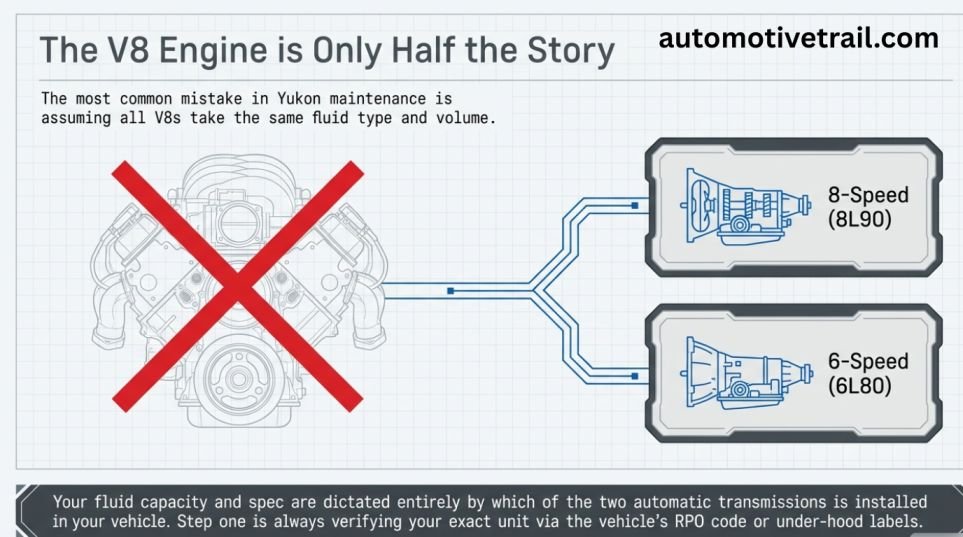
Knowing the correct transmission fluid capacity matters because a 2017 Yukon V8 can have different automatic transmissions, and the fill amount changes by unit. Getting the level wrong can lead to poor shift quality, overheating, or an inaccurate dipstick reading. This is why fluid capacity is the first data point to lock down when maintaining a V8 Yukon.
For a 2017 GMC Yukon with a V8, the common automatic options include the 6-speed 6L80 and 8-speed 8L90. Service fill capacities reported for these transmissions are about 5.7 to 6.0 quarts (service) for the 6L80, and about 7.0 quarts (service) for the 8L90. A complete overhaul fill can be higher, so “how much to buy” depends on whether you are doing a drain and fill or a full overhaul.
How To Confirm Which Capacity Applies
Capacity can’t be chosen by engine alone because the same 2017 Yukon V8 lineup can be paired with different transmission models. The easiest way to confirm is to check the transmission model designation shown on the vehicle documentation or under-hood labels, then match it to the correct spec (6L80 versus 8L90). When buying fluid, plan for the service fill amount and then verify final level using the vehicle’s proper method and temperature procedure, since mixing temperature and procedure can give you a false level. If you are unsure whether you are doing a simple drain and fill or a complete refill, the “buy extra” mindset is safer than coming up short.
Reader takeaway: identify the transmission model first (6L80 versus 8L90) and then use the matching service-fill capacity, since the V8 engine alone does not guarantee the correct quarts.
How It Works
The reason this belongs in a list for a 2017 GMC Yukon V8 is that the transmission fluid level and capacity depend on which V8 and automatic transmission you have, and the fluid is what carries hydraulic pressure and lubrication throughout the unit. For the 8-speed 8L90 used in many V8 Yukons, typical service-fill capacity is about 7.0 qt, with an overhaul fill around 11.0 qt. Getting the capacity wrong can lead to delayed shifts, heat buildup, and accelerated wear because the pressure and cooling margins change.
In practice, the transmission is a hydraulic system first, with fluid pressure controlling clutch apply and gear selection while internal passages route fluid for cooling. A service fill is what you end up with during a drain and refill, while an overhaul fill is what the system holds when components are dry and fully replenished.
For example, if you are doing a drain and refill, you typically add fluid until the level is correct at temperature using the correct dipstick or check procedure for your transmission, since the remaining fluid in the torque converter and valve body affects the final amount.
Why Service-fill Volume Can Differ From Overhaul-fill
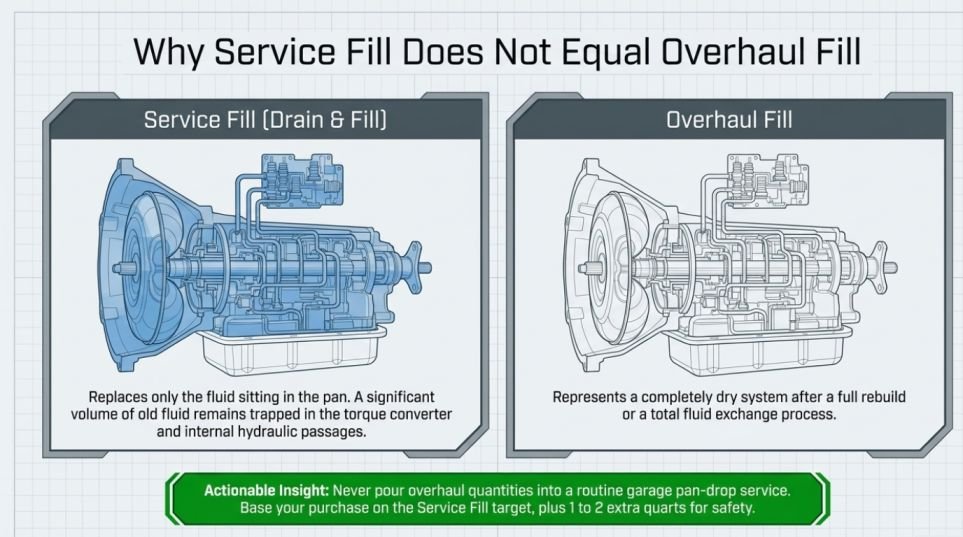
The big working difference is that a service drain leaves some fluid in places like the torque converter and internal passages, so the number of quarts needed is lower than an overhaul. With the transmission apart or fully emptied, those cavities start dry and receive fluid during refill, which is why overhaul volumes climb to around 11.0 qt for the 8L90 in the reference. Also, fluid expands with temperature, so checking level by “cold” guessing can easily overshoot or underfill, causing aeration or low hydraulic pressure.
Key Benefits
Knowing the correct transmission fluid capacity for a 2017 GMC Yukon with a V8 matters because an 8-speed automatic typically calls for a larger service-fill volume than smaller transmissions, and the wrong fill level can cause harsh shifts or delayed engagement. Using the proper capacity also helps you plan the exact amount of DEXRON-HP style fluid you need for a clean level at operating temperature. Getting this right is one of the simplest ways to keep shift quality consistent after service.
For a 2017 Yukon equipped with the 8L90 (8-speed automatic), published guidance lists about 7.0 quarts for a service fill and 11.0 quarts for an overhaul fill. The same reference set pairs this with DEXRON-HP for the 8-speed unit. Service interval values in that reference are listed around 72,000 km (45,000 miles), which can help you decide when capacity becomes relevant for routine drain and fill planning.
How The Capacity Ties To Shift Quality And Service Planning
Transmission fluid capacity isn’t just a number for your toolbox; it affects how consistently the pump maintains hydraulic pressure during acceleration and at steady cruising. For an 8-speed, using the service-fill amount helps keep fluid volume in the range where the transmission can manage normal lubrication and cooling without excess fluid slinging.
In practice, drain and fill jobs often take less than an overhaul amount, so over-ordering full “overhaul fill” quantities can waste money and under-ordering can leave you guessing during level checks.
For example, you can stage your supplies around the published service-fill figure, then top to the proper level procedure. If your Yukon is near the recommended service window (about 45,000 miles in the referenced interval), having the right capacity estimate makes it easier to stay on schedule and keep shift behavior predictable.
Step-by-step Guide
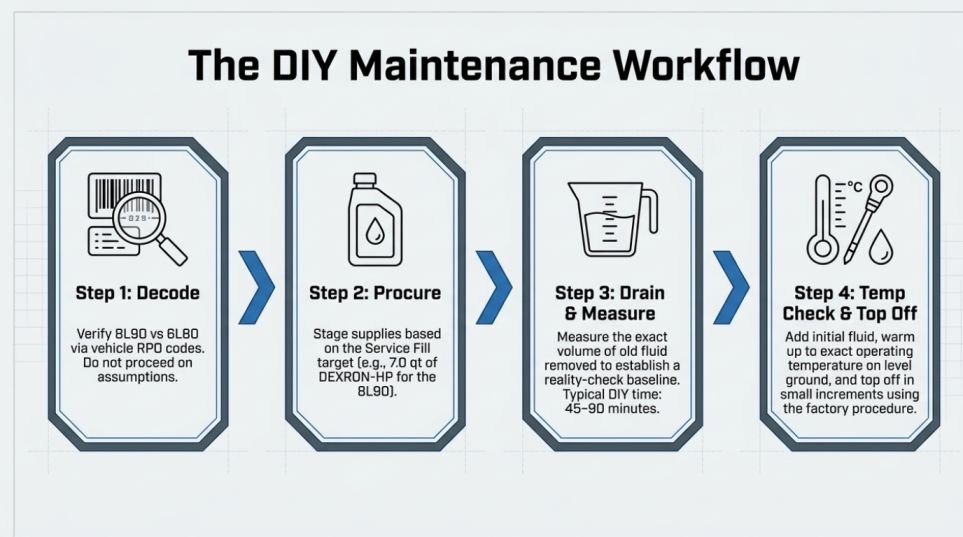
For a 2017 GMC Yukon V8, the exact transmission fill matters because most overfill or underfill issues show up quickly as harsh shifts, delayed engagement, or foaming. This is why this list item focuses on the practical fill workflow and how to verify the correct amount for the transmission style installed. Using the right service-fill capacity for the 8L90 family helps you stay on the safe side when you’re doing a drain-and-fill instead of a full overhaul.
Confirm which transmission you have by checking the RPO code or model label, since capacities differ between units. One reference lists 8L90 (M5U) service fill around 7.0 qt and overhaul fill around 11.0 qt, so a drain-and-fill typically uses a smaller amount than a full refill. If you’re doing a drain-and-fill, plan on 1 to 2 cartons of the correct ATF depending on your pan drop and whether the fluid was low.
In practice, measure the fluid you remove so you can compare it to the expected service fill, and then top up to the mark with the engine running at the specified temperature. Use a quality dipstick or fill procedure per the transmission, since overfilling is a common mistake that can aerate fluid and worsen shift feel.
- Tools: drain pan, correct ATF (DEXRON-HP type per 8L90 references), funnel, and gloves
- Safety: support the vehicle securely if you must work under it, and keep ATF off hot exhaust components
- Warm-up: set the fluid temp correctly before final level check to avoid misleading readings
Typical DIY time is 45 to 90 minutes for a simple drain-and-fill, longer if you replace the filter or drop the pan.
Level Check And When To Stop
Fluid level checks are where DIY drain-and-fills succeed or fail, because ATF expands with temperature. After you add the initial amount, do a final check with the engine idling and the vehicle on level ground, then add small amounts in increments until the level is right. If the fluid is significantly low, you may have a leak or a previous incorrect fill, so keep correcting and rechecking rather than forcing a quick “almost right” level.
If you notice persistent foaming, a burnt smell, or metal particles in the removed fluid, stop and have the transmission evaluated, since topping off can mask an underlying issue. For most 2017 Yukon V8 owners, aiming for the service-fill amount first (around 7.0 qt for the 8L90 family per available references) is the most controllable and repeatable approach.
Common Mistakes To Avoid
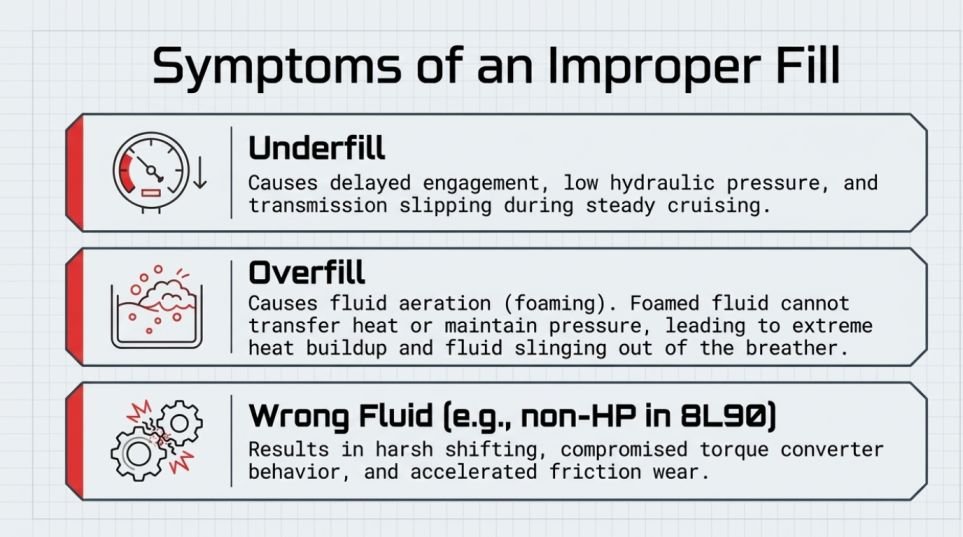
Mixing up the transmission fluid spec or volume on a 2017 Yukon V8 is a common reason shops end up doing repeat work. GM transmissions like the 8L90 (common on V8 Yukons) call for a specific fluid formulation, and the correct capacity changes depending on whether you are doing a service fill or an overhaul fill. Using the wrong amount can cause harsh shifts, temperature issues, and drain-and-refill confusion.
For example, service fills are typically lower than overhaul fills because a full overhaul drains more components and allows more fluid to be replaced. A published capacity reference for 8L90 shows about 7.0 qt for a service fill and about 11.0 qt for an overhaul fill, so counting bottles blindly can be a trap. For the fluid type, 8L90 is listed with DEXRON-HP, so pouring in a look-alike Dexron can create long-term shift and wear risks.
How The Level Check Method Causes Repeat Mistakes
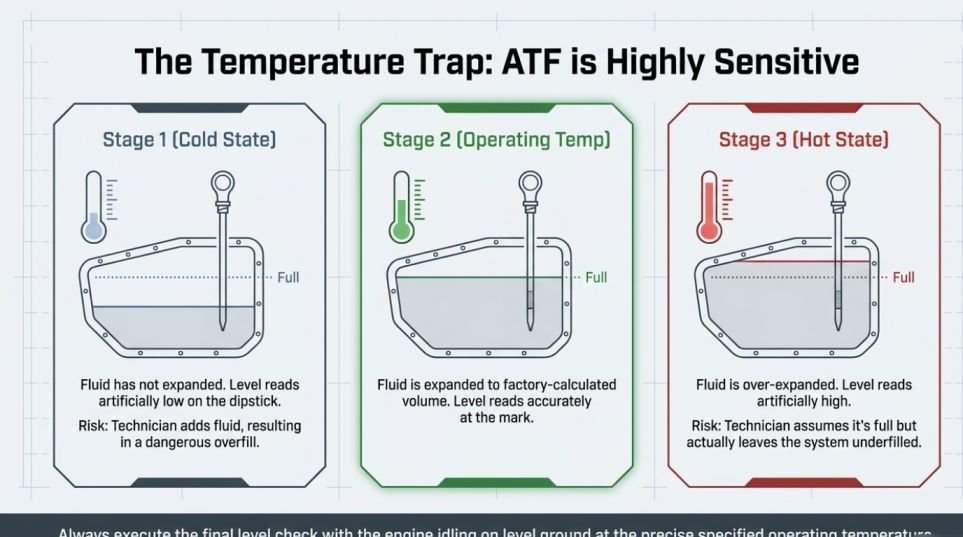
Level checking is where many Yukon owners go wrong, because the fluid level on modern automatics is temperature-sensitive. If you check when the fluid is too cold, the pan will read low, and you will add extra fluid; then the car runs hot and shifts harshly after the level rises. If you check when the fluid is too hot, the opposite problem happens, and you can end up slightly underfilled.
In practice, follow the temperature and parking-condition requirements from the service procedure for your specific transmission, since 6L80 versus 8L90 can differ. When you are unsure whether your Yukon has 6L80 or 8L90, stop and verify the transmission code before you decide how many quarts to plan for. For safety and to avoid damage, keep the vehicle on a level surface and keep your hands clear of moving drivetrain components during any hot checks.
Tips For Success
Getting the fill right on a 2017 GMC Yukon V8 matters because the 8L90 8-speed automatic uses a higher capacity range than earlier transmissions, and overfilling or underfilling can affect shift quality. For the 8L90, published capacity figures commonly list about 7.0 qt for a service fill and 11.0 qt for an overhaul fill, which is why having the correct amount ready prevents repeated heat cycles and re-checks. Using the correct fluid spec also helps keep pressure and torque converter behavior consistent during steady driving.
For example, plan on checking fluid level at operating temperature and with the correct procedure for your 2017 Yukon (the level point is temperature-sensitive). Many V8 Yukons use the 8L90, and the fluid listed for that unit is typically DEXRON-HP; grabbing the wrong product (even within the “DEXRON family”) can lead to poor shift feel. If you are doing a drain and fill, treat the “service fill” number as your target, then fine-tune based on the dipstick or fill plug level method your chassis uses.
Temperature And Level-check Discipline
Fluid capacity numbers are only half the story because automatic transmissions are extremely sensitive to fluid temperature at the time you check level. If you check too cold, the fluid will be higher in the system, and you can end up underfilling once it reaches operating temperature. If you check too hot, the opposite risk happens, and the fluid can run high enough to aerate and cause harsher shifts.
In practice, follow the method your Yukon uses for level verification, then recheck after any adjustment and after the vehicle has sat briefly to stabilize flow through the valve body.
Real Examples
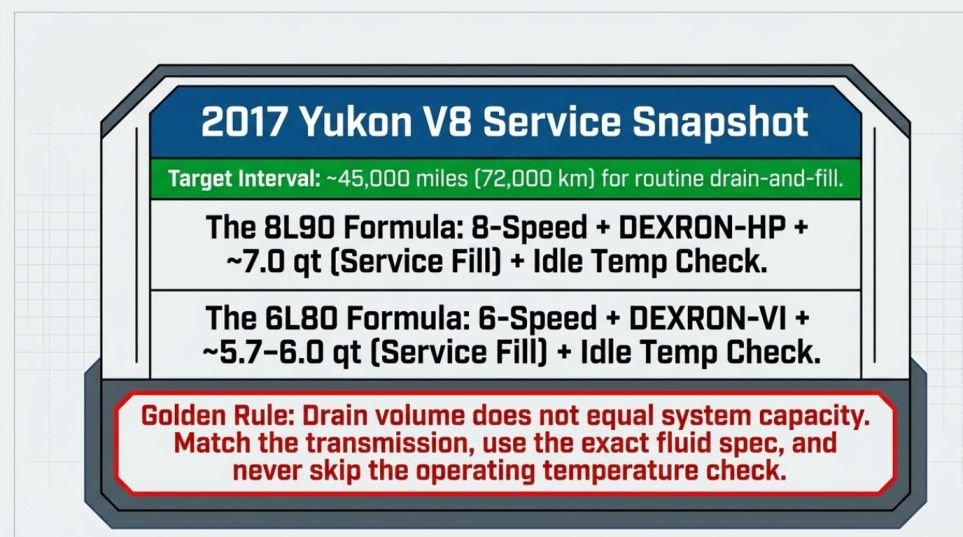
A 2017 GMC Yukon V8 commonly uses a GM 8-speed automatic (8L90) on many trims, and the usable “service fill” and “overhaul fill” numbers matter because a pan drain only replaces part of the total fluid.
For example, an 8L90 capacity reference lists 7.0 qt for service and 11.0 qt for overhaul, which explains why a quick drain-fill and refill won’t bring the level to what you’d see after a full rebuild. This is why real-world examples belong in a transmission fluid capacity list.
In practice, a shop will typically target the fill procedure on the dipstick or fill-level check per the transmission’s temperature and level method, since overfilling can cause foaming and shifting issues.
For example, the same capacity reference shows the 8L90 service interval at about 72,000 km (45,000 miles) in its table context, which gives you a time window for planning your fluid service. A practical parts run often means buying enough DEXRON-HP to cover a drain-and-fill plus a little extra for topping during final checks.
What Changes The “Capacity” Number In Real Service
Capacity numbers differ because technicians are usually performing a service fill, not a complete refill of every circuit and cooler line.
For example, a standard pan drain and filter service might only remove a portion of the total fluid, so you buy for the stated service fill and then confirm final level using the vehicle’s correct temperature/level-check method. In contrast, an overhaul fill assumes additional fluid volume is introduced during internal work or a more complete exchange process, which is why the reference lists a higher number for overhaul. If you’re dealing with unknown maintenance history, measuring what drains out during service is a good reality check; then follow the level procedure to avoid overfill.
Quick Summary
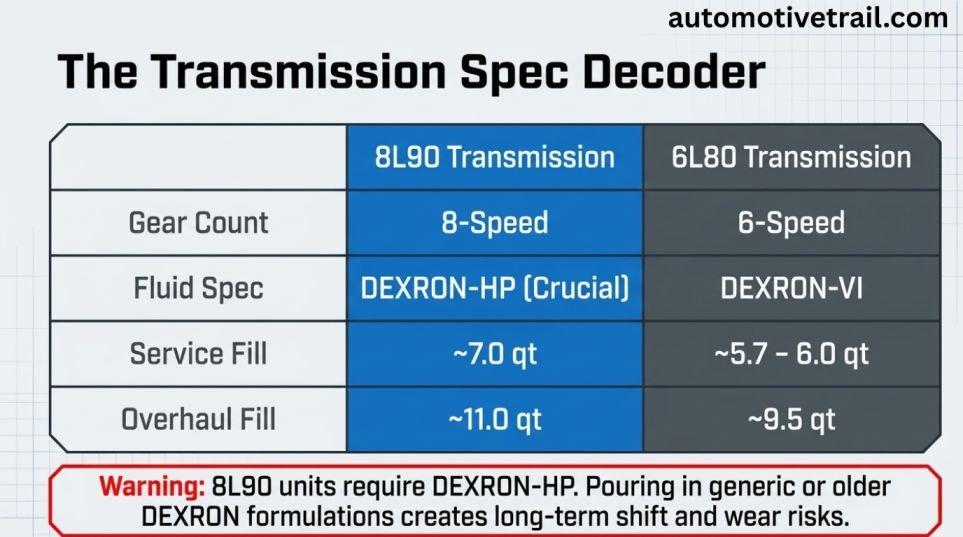
For a 2017 GMC Yukon V8, transmission fluid capacity depends on which automatic transmission you have, not just the V8 engine. The article breaks it down by transmission code: the 8L90 uses about 7.0 qt for a service fill and about 11.0 qt for an overhaul fill, and it calls for DEXRON-HP. The 6L80 uses about 5.7 to 6.0 qt for a service fill and about 9.5 qt for an overhaul fill, with DEXRON-VI. The key is confirming the transmission variant before buying fluid.
Once you know whether you have the 6L80 or 8L90, the next step is matching the ATF type and using the correct level-check procedure at operating temperature, since mixing temperature and method can give you a false level. The article also stresses that “drain” does not equal the full system capacity, because the torque converter and internal passages leave remaining fluid. A deeper refill or full exchange pulls more than a drain and fill, so the safest approach is to verify the job type and then confirm final level using the proper method, since the most important takeaway is to match transmission, fluid spec, and checking procedure.
| 2017 Yukon V8 Transmission | ATF Spec | Service Fill (Drain and Fill) | Overhaul Fill |
|---|---|---|---|
| 8L90 | DEXRON-HP | About 7.0 qt | About 11.0 qt |
| 6L80 | DEXRON-VI | About 5.7 to 6.0 qt | About 9.5 qt |
Frequently Asked Questions
What Is The Transmission Fluid Capacity For A 2017 GMC Yukon V8?
For the 2017 Yukon with the 8L90 8-speed automatic, the typical values are about 7.0 qt for a service fill and about 11.0 qt for an overhaul fill. Exact amounts can vary depending on whether you drain and refill or you do a full fluid exchange.
How Much Transmission Fluid Do I Need To Refill A 2017 Yukon V8 After A Drain And Fill?
If you’re doing a standard drain and refill on an 8-speed 8L90, plan on roughly 7.0 qt for the service fill. After you install the fluid, check the level with the procedure specified for your transmission at operating temperature.
What Fluid Type Should I Use For A 2017 GMC Yukon V8 Transmission?
For the 8L90 8-speed, the recommended fluid is DEXRON-HP (not a generic ATF). Using the wrong fluid can cause shift quality issues, so match the spec before you pour.
Service Fill Vs Overhaul Fill: What Is The Difference For A 2017 Yukon V8?
A service fill is the amount you replace after a drain and refill, while an overhaul fill accounts for a much more complete refill. For the 8L90, that’s roughly 7.0 qt service versus 11.0 qt overhaul.
How Long Does It Take To Change Transmission Fluid On A 2017 Yukon V8?
A basic drain and refill on an 8-speed typically takes about 1 to 2 hours depending on access, lift setup, and how long the fluid level procedure takes. A full exchange, if done, usually takes longer because you’re moving more fluid through the system.
What’s The Most Common Mistake When Checking Transmission Fluid Level On A 2017 Yukon V8?
The big mistake is checking the fluid level at the wrong temperature or not following the level procedure, which can leave you overfull or underfull. Get it correct at operating temperature, then fine-tune to the factory check method to avoid drivability problems.

- 2017 Dodge Grand Caravan Transmission Fluid Capacity: Dodge Grand Caravan Transmission - September 27, 2026
- How Many Gallons Of Transmission Fluid Does A 2017 Gmc Yukon 5.3 Slt Xl Hold: How Many - September 26, 2026
- 17 Gmc Yukon Transmission Fluid Capacity V8 (8l90) Quarts/liters - September 26, 2026