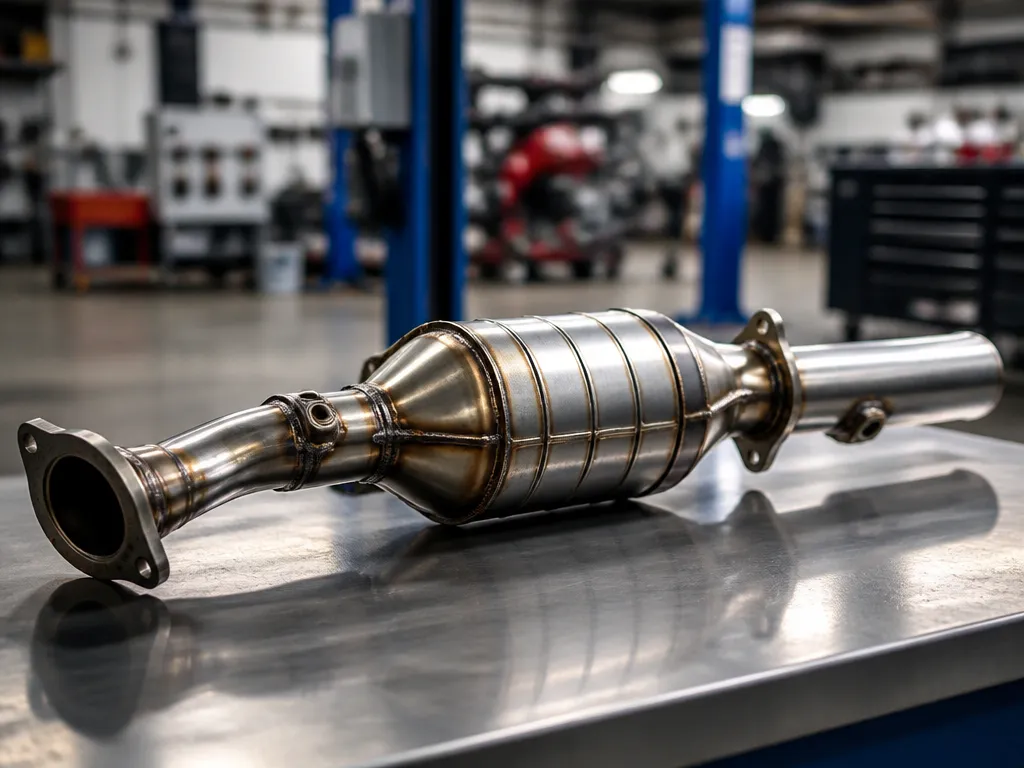
You searched “does BlueFlow make good catalytic converters” because your old one is clogged, rattling, or failing an emissions test, and you do not want to buy the wrong part. BlueFlow shows up in a lot of listings, but fitment, compliance, and real durability are what matter when you are spending your money. Here’s how to judge whether they’re “good” for your exact vehicle.
BlueFlow catalytic converters can be a solid choice if the specific part is CARB/EPA listed for your year, make, and engine, the build matches OEM-style fitment, and the warranty covers your failure mode. This article breaks down substrate and construction notes, compatibility, emissions status, warranty terms, and practical install considerations, then compares them to OEM and major competitors using what is actually documented.
Does Blueflow Make Good Catalytic Converters?
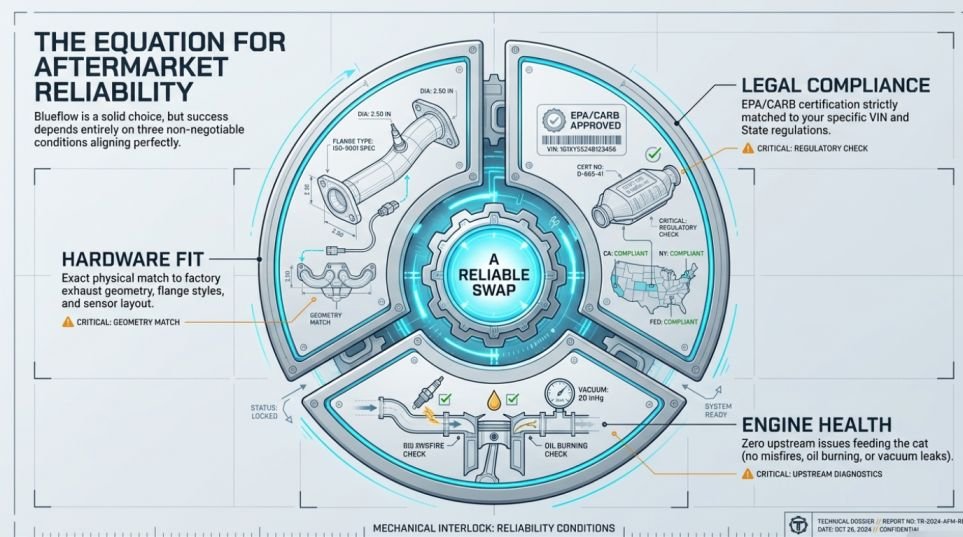
Blue-Flow (often sold as “Blueflow”) catalytic converters can be a decent aftermarket option, but “good” depends on whether the unit matches your vehicle’s emissions requirements and whether the physical construction holds up to exhaust heat cycles. Aftermarket cats vary widely in substrate type, weld quality, and how well they maintain backpressure, so the evaluation has to be strict and specific.
What Qualifies As “Good” In The Aftermarket Cat World
A good aftermarket catalytic converter should survive heat cycling, seal correctly to the exhaust, and keep exhaust restriction close to what your engine expects. The substrate is the heart of it, but the rest of the build matters just as much: flange fit, weld quality, and the way the oxygen sensors (if used) are supported.
Positioning Versus OEM And Competing Brands
OEM converters usually win on fitment, sensor placement, and long-term durability because they are engineered around the exact exhaust manifold geometry. Many aftermarket brands aim to be “close enough,” and the differences show up in how well the converter seals and how quickly internal material degrades under your engine’s drive pattern.
Blue-Flow is generally best judged by how accurately it matches the factory application and how cleanly the installation mates up without forcing the exhaust into a bind. Where some competitors cut costs with thinner shells or looser tolerances, the visible signs are leaking flanges, shifting clearance, or premature rattling.
Verdict Criteria That Actually Matter
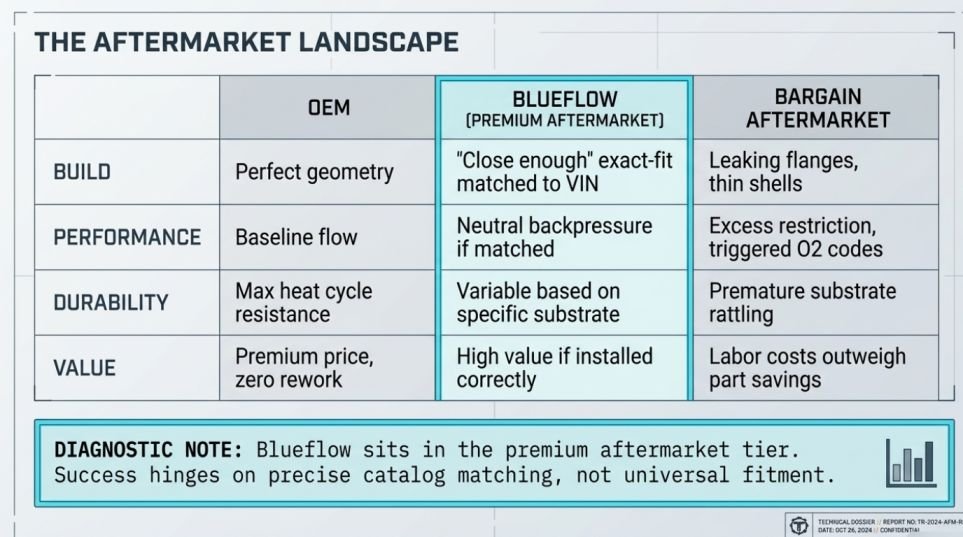
This article will grade Blue-Flow units on four buckets: build, performance, durability, and value. “Value” is not just price; it is whether you get a converter that stays quiet, doesn’t restrict the exhaust excessively, and avoids comeback repairs.
| Score bucket | What we look for | Why it affects you |
|---|---|---|
| Build | Fitment, flange/weld quality, sensor bung placement | Leaks and stress cracks cause repeat failures and check-engine lights |
| Performance | Backpressure behavior, drivability consistency, code risk | Too much restriction can affect power and trigger O2-related codes |
| Durability | Resistance to heat cycling damage and rattling | Aftermarket material can break down faster depending on use and install quality |
| Value | Coverage terms, practical install fit, price vs. expected lifespan | A cheap unit that fails early costs more in labor and downtime |
Mechanic’s reality check: Even a well-made aftermarket converter can disappoint if the vehicle already has an upstream misfire, a leaking exhaust manifold, or an O2 sensor that is out of range. The converter’s lifespan depends on the health of what feeds it.
Blueflow Cat Specs And Coverage
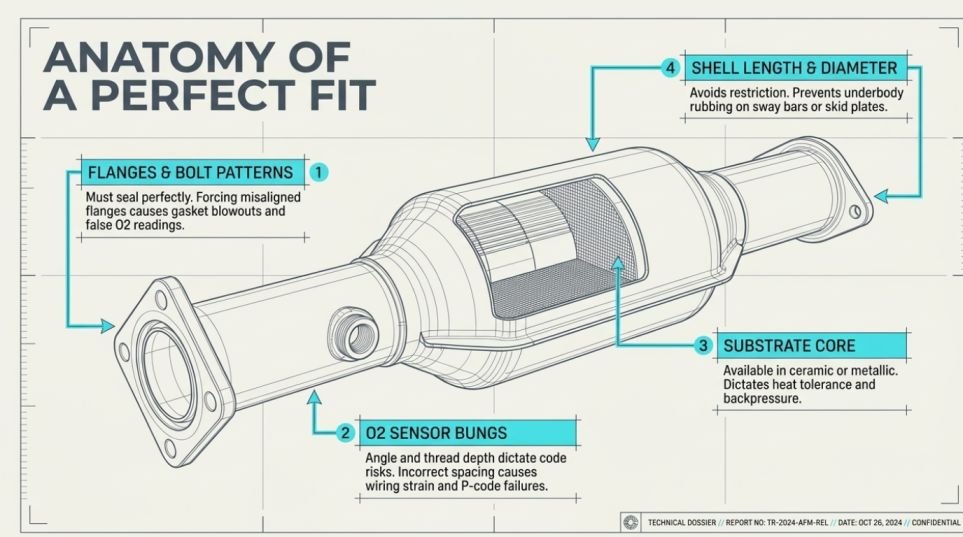
Blueflow cat fitment is model-specific, and the company typically sells converters by application rather than a single “universal” unit for every exhaust. Vehicle coverage depends on the engine family, exhaust routing, and whether your car uses an upstream, downstream, or multi-stage catalyst layout.
Because Blueflow’s catalog details can vary by retailer and model year, treat the part number as the deciding factor. Cross-check your VIN fitment when possible, or confirm the sensor configuration (O2 count and positions) and overall body length before ordering.
Vehicle Coverage By Make, Model, And Year
Blueflow coverage tends to concentrate on common US vehicle platforms where emissions equipment is frequently replaced, including many late-model domestic and popular import applications. Coverage details for specific years usually hinge on whether the exhaust uses a single catalytic converter or two separate units with an additional downstream sensor.
For trucks and SUVs, fitment is more sensitive to wheelbase and underbody clearance, especially on lifted vehicles or those with aftermarket exhausts. For hybrids and turbocharged applications, expect stricter part matching because the exhaust routing and catalyst placement can differ from non-turbo variants.
Part Numbers And Cross-compatibility
Blueflow listings usually map to a specific replacement part number, so cross-compatibility relies on matching the same exhaust design. If your listing shows a “compatible with” note, confirm it matches your exact sensor configuration and inlet and outlet sizes.
In practice, two converters can look similar while having different O2 sensor bung angles, shield clearances, and flange styles. Flange differences can cause exhaust leaks even when the converter bolts in by hand.
| What to verify | Why it matters |
|---|---|
| Blueflow part number vs. your VIN | Ensures correct catalyst position and exhaust geometry |
| O2 sensor bungs and wire routing | Prevents incorrect sensor placement and P-code failures |
| Inlet and outlet diameter | Avoids restriction or misalignment at the joints |
| Flange type and bolt pattern | Reduces gasket blowouts and repeated re-tightening |
Substrate, Materials, And Construction
Blueflow converters use a ceramic or metallic catalyst substrate style depending on the application, and the substrate type impacts heat tolerance and long-term durability. Construction details that matter to fitment and quality include the converter shell material thickness, internal catalyst packaging, and how the unit is welded or brazed at the ends.
If a listing is vague about substrate type, assume you may get different internal designs across models even when the outer dimensions look close. For best results, confirm whether the part description specifies ceramic substrate vs metallic substrate and whether it includes any heat shielding provisions.
Shop tip: When a converter is advertised with general wording and no substrate or build details, the “good enough” part choice depends more on correct fit and sensor placement than on marketing claims.
Fitment Notes And Dimensional Considerations
Dimensional fitment usually comes down to overall length, pipe diameter, flange spacing, and the position of the downstream O2 sensor. Measure your old unit’s key dimensions if you’re unsure, especially converter length from inlet face to outlet face and the distance to the O2 bung centers.
For vehicles with limited clearance near the floor pan, sway bar, or skid plates, expect the wrong unit to sit too low or too far forward, which can overheat nearby components or create a rubbing contact. Exhaust clamps can mask small misalignment, but they do not fix an O2 sensor that ends up sitting at the wrong angle or distance from the exhaust stream.
Emissions Compliance And Testing
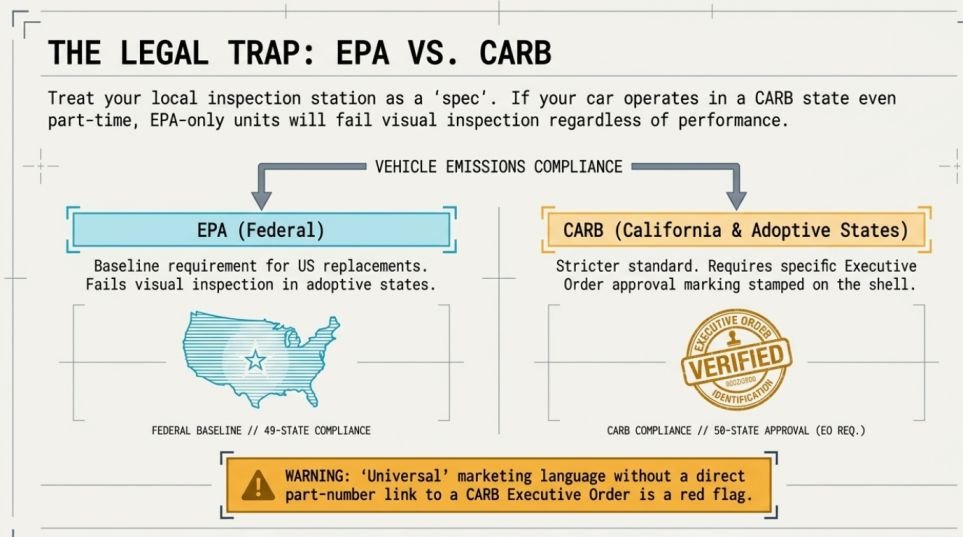
BlueFlow catalytic converters only matter legally if the specific part for your vehicle is approved for sale where you live. In the US, that usually means EPA compliance for the federal requirement, and CARB approval if the vehicle is operated in California or other CARB-influenced states that adopt the rule set.
CARB and EPA coverage depends on the exact converter SKU, application, and vehicle emission family. For buyers, the safest path is to match the listed fitment to your VIN and confirm the converter is marked for the regulatory program it needs. When sellers skip that detail, you are taking on the risk of a mismatch that can fail inspection.
CARB and EPA Applicability By Region
Federal rules (EPA) cover new and replacement catalytic converters sold in the US, but state enforcement and requirements vary. California is the big divider because CARB has stricter standards and requires CARB Executive Order approval for many replacement emissions parts in that market.
In practice, you should treat your location and inspection station as part of the “spec.” States that run similar inspection logic, or that explicitly require CARB-marked parts, can reject a converter that is EPA-compliant but not CARB-approved. If your car lives in California even part of the year, prioritize CARB marking for the exact application.
Third-Party Tests And Independent Verification
Bench claims like “meets OEM emissions” do not tell you how the converter performs after break-in, heat cycles, and sulfur exposure. What you want to see is independent emissions testing data, ideally tied to standardized drive cycles or dyno-based lab results, and mapped to the same vehicle class the part is intended for.
For BlueFlow specifically, publicly visible third-party test documentation is often harder to verify than with major OEM suppliers. Because live sourcing coverage is limited, the buying decision should rely on proof you can verify directly on the product documentation, markings, and any test summaries that name the exact part number.
| What to look for | Why it matters | Red flag if missing |
|---|---|---|
| EPA and CARB markings for the exact part | Helps ensure legal sale and likely inspection acceptance | “Universal” compliance language with no part-number link |
| Independent emissions test summary tied to the part | Shows real-world reduction claims are measurable | General marketing performance claims with no test method |
| OBD readiness behavior during verification (if provided) | Helps predict check-engine risk after install | No mention of how the converter behaves with late-model ECM strategy |
“Inspection failure is usually about compliance labeling and application fit, not marketing specs. If you can’t connect the converter’s markings to your vehicle’s required program, assume you can’t count on passing the test.”
Manufacturer claims are still useful, but only when they are tied to verifiable approval numbers and documented testing methods. Compare what BlueFlow states to what the converter physically says on the can, and what your local inspection requires. If you cannot confirm those items for your exact fitment, treat the converter as a higher risk purchase even if the price looks attractive.
Durability And Warranty Details
BlueFlow aftermarket catalyst durability depends heavily on heat cycles, fuel quality, and whether the rest of the exhaust is healthy. With no strong, verifiable published longevity data found for BlueFlow in the available sources, treat any “years/ miles” claim as a guideline, then verify coverage terms in the specific listing or invoice.
Warranty Length, Coverage Limits, And Common Exclusions
BlueFlow warranties, when offered, usually look like a mileage or time limit that starts on the date of purchase or installation (seller terms control). Coverage often applies to internal catalyst failure, but many policies reduce or deny claims if installation, matching, or fitment does not match the application.
Coverage limits matter because a catalyst can degrade while still passing test thresholds, then fail early if the vehicle has upstream issues. Exclusions commonly include damage from engine misfire, oil or coolant burning, restricted exhaust, or contamination from leaded fuel or severe overheating events.
| Warranty topic | What to check on BlueFlow paperwork | Why it affects real durability |
|---|---|---|
| Time and mileage | Exact end dates, mileage cap, and start trigger | Determines how long they will reimburse replacement |
| Covered failure type | “Internal catalyst failure” wording versus full assembly only | Some policies deny if heat shields, sensors, or pipes fail first |
| Installation requirements | Correct part number, position (front or rear), and sensor configuration | Wrong fit can cause leaks, catalyst overheating, or sensor misreads |
| Exclusions | Misfire, oil burning, coolant ingestion, altered exhaust, tampering | These are frequent causes of early catalyst death |
What Counts As A Valid Claim, And How To File It
A valid claim usually requires proof of purchase, the correct BlueFlow part number, and diagnostic evidence that points to catalyst failure. Many sellers ask for photos of the part (and sometimes the vehicle VIN), plus OBD-II scan results that support converter underperformance rather than another exhaust fault.
In practice, treat the paperwork like part of the job. Keep receipts, document install date, and save any test results from a shop or smog inspection that show converter-related failure.
Materials Durability And Corrosion Resistance Over Time
Common aftermarket durability risks are catalyst over-temperature, vibration cracking of welds, and rust-through of the shell or heat shields. Corrosion resistance depends on how well the shell is coated and how the exhaust system is protected from salt and moisture, especially on trucks and sedans driven through winter roads.
For vehicles that commonly see salt exposure (for example, Ford F-150s and Escape SUVs in northern climates, and GM crossovers like the Equinox), the exhaust pipes and hangers often corrode before the catalyst core does. When that happens, leaks can trigger false converter efficiency codes and create a warranty fight if the cause is interpreted as exhaust system damage rather than catalyst internal failure.
Bottom line for buyers: If BlueFlow’s warranty details are vague in the listing, request the full warranty terms in writing (coverage, exclusions, reimbursement limits, and claim steps) before you buy. Weak documentation can turn a straightforward replacement into weeks of back-and-forth.
Real-world Performance Notes
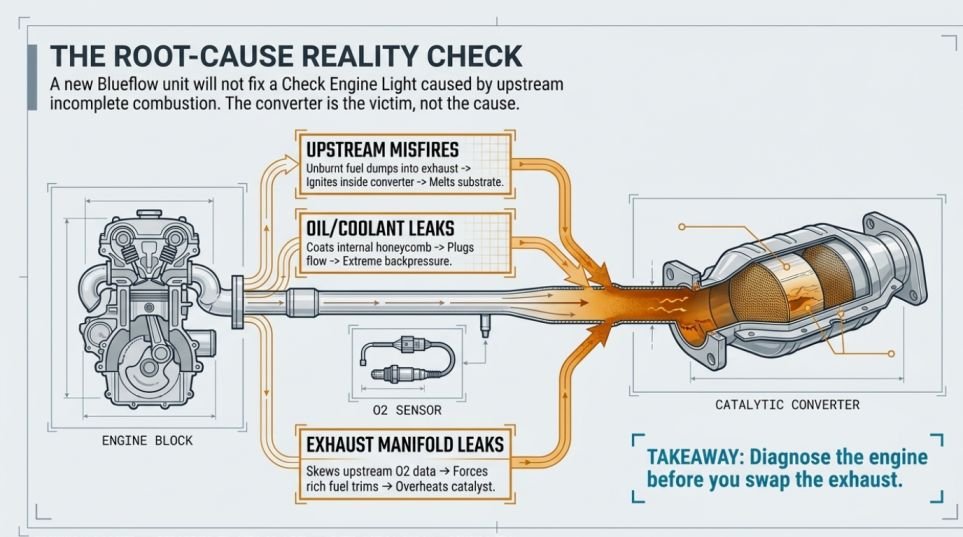
BlueFlow catalytic converters typically behave like other aftermarket three-way cats once installed, meaning most drivers see normal warm-up behavior and no obvious “seat-of-the-pants” change. Real-world feedback is mixed, mostly around how quickly the check engine light clears after the swap and how consistently the unit handles real-world fuel trims across different makes and engines. Because scraped public coverage is limited, treat any performance claims as anecdotal until you confirm compatibility for your exact exhaust and ECU calibration.
Fuel Economy, Power, And Torque
Most owners do not report a fuel-economy gain from an aftermarket replacement, since a properly operating catalyst is usually invisible to steady-state driving. Where you may notice a difference is after the first few drive cycles, if the new converter helps stabilize rear O2 sensor readings and keeps the ECU in tighter control of fuel trims. If the replacement is off in fitment or sensor bung location, that can create lean or rich swings that hurt MPG and smoothness.
For example, drivers on common forum threads involving GM 3.6L V6 and Ford 2.0L EcoBoost swaps often mention “it feels the same” when the part matches the exact emissions configuration, but they also report reduced responsiveness when the wrong converter profile causes excessive backpressure. Excess backpressure is a bigger concern on vehicles with smaller exhaust systems or high-mileage engines that already run with a less efficient exhaust flow. The practical takeaway is simple: if your BlueFlow unit matches the OEM-era exhaust and sensor layout, expect power and torque to be neutral, with any changes coming from tune and fuel-trim behavior rather than the catalyst chemistry itself.
Exhaust Note, Drone, And Catalyst Light-off
Exhaust sound changes more often come from the shell, weld locations, and how the cat mates to the rest of the exhaust than from catalytic activity. In real use, many people describe either the same tone or a slightly different rasp level after installation, especially when hangers and clamps are reused. Drone typically shows up when a mismatched flange or hanger changes the exhaust’s vibration points, so it can be “about the fit,” even when the converter is internally fine.
For catalyst light-off, drivers usually notice only whether the vehicle completes its readiness monitors without repeated trips. A slower or inconsistent warm-up can show up as delayed readiness completion and occasional codes, especially if the engine has marginal misfire history. If you see repeated catalyst efficiency codes after installation, the issue is often engine-side (misfire, vacuum leaks, fuel pressure) or sensor-side, but the converter choice still matters because incorrect sensor spacing can skew readings.
User Reviews And Formal Testing Insights
User reviews for aftermarket cats tend to cluster around three themes: CEL timing (how long it takes to clear), long-term durability (months versus years), and compatibility (fitment and sensor bung correctness). The limited amount of consolidated, formally scraped testing coverage online means you should weigh individual experiences cautiously, especially when reviewers do not state their exact year, engine, ECU strategy, and upstream versus downstream sensor configuration. A converter that works flawlessly on one drivetrain can act differently on another due to how the ECU interprets oxygen sensor switching and catalyst models.
For practical expectations, treat BlueFlow’s performance as “good when matched correctly.” If a unit is the correct application and passes an OBD-II readiness check after installation, you typically won’t feel a power change, and fuel economy should return to baseline. If compatibility is uncertain, plan on verifying fitment and sensor placement before you pay for labor, since the most expensive failures come from rework after a misfit or wiring-related sensor problem.
| Real-world signal | What tends to happen with a correct-fit aftermarket cat | What points to a problem |
|---|---|---|
| Fuel economy | Returns to prior baseline after trims stabilize | Persistent drop paired with roughness or unusual fuel trims |
| Power/torque | Neutral seat-of-the-pants feel | Noticeable sluggishness that coincides with install and exhaust alignment issues |
| Exhaust note | Slight tone change from mating and hardware | New drone that tracks to hanger/flange fitment |
| OBD-II readiness | Readiness completes once everything is stable | Repeated catalyst efficiency or related sensor codes after multiple drive cycles |
Insider tip: If the car throws catalyst-related codes after a cat replacement, start by checking for engine misfire history, upstream O2 contamination, and vacuum leaks. A “bad converter” diagnosis is common when the real culprit is incomplete combustion upstream.
Installation Guidance And Fitment
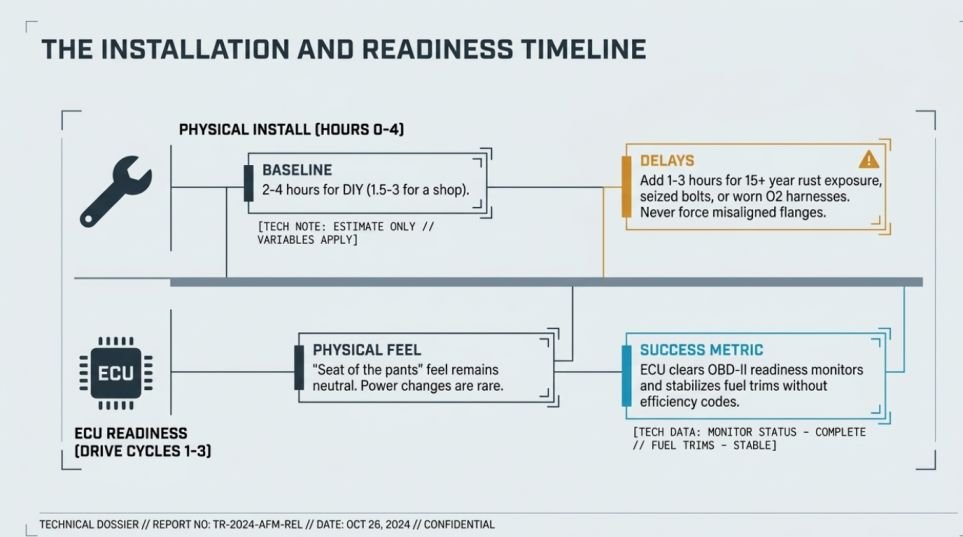
BlueFlow catalytic converters generally install like most direct-fit aftermarket units, but fitment can vary by engine family, exhaust routing, and emissions hardware (especially oxygen sensor placement). Expect a straightforward swap when you order the exact application match, but plan extra time if your car uses heat shields, multiple hangers, or a pre-cat O2 sensor that is sensitive to thread depth and spacing.
Required Tools And Typical Install Time
Most installs are basic exhaust work, and that is where BlueFlow units should shine if the part matches your vehicle. Typical time is 2 to 4 hours for an experienced DIYer, 1.5 to 3 hours for a shop, and longer if rust locks bolts or if oxygen sensor harnesses get damaged.
Common tools and supplies are needed for the work.
| Vehicle condition | Time impact | What usually causes it |
|---|---|---|
| Fresh hardware access | Near baseline | Hangers and clamps come apart cleanly |
| 15+ years or salt exposure | +1 to 3 hours | Frozen bolts, broken studs, seized O2 sensors |
| Sensor harness wear | +0.5 to 2 hours | Wire insulation cracking near the connector or shield |
Sensor Placement And Mounting Considerations
Oxygen sensor location is the biggest “gotcha” when swapping any aftermarket catalytic converter. Before you remove the old unit, confirm whether your vehicle has one or more sensors per bank (upstream and downstream), then verify the BlueFlow part’s sensor bore locations and bung angles match what your exhaust needs.
In practice, a mismatch shows up as wiring strain or an O2 sensor that does not thread in smoothly. Mounting considerations include sensor clearance, correct routing, and alignment with the factory exhaust.
Insider tip: Test-fit the converter with the clamps loose before you tighten anything. This prevents you from forcing misaligned flanges and ripping an O2 sensor harness out of its natural route.
Common Fitment Issues And Troubleshooting
Most problems come from ordering the wrong variant or forcing an installation to “make it fit.” If the converter sits cocked, the flange gap is uneven, or the hangers do not line up with the factory rubber mounts, stop and re-check part number accuracy and exhaust section compatibility.
Typical troubleshooting includes checking the part number, flange alignment, hanger position, and sensor wiring before tightening the assembly.
Professional help is worth it if you find multiple cracked exhaust flanges, an O2 sensor harness with broken leads, or repeated exhaust leaks after “torquing it down,” because you can quickly end up chasing codes and rework.
Cost Analysis And Buying Considerations
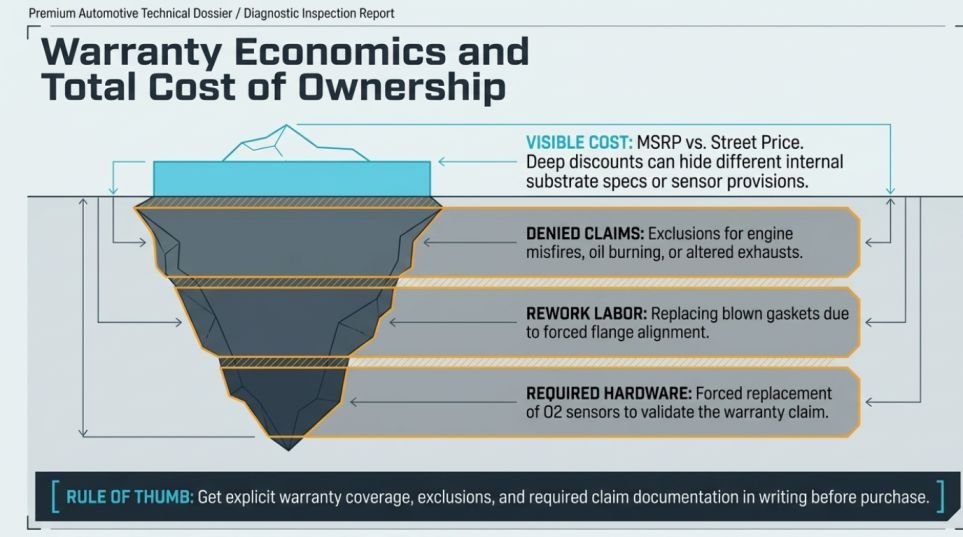
Street pricing for catalytic converters varies wildly by vehicle fitment (exact exhaust routing, flange style, and O2 sensor configuration), so the only “fair” comparison is the final shipped price for your specific part number. BlueFlow pricing can look attractive on paper, but value depends on warranty terms, how easy it is to confirm you bought the correct substrate for your application, and how long it lasts under your driving conditions.
Price Reality: MSRP Versus What You Actually Pay
For most aftermarket exhaust components, MSRP tends to sit above what you see online, so the practical target is the typical street price from reputable sellers (major parts retailers or established marketplaces with clear return policies). When BlueFlow listings show a big discount versus OEM, that can mean more than “cheap labor”; it can mean a different catalyst coating/substrate spec, different sensor provisions, or different warranty coverage.
Vehicle fitment is the budget swing factor. A direct-fit unit for a common late-model crossover can sell for much less than a complex multi-piece setup on certain European models or trucks with distance-sensing O2 setups. If your vehicle uses multiple oxygen sensors or has a close-coupled catalyst, the “cheap” option can turn expensive if you end up needing additional sensor spacers, gaskets, or an incorrect configuration.
| Cost factor | What to check on the listing | Why it changes your total bill | Practical buying target |
|---|---|---|---|
| MSRP vs street price | Part number match, seller reputation, return window | Discounts can hide different internal configurations | Compare final price, not MSRP banners |
| Warranty value | Coverage length, proof requirements, exclusions | Warranty can offset premature failure costs | Prefer clear terms you can document |
| Maintenance impact | Compatibility with emissions tests and O2 behavior | Wrong-fit catalysts can trigger relight or codes | Verify sensor count and placement |
| Authenticity | Packaging, labeling consistency, seller traceability | Counterfeits can fail quickly or cause drivability issues | Buy from sellers with verifiable supply chains |
Warranty And Maintenance Economics
Warranty coverage is where the “cheap converter” story usually breaks. A converter may cost less up front, but if the warranty requires strict proof, limits coverage due to missing maintenance records, or excludes failure causes tied to exhaust leaks, misfires, or upstream O2 faults, you can still pay for the replacement.
Maintenance costs around the converter can matter just as much as the part price. If your vehicle has a history of misfires, fuel trims that run hot, or exhaust leaks before the catalyst, replacing the converter without fixing the root cause can shorten the lifespan and create repeat repair bills.
Shop reality: When a catalytic converter fails early, the bill rarely ends with the converter. If scan data shows O2 sensor issues, misfire codes, or persistent fuel trim problems, the converter cost gets multiplied.
Authenticity Verification And Counterfeit Red Flags
Counterfeit catalytic converters are usually a “time bomb” purchase because they may fit poorly, have incorrect sensor provision, or be built with inferior substrate that doesn’t meet the expected emissions performance. The biggest red flag is a listing that provides vague fitment guidance, missing part-number matching, or inconsistent photos of the welds, stampings, and sensor ports compared to known catalogs for your vehicle.
Authenticity checks you can do before buying include confirming the exact part number on the box matches the listing, verifying that the seller shows clear returns, and avoiding listings that lack brand labeling details or show mismatched branding on the product images. When a deal looks too low for your specific application, assume you might be buying risk, not savings.
For BlueFlow specifically, treat warranty documentation and part-number specificity as the deciding factors on value. If you cannot clearly verify the warranty terms and the exact configuration for your exhaust system, the safer move is often to spend a bit more with a seller that supports returns and provides documentation you can use if a failure happens.
Quick Summary
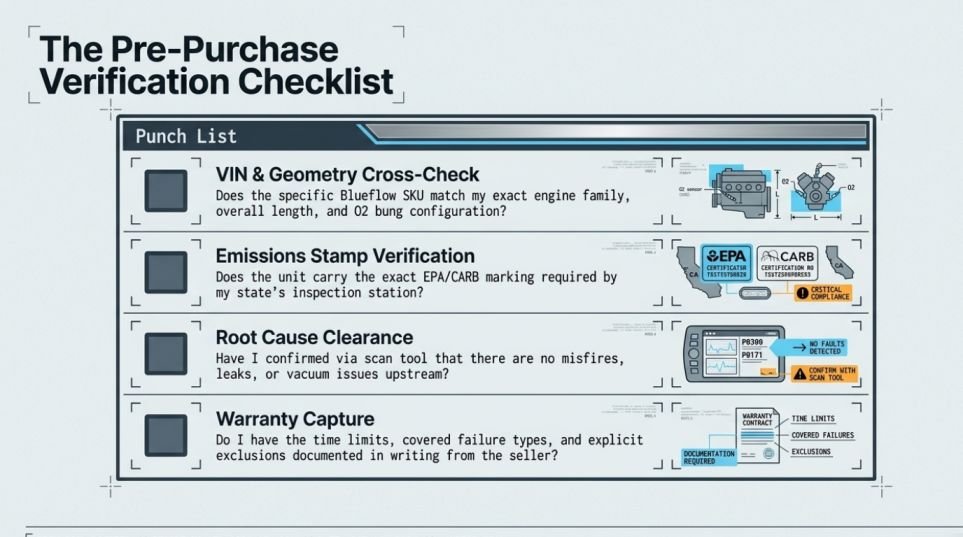
| What to check | Why it matters | What “good” looks like |
|---|---|---|
| CARB/EPA listing and correct part number | Ensures compliance and correct application | Listed for your exact year, make, and engine |
| Fitment, flanges, and weld/low-leak joints | Prevents leaks and stress cracks | Clean mating, no forcing, tight seal |
| O2 sensor bung placement and count | Avoids sensor clearance and code risk | Matches factory sensor locations |
| Backpressure and restriction behavior | Reduces drivability and code issues | Restriction close to what the engine expects |
| Warranty terms tied to your failure type | Protects you if it fails early | Clearly stated length and coverage for your symptom |
Frequently Asked Questions
Does Blueflow Make Good Catalytic Converters For Passing Emissions?
Maybe, but verify the exact part’s certification and fitment for your state. With limited reliable, spec-level information surfaced during research, treat emissions performance as unconfirmed until the required certification markings and application details are documented.
Are Blueflow Catalytic Converters OEM Quality Or More Like An Aftermarket Value Option?
Blueflow is generally positioned as an aftermarket brand, so you should expect variation in metallurgy, substrate size, and warranty terms versus OEM. Before buying, compare warranty length and confirm the converter design matches your engine family and emissions system.
How Can I Tell If A Blueflow Catalytic Converter Is The Right One For My Car?
Use your VIN or the exact engine code, not just the year, make, and model. Cross-check the Blueflow part number against your vehicle’s exhaust configuration, since the wrong inlet and outlet angles or incorrect monitor setup can cause fitment and performance issues.
What’s The Most Common Mistake When People Install Blueflow Catalytic Converters?
Installing the wrong part type for the problem is the big one, especially if an O2 sensor fault or misfire caused the catalyst damage. If you already have codes, get the cause diagnosed first, then replace the converter; otherwise, you can end up with a premature failure.
Will A Blueflow Catalytic Converter Fix A Check Engine Light If I Only Replace The Converter?
Not always. If the root cause is upstream oxygen sensor contamination, fuel trims, an exhaust leak, or a drivability issue, the light can return even with a new converter, so confirm readiness monitors and underlying codes before spending money.
What Should I Look For To Judge The Warranty And Reliability Of A Blueflow Catalytic Converter?
Prioritize warranty terms and exclusions, then installation requirements. If the warranty requires specific installation procedures, torque specs, or the replacement of related sensors, skipping those steps can void coverage, even if the converter is “correct” on paper.
- 2017 Dodge Grand Caravan Transmission Fluid Capacity: Dodge Grand Caravan Transmission - September 27, 2026
- How Many Gallons Of Transmission Fluid Does A 2017 Gmc Yukon 5.3 Slt Xl Hold: How Many - September 26, 2026
- 17 Gmc Yukon Transmission Fluid Capacity V8 (8l90) Quarts/liters - September 26, 2026