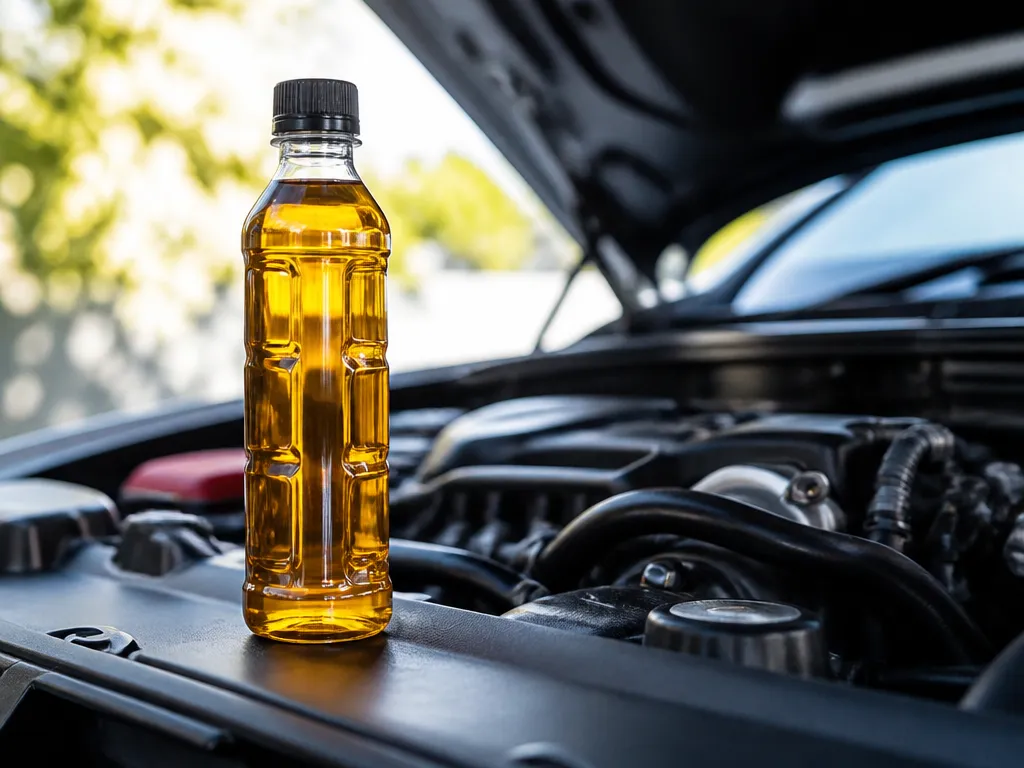
Direct injection engines suffer from heavy carbon buildup on intake valves because fuel no longer washes over them. You might be considering an oil additive to solve this or prevent Low Speed Pre-Ignition, commonly known as LSPI. Most drivers hope these bottles offer a simple fix for performance loss, but the reality involves specific chemical interactions and strict engine oil standards.
Oil additives for direct injection engines offer zero cleaning benefit for intake valves because motor oil does not touch the intake track. While specific additives can help prevent LSPI in turbocharged engines, you must ensure your oil meets the API SP or ILSAC GF-6A standards to maintain your warranty.
Oil Additive For Direct Injection: Do They Work?
Oil additives do not effectively clean the intake valves of GDI engines; they can improve oil film stability and may slightly lower the chance of low‑speed pre‑ignition, but they cannot replace a dedicated valve‑cleaning procedure.
GDI engines spray fuel directly into the combustion chamber, so the intake valves never see the cleansing action of fuel. Over time, incomplete combustion deposits soot and oil ash on the valve crowns, especially in short‑trip driving where the engine never reaches optimal temperature. The result is a gradual restriction that can cause rough idle, loss of power, and higher emissions.
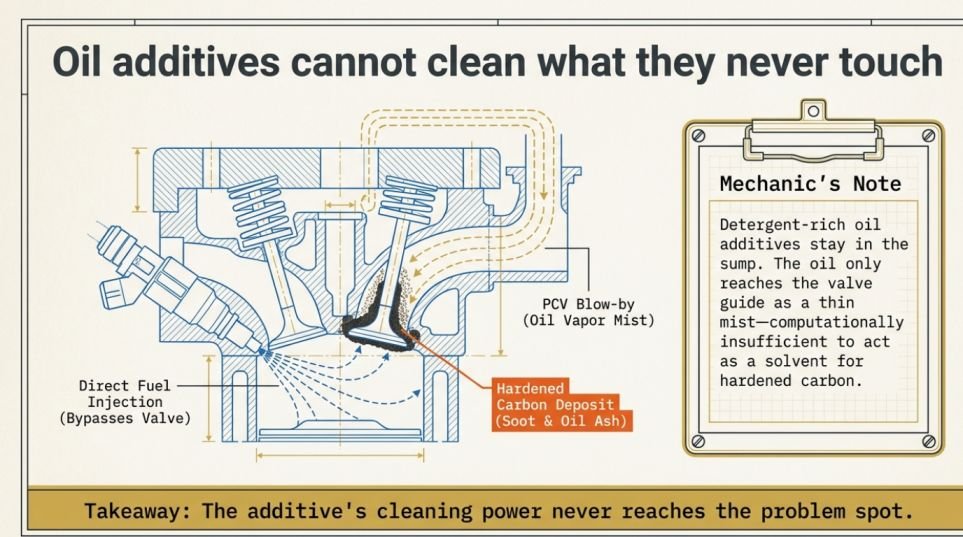
Detergent‑rich oil additives stay dissolved in the oil sump. The oil reaches the valve guide area only as a thin mist, which is insufficient to dissolve the hardened carbon that builds up on the valve surface. Consequently, the additive’s cleaning power never reaches the problem spot in any meaningful amount.
What Oil Additives Actually Do
Typical formulations contain zinc dialkyldithiophosphate (ZDDP) for wear protection and polyetheramine detergents for sludge control. These ingredients help keep the oil clean and protect metal surfaces inside the crankcase, but they do not act as a solvent for valve carbon.
Why Direct Cleaning Still Matters
Effective valve cleaning requires the cleaning agent to contact the valve face directly. Methods such as fuel‑system cleaning additives, walnut‑shell blasting, or manual scraping achieve this by delivering solvents or abrasive media straight to the valve.
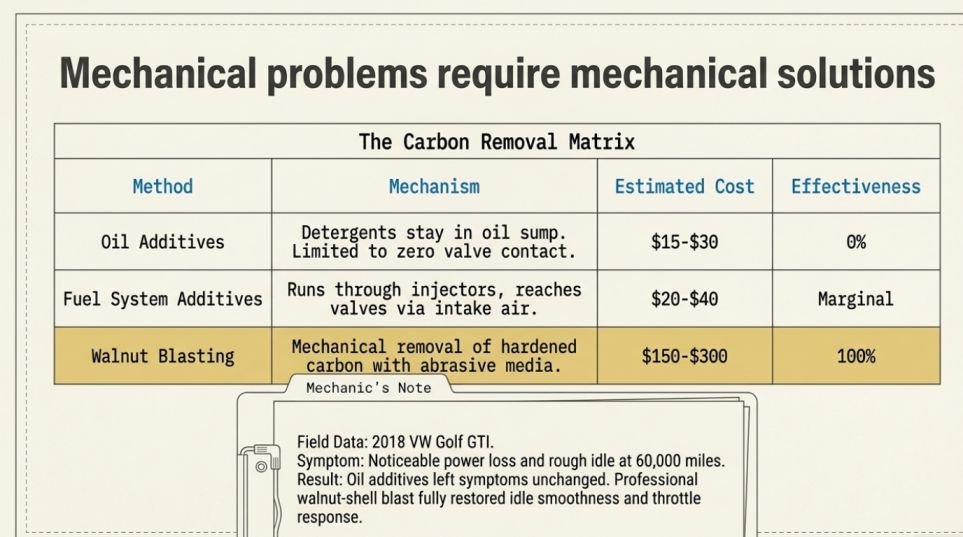
| Method | How It Works | Typical Cost |
|---|---|---|
| Oil additive | Detergents stay in oil, limited valve contact | $15‑$30 per bottle |
| Fuel system additive | Runs through injectors, reaches valves via intake air | $20‑$40 per bottle |
| Walnut blasting | Mechanical removal of carbon with abrasive media | $150‑$300 (shop labor) |
For example, a 2018 Volkswagen Golf GTI with noticeable power loss after 60,000 miles benefited from a professional walnut‑shell blast, restoring idle smoothness and throttle response. An oil additive alone left the symptoms unchanged.
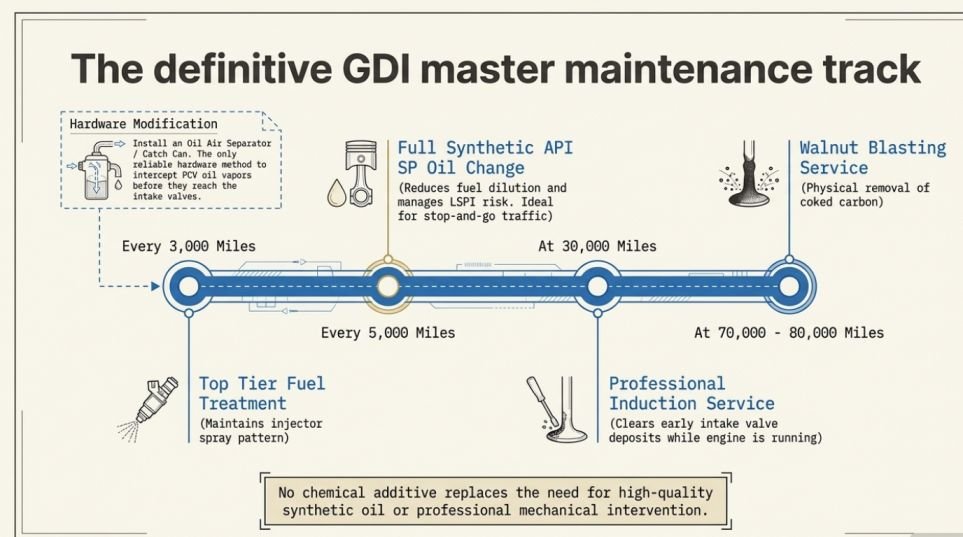
Mechanic’s tip: Use a high‑ZDDP oil (≥1200 ppm) if your turbocharged GDI engine shows any signs of LSPI, but schedule a valve‑cleaning service every 70,000 – 80,000 miles to keep the intake side healthy.
Bottom line: oil additives can support overall engine health, but they are not a shortcut for intake‑valve carbon removal. Trust a proper cleaning method when you see the classic symptoms, and keep up with regular oil changes using the right viscosity and ZDDP level.
GDI Blow-by And Oil Contamination Explained
Blow-by consists of high-pressure combustion gases and unburned fuel that escape past the piston rings into the crankcase. This mixture aerosolizes motor oil, creating a fine mist of oil vapor that the Positive Crankcase Ventilation (PCV) system must evacuate to prevent internal pressure buildup.
The PCV System And Intake Deposits
Direct injection engines lack the fuel spray over the intake valves that cleans port-injected engines. In a typical GDI setup, the PCV system pulls this oil-heavy crankcase vapor directly into the intake manifold to be burned in the combustion chamber. Since no fuel washes over the back of the valves, that oil vapor sticks to the hot valve stems and seats.
Mechanic Tip: Most modern GDI engines utilize an oil air separator or a catch can to intercept these vapors before they reach the intake. Installing a quality catch can is the only reliable way to stop oil from reaching the valves.
Why Oil Additives Struggle With Deposits
The primary concern with oil contamination in GDI engines is the degradation of the oil itself. Fuel dilution thins the lubricant, which reduces its ability to protect the turbocharger bearings and timing chain tensioners. While some additives claim to stabilize oil viscosity, they cannot reverse the physical accumulation of carbon on the intake tract components.
Preventing LSI with the Right Motor Oil
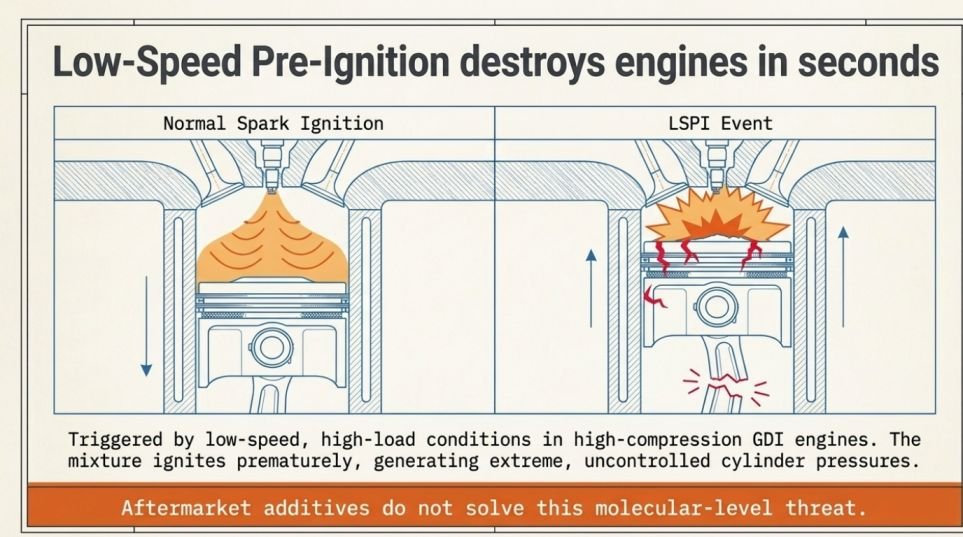
Low-Speed Pre-Ignition (LSPI) occurs when the air-fuel mixture in a direct injection engine ignites prematurely during low-speed, high-load driving conditions. This uncontrolled combustion event generates extreme cylinder pressures that can snap connecting rods or shatter piston ring lands in seconds.
Modern GDI engines are prone to this because of high compression ratios and the way fuel is injected directly into the combustion chamber. Rather than relying on aftermarket additives to mask the issue, the primary defense is using a motor oil formulated to suppress these ignition events at the molecular level.
Api Sp And Ilsac Gf-6a Standards
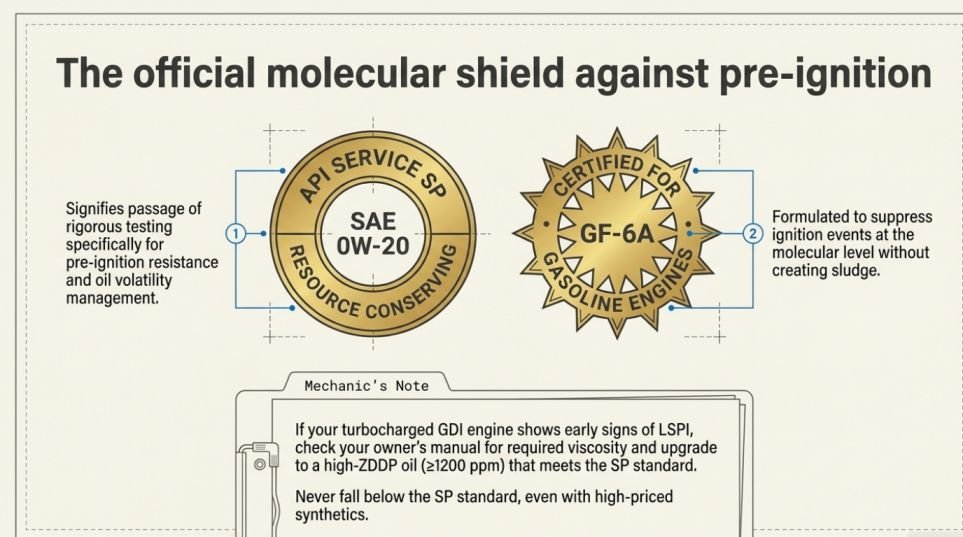
The American Petroleum Institute (API) introduced the SP service category specifically to address the LSPI challenge in turbocharged direct injection engines. Any oil bottle displaying the API SP “donut” or the ILSAC GF-6A “starburst” logo signifies that the lubricant has passed rigorous testing for pre-ignition resistance.
Mechanic’s Tip: Check your owner’s manual for the required viscosity and the specific API certification. If you drive a turbo GDI vehicle, never use oil that falls below the SP standard, even if it is a high-priced synthetic.
Why Oil Chemistry Beats Aftermarket Additives
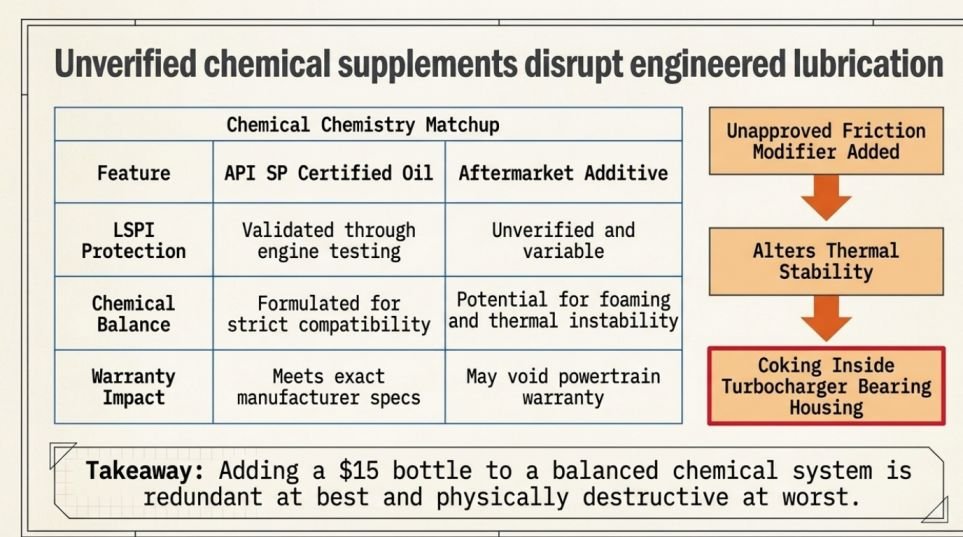
Engineers design motor oil as a balanced chemical system where detergents, dispersants, and anti-wear agents work in harmony. Adding a third-party chemical supplement to your crankcase disrupts this delicate balance and can actually increase the likelihood of LSPI by introducing incompatible metallic compounds.
| Feature | API SP Certified Oil | Aftermarket Oil Additive |
|---|---|---|
| LSPI Protection | Validated through engine testing | Unverified/Variable |
| Chemical Balance | Formulated for compatibility | Potential for interference |
| Warranty Impact | Meets manufacturer specs | May void powertrain warranty |
Manufacturers calibrate their engine management systems to work with the specific additive packages found in certified oils. Using the correct oil ensures your engine receives the intended protection against both LSPI and premature chain wear without risking secondary damage to the catalytic converter or sensors.
Risks Of Using Aftermarket Oil Additives
Aftermarket oil additives often disrupt the delicate chemical balance of modern engine oils, which are already engineered to meet specific manufacturer performance standards. Introducing unverified compounds can cause base oil degradation or create sludge that clogs sensitive oil passages in direct injection systems.
Chemical Interference And Performance
Modern motor oils rely on complex additive packages that include detergents, dispersants, and friction modifiers carefully balanced for high-pressure environments. Adding a supplemental bottle of chemicals changes the concentration of these elements, potentially causing the oil to foam or lose its thermal stability.
Pro Tip: Most high-quality full synthetic oils already contain the exact blend of additives your engine needs to resist the specific stresses of direct injection. Adding extra chemicals is redundant at best and harmful at worst.
Warranty Implications
Automotive manufacturers design their engines to operate with oils that meet specific industry certifications, such as API SP or ILSAC GF-6. Using unapproved additives can provide a pathway for a manufacturer to deny a warranty claim if a mechanical failure occurs.
| Risk Factor | Potential Impact |
|---|---|
| Chemical Imbalance | Reduced oil life and internal component wear |
| Warranty Denial | High out-of-pocket repair costs |
| Sludge Buildup | Oil starvation to the turbocharger or timing chain |
Stick to the oil viscosity and specification listed in your owner’s manual to ensure your engine remains protected under factory coverage. If you suspect your engine needs extra protection, switch to a premium brand of synthetic oil that carries the official manufacturer approval for your specific vehicle.
Effective Strategies For GDI Engine Health
Direct injection engines require high-quality, full-synthetic motor oil meeting the latest API SP or ILSAC GF-6 standards to prevent Low-Speed Pre-Ignition (LSPI) and internal sludge formation. These oils contain specific detergent and dispersant packages designed to handle the unique thermal stresses and soot loading common in high-pressure fuel systems.
Preventative Maintenance Protocols
Carbon buildup occurs on the intake valves because fuel no longer washes over them, making the choice of oil and fuel additives critical for long-term reliability. Relying on specialized maintenance habits provides better protection than any single aftermarket additive bottle.
Mechanic’s Note: If you drive primarily in stop-and-go traffic, your engine runs cooler and accumulates carbon faster. A shorter 5,000-mile oil change interval is a cheap insurance policy compared to the cost of a cylinder head cleaning.
Recommended Maintenance Schedule
| Task | Frequency | Benefit |
|---|---|---|
| Full Synthetic Oil Change | 5,000 Miles | Reduces fuel dilution and LSPI risk |
| Top Tier Fuel Treatment | Every 3,000 Miles | Maintains injector spray pattern |
| Induction Service | 30,000 Miles | Clears intake valve deposits |
Following this schedule keeps the fuel delivery system efficient and limits the amount of blow-by gases that contribute to intake valve coking. Skipping these steps forces the engine computer to adjust fuel trims, which eventually leads to poor fuel economy and potential misfire codes.
Quick Summary
Direct injection engines are prone to heavy carbon buildup on intake valves because fuel no longer washes over them to provide a cleaning effect. While many drivers search for oil additives to resolve this performance loss, these products stay within the crankcase and never contact the intake track. Additives might contain ZDDP for wear protection or detergents to manage sludge, but they cannot remove the hardened carbon deposits that accumulate on valve stems. Using aftermarket chemicals in your oil also carries the risk of voiding your powertrain warranty if a failure occurs.
To prevent LSPI in turbocharged engines, you must prioritize using motor oil that meets API SP or ILSAC GF-6A standards rather than relying on aftermarket additives. Professional walnut blasting remains the only effective method for removing carbon deposits, typically costing between 150 and 300 dollars. Mechanics recommend scheduling this valve cleaning service every 70,000 to 80,000 miles to maintain engine health. Ultimately, no oil additive replaces the need for high-quality synthetic oil or professional mechanical intervention when you experience symptoms like rough idle or a loss of power.
| Method | Mechanism | Estimated Cost |
|---|---|---|
| Oil Additive | Stays in sump, limited valve contact | 15 to 30 dollars |
| Fuel System Additive | Reaches valves via intake air | 20 to 40 dollars |
| Walnut Blasting | Mechanical removal with abrasive media | 150 to 300 dollars |
Frequently Asked Questions
Can An Oil Additive Actually Prevent Carbon Buildup In Direct Injection Engines?
No, oil additives do not prevent carbon buildup on the intake valves because in direct injection engines, fuel does not wash over the valves. You should focus on using API SP or ILSAC GF-6 rated motor oil, which is specifically formulated to reduce low-speed pre-ignition and minimize oil volatility that contributes to deposits.
Will Adding An Oil Supplement Void My New Car Warranty?
Most manufacturers state that using aftermarket additives is not recommended and could potentially impact your coverage if the product causes a failure. Always check your owner’s manual for the specific fluid requirements, as modern direct injection systems are sensitive to any deviation from manufacturer specifications.
Are There Oil Additives That Help With The Fuel Dilution Common In Direct Injection?
While some products claim to improve seal integrity, they cannot fix the fundamental design trait where raw fuel bypasses piston rings during cold starts. The best way to manage fuel dilution is to change your oil every 3,000 to 5,000 miles rather than relying on additives to extend the service life of the lubricant.
Do High Detergent Oil Additives Help Clean Direct Injection Intake Ports?
Additives in the crankcase oil cannot clean intake ports because oil does not circulate through the intake tract. If you want to clean your intake valves, you need to use a professional induction service or a direct injection cleaner that is sprayed directly into the intake manifold while the engine is running.
Is It Safe To Use A Friction Modifier Additive In A Turbocharged Direct Injection Engine?
It is generally risky, as turbochargers rely on very specific oil viscosity and additive packages to handle extreme heat without breaking down. Using an unapproved friction modifier can alter the thermal stability of your oil, which may lead to coking inside the turbocharger bearing housing.

- 2017 Dodge Grand Caravan Transmission Fluid Capacity: Dodge Grand Caravan Transmission - September 27, 2026
- How Many Gallons Of Transmission Fluid Does A 2017 Gmc Yukon 5.3 Slt Xl Hold: How Many - September 26, 2026
- 17 Gmc Yukon Transmission Fluid Capacity V8 (8l90) Quarts/liters - September 26, 2026