

Direct answer: a 2012 Audi A3 TDI with the 6-speed DSG (02E) automatic takes about 5.2 to 5.5 L (5.5 to 5.8 US qt) for a normal fluid change, and about 6.9 to 7.2 L (7.3 to 7.6 US qt) for a completely dry fill, using Audi DSG fluid G 052 182 A2. Those figures come from Audi’s 2012 A3 fluid capacity chart for North America.
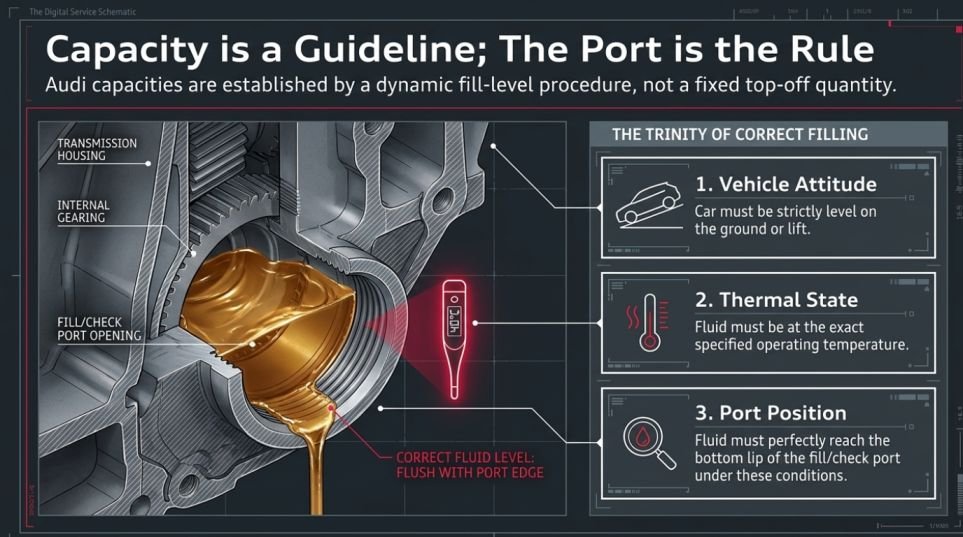
The catch is that the quantity is only a starting point. A DSG is filled to a level set at a specific fluid temperature, so you buy to the capacity but finish by the level check, not by the last bottle. Below you will find the amounts, how to confirm which gearbox your car has, the right fluid, and a step-by-step overview of the job.
How much transmission fluid does a 2012 Audi A3 TDI take?
For the 6-speed DSG that Audi lists for the 2012 A3 TDI in North America, the capacities are:
| What you are doing | Amount (Audi chart) | Notes |
|---|---|---|
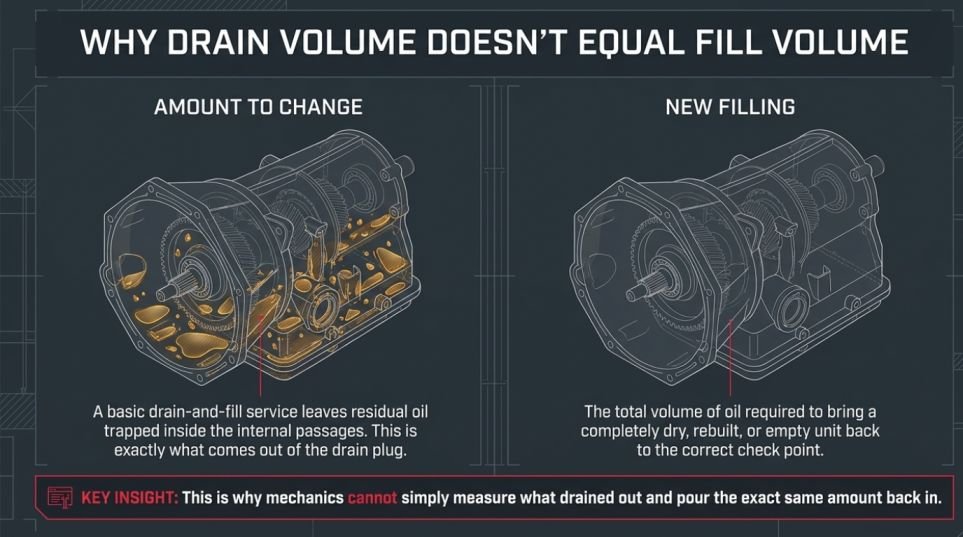
| Fluid change (drain and refill) | About 5.2 to 5.5 L (5.5 to 5.8 US qt) | What a normal service needs. Fluid left in the unit is why it is less than the full capacity. |
| New fill (dry, after a rebuild or replacement) | About 6.9 to 7.2 L (7.3 to 7.6 US qt) | Only applies when the transmission is empty. |
| Fluid specification | Audi part no. G 052 182 A2 | DSG fluid. Not the same as the fluid for the newer 7-speed S tronic. |
How much should you actually buy? Independent DSG shops say that in practice only about 4.5 to 5 L comes out during a service, because some fluid stays in the unit. A common 5 L service kit can therefore leave you short when you set the level. Buy roughly 6 L so you can finish the level check without a second trip, and keep any leftover sealed.
Reality check: do not rely on a single number from a forum or a generic parts site. Confirm the gearbox type first, then use the capacity for that gearbox and set the final level by the procedure below.
Which gearbox does your 2012 Audi A3 TDI have?
In the US market, the 2012 A3 TDI was sold with the 6-speed DSG (S tronic, gearbox family 02E), and that is the gearbox the figures above apply to. Other markets also had manual gearboxes, and the oil quantity differs by gearbox code. To confirm what you have:
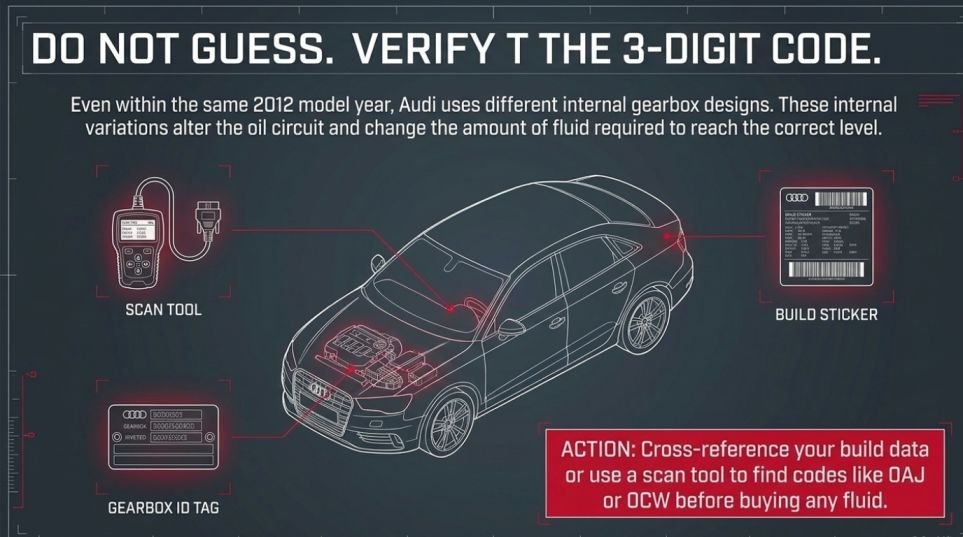
- Look for the three-character gearbox code on the transmission ID label or in the car’s build data and service documents tied to your VIN.
- Check whether the car has a conventional gear lever with a clutch pedal (manual) or a pedal-less automatic with a paddle or S tronic badge (DSG).
- If the code and the vehicle do not agree with the table above, stop and check the repair manual before ordering fluid.
Manual gearbox versions (non-US markets)
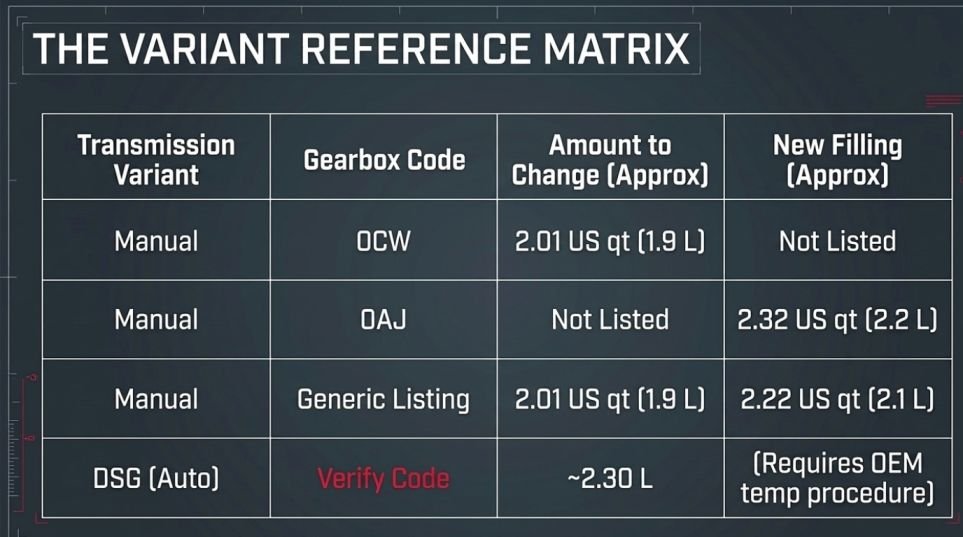
Some online listings quote manual gearbox oil changes of roughly 1.9 L (about 2.0 US qt) for a code such as 0CW and roughly 2.2 L (about 2.3 US qt) for a code such as 0AJ. I could not confirm these against an Audi chart, so treat them as unverified and check your own code in the factory documentation before you buy. A manual gearbox is normally filled until oil reaches the fill plug opening.
What fluid does a 2012 Audi A3 TDI DSG use?
Audi’s 2012 chart lists G 052 182 A2 as the fluid for the A3’s 6-speed DSG (02E). The 7-speed S tronic used in other Audi models calls for a different fluid (G 052 529 A2), so do not assume the two are interchangeable just because both are “DSG” fluids. A DSG service normally also includes a new filter and O-rings, so buy those with the fluid.
Engine oil is a separate question. Audi lists VW 507 00 for the A3 TDI’s 2.0L diesel engine. If you are servicing the car anyway, our guide on whether there is a different 5W-30 for diesel engines explains what that spec means.
How to change the DSG fluid: step-by-step overview
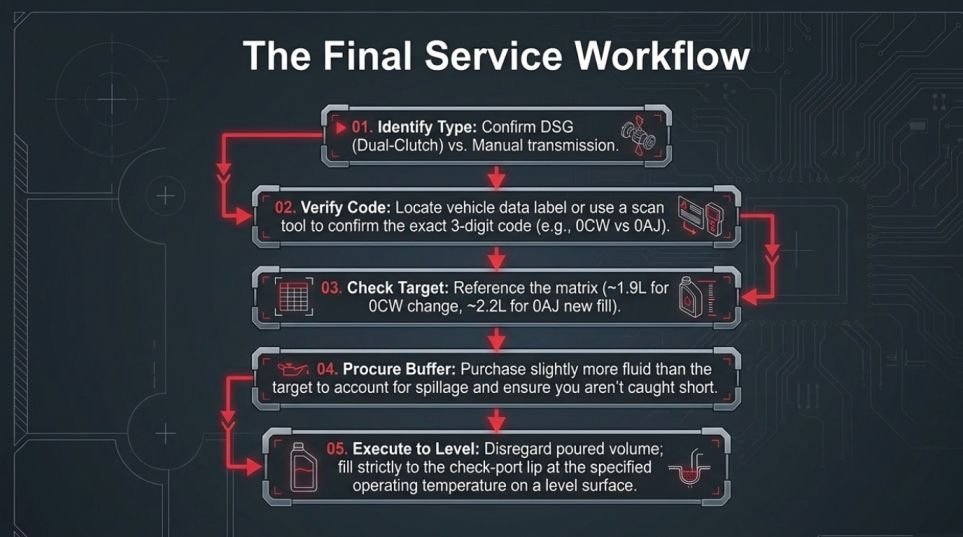
This is an overview, not a replacement for the repair manual. A DSG level check depends on measuring the fluid temperature, which normally needs a scan tool.
- Prepare. Confirm the gearbox, then gather about 6 L of G 052 182 A2, a filter, O-rings and new seals for the drain and level plugs.
- Raise and secure the car on level ground and remove the underbody cover. The fluid should be warm, not hot, so you do not get burned.
- Drain the old fluid and replace the filter and O-rings.
- Refill with fresh fluid, measuring how much goes in.
- Set the level. With the engine running and the fluid at the temperature given in the repair manual, check the level at the check/overflow plug. The manual specifies the temperature window (a scan tool reads it), so do not skip this.
- Refit the plug with a new seal to the specified torque, refit the cover, and take a short test drive.
Safety note: work on a level surface with proper stands, and keep your face and hands out of the splash path when loosening plugs. Hot fluid can burn badly.
Common mistakes to avoid
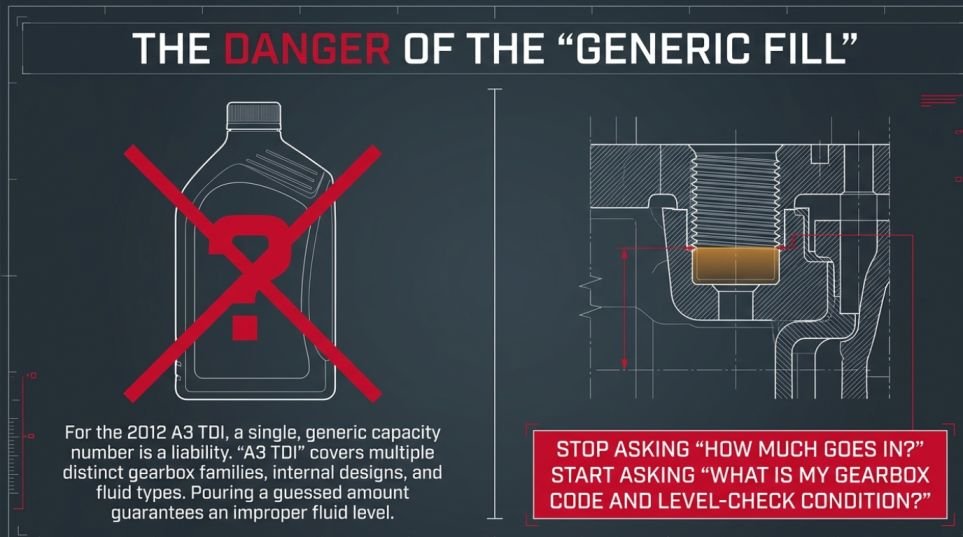
- Using a generic capacity. The gearbox type changes the quantity and the fluid.
- Treating “amount to change” as the final fill. Drain-and-fill leaves fluid behind, so the level check is what decides the final amount.
- Using the wrong fluid. G 052 182 A2 is for this 6-speed DSG; the 7-speed uses a different fluid.
- Skipping the temperature check. A DSG level set at the wrong temperature will be wrong once it warms up.
- Buying exactly one kit and stopping when it runs out. Buy a little extra so you can finish the level check.
Why overfilling and underfilling both cause problems
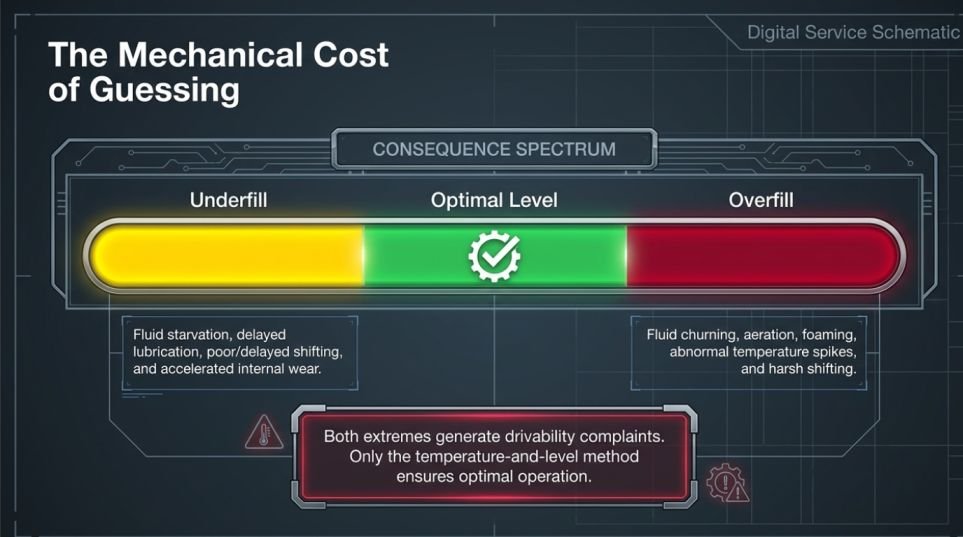
Overfilling can let the fluid foam and run hot, which can lead to harsh or delayed shifts. Underfilling risks poor lubrication and cooling of the clutch packs. Either way, the symptom people notice first is rough or hesitant shifting.
Tips for success
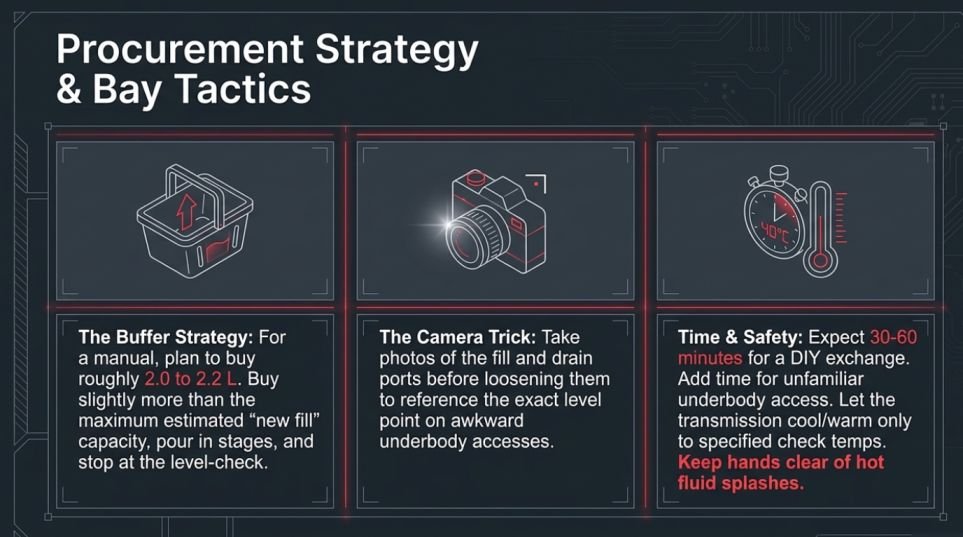
Take photos of the drain and fill plug locations before you loosen anything, so you know where the level point lives. Write down your gearbox code and fluid part number before ordering, and keep the receipt for your service records. If you do not have a scan tool that can read DSG fluid temperature, have a shop set the level for you.
Quick summary
A 2012 Audi A3 TDI with the 6-speed DSG takes about 5.2 to 5.5 L (5.5 to 5.8 US qt) for a fluid change and about 6.9 to 7.2 L (7.3 to 7.6 US qt) for a dry fill, using Audi fluid G 052 182 A2. Buy about 6 L, replace the filter and O-rings, and set the final level at the correct fluid temperature rather than by the quantity poured.
| Gearbox | Fluid change | Dry fill | Fluid |
|---|---|---|---|
| 6-speed DSG (02E) | About 5.2 to 5.5 L (5.5 to 5.8 US qt) | About 6.9 to 7.2 L (7.3 to 7.6 US qt) | G 052 182 A2 |
| Manual (non-US, by code) | Unverified; confirm by gearbox code | Unverified | Confirm by gearbox code |
Frequently asked questions
How much DSG fluid does a 2012 Audi A3 TDI hold?
Audi lists about 6.9 to 7.2 L (7.3 to 7.6 US qt) for a dry fill and about 5.2 to 5.5 L (5.5 to 5.8 US qt) for a normal fluid change on the 6-speed DSG.
What fluid does a 2012 Audi A3 TDI DSG use?
Audi lists fluid part number G 052 182 A2 for the A3’s 6-speed DSG. The 7-speed S tronic uses a different fluid, so do not mix them up.
How many liters should I buy for a DSG fluid change?
About 6 L is a safe purchase. Shops report that roughly 4.5 to 5 L comes out in practice, but you need extra to set the level properly.
Does a 2012 Audi A3 TDI come with a manual gearbox?
Some markets did, but in the US the TDI was sold with the 6-speed DSG. Manual gearboxes have different capacities by code, so confirm your gearbox code before buying fluid.
Should I replace the filter when I change the DSG fluid?
Yes. A DSG service normally includes a new filter and O-rings, which are sold together in service kits.
What is the biggest mistake people make?
Pouring a guessed amount instead of setting the level at the correct fluid temperature. The capacity tells you what to buy; the level check tells you when to stop.
Can I use the wrong amount of fluid and drive on it?
Avoid it. Too much can foam and run hot, and too little can starve the clutches. Both can cause poor shifting and extra wear, so correct it before driving much.

- Top 10 Ranking Tire Brand for Minivan: Reviewed 2026 - October 5, 2026
- Model Y Tesla Long Range Automatic Wagon Tyre Fitment And Ratings - October 3, 2026
- What Is The Benefit Of Larger Rear Tyres On A Zero-turn Mower - October 3, 2026