BMW 5W-30 engine oil — what you need to know first
BMW 5W-30 engine oil is a full synthetic lubricant built to meet BMW’s Longlife-01 (LL-01) or Longlife-04 (LL-04) approval, depending on whether your car runs on gas or diesel. It’s the factory-fill grade for most BMW gasoline engines built between roughly 2001 and 2014, including the M54, N52, N54, and N55. Newer turbo models have mostly moved to 0W-20 or 0W-30, so the first thing to check is whether your BMW even calls for 5W-30 anymore.
Key Takeaways
- LL-01 is BMW’s baseline gas-engine spec since 2001; LL-04 covers diesels and low-SAPS emission systems.
- 5W-30 is correct for M54, N52, N54, and N55 engines, and most E46/E9x-era cars. Newer B48/B58 engines typically specify 0W-20 or 0W-30 instead.
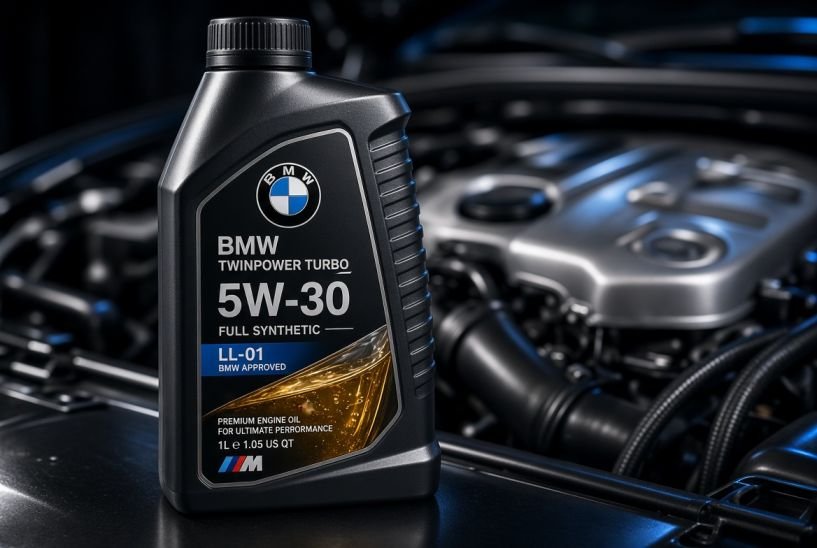
- Genuine BMW TwinPower Turbo 5W-30 is supplied by Castrol in North America; check the approval code stamped on the bottle, not just the brand name.
- Castrol EDGE 5W-30 (LL-04) and Liqui Moly 5W-30 are the two most-cited aftermarket alternatives among long-term BMW owners.
- Common complaints center on oil consumption in direct-injection turbo engines, LSPI concerns with older LL-01 formulas, and confusion after BMW switched dealer suppliers from Castrol to Shell for some product lines.
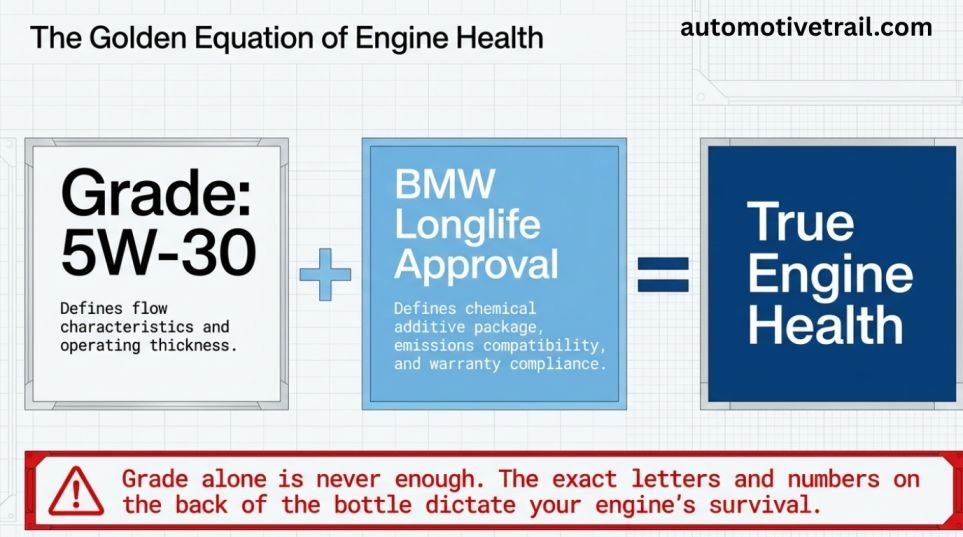
- Always confirm the approval code on the bottle matches your owner’s manual. Grade alone (5W-30) isn’t enough.
Is 5W-30 even the right oil for your BMW
This is the question that trips up more buyers than anything else. BMW has changed its factory oil spec multiple times as engines evolved, and 5W-30 isn’t universal across the lineup anymore.
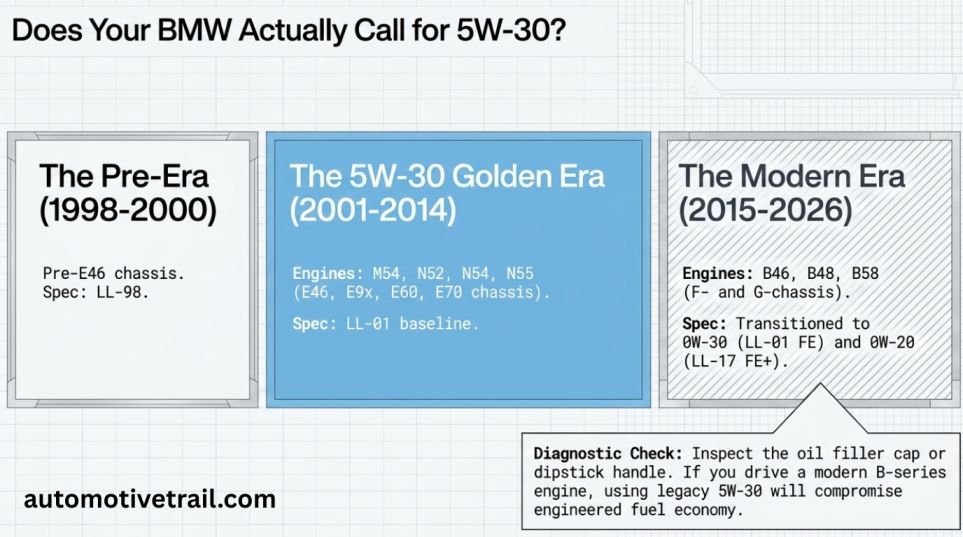
Engines from the 2001 to roughly 2014 era- the M54 inline-six, the N52 naturally aspirated six, and the turbocharged N54 and N55- were all designed around 5W-30 under LL-01. If you drive an E46, E9x 3 Series, E60 5 Series, E70 X5, or early F-chassis car with one of those engines, 5W-30 is still the correct baseline grade.
Newer turbo fours and sixes, the B46, B48, and B58 engines found in F- and G-chassis cars from around 2015 onward, generally spec 0W-30 under LL-01 FE, or 0W-20 under the newer LL-17 FE+ spec. Running 5W-30 in one of these isn’t dangerous in a pinch, but it’s not what the engine was calibrated for, and it won’t match the fuel-economy numbers BMW engineered around the thinner factory fill.
Check your oil cap or dipstick handle first. BMW stamps the recommended grade directly on the cap in most models. If in doubt, the owner’s manual settles it.
BMW’s oil specifications explained (LL-01 vs LL-01 FE vs LL-04)
| Engine | Years | Oil Grade | BMW Approval | Oil Brand / Product | Best Use | Est. Price | Key Benefits |
|---|---|---|---|---|---|---|---|
| M54 | 2000–2006 | 5W-30 | LL-01 | BMW TwinPower Turbo 5W-30 | Warranty compliance | $12–$18 | OEM oil; full LL-01 approval; high moly; lease-friendly. |
| N52 | 2004–2013 | 5W-30 | LL-01 | Castrol EDGE European Formula 5W-30 | Daily driving | $8–$11 | Factory-fill lineage; cost-effective; widely available. |
| N54 | 2006–2010 | 5W-30 or 5W-40 | LL-01 | Liqui Moly 5W-30 (Leichtlauf High Tech) | High-mileage; track use | $9–$13 | Strong detergents; helps reduce oil consumption; suited to 100k+ miles. |
| N55 | 2009–2016 | 5W-30 or 0W-30 | LL-01 or LL-01 FE | BMW TwinPower Turbo 5W-30 | Warranty compliance | $12–$18 | Factory-fill grade; thicker actual viscosity than some aftermarket oils. |
| B48 / B58 | 2015–Present | 0W-20 | LL-17 FE+ | Varies | Modern turbo; fuel economy | Varies | Lower viscosity for fuel economy; suited to newer F/G chassis. |
| N57 (Diesel) | 2001–2014 | 5W-30 | LL-04 | Castrol EDGE 5W-30 (LL-04) | Diesel with particulate filters | $8–$11 | Low-SAPS formula; protects catalysts and particulate filters. |
The letters and numbers on the bottle matter more than the brand name. BMW’s Longlife approvals are separate from viscosity grade, and one grade can carry multiple approvals depending on the formulation.
LL-01 and LL-04 aren’t interchangeable even at the same viscosity. LL-04 is a low-SAPS (sulfated ash, phosphorus, sulfur) formula designed to protect diesel particulate filters and catalysts. Running LL-04 in a gas engine that calls for LL-01 generally isn’t harmful, but running LL-01 in a diesel with a particulate filter can shorten filter life. Match the letter code, not just the number.
Which BMW engines and model years actually use 5W-30
- M54 (2000-2006): Naturally aspirated inline-six in the E46 3 Series, E39 5 Series, and E53 X5. LL-01, 5W-30 factory fill.
- N52 (2004-2013): Naturally aspirated six replacing the M54. Same LL-01, 5W-30 spec across most E9x and E6x applications.
- N54 (2006-2010ish): BMW’s first modern turbo six, found in the 335i and 135i. LL-01, 5W-30 remains valid, though many owners on forums like BobIsTheOilGuy lean toward 40-weight oils for track or high-load use.
- N55 (2009-2016): Single-turbo successor to the N54. Factory spec sits at LL-01 5W-30, though BMW later approved LL-01 FE 0W-30 as an alternative for the same engine.
- Diesel sixes (N57, etc.): These call for LL-04, not LL-01, and the 5W-30 LL-04 formula is a different chemistry from the gas-engine version despite sharing a viscosity number.
If your BMW predates 2015 and runs a gas engine, there’s a strong chance 5W-30 under LL-01 is still correct. Anything newer, verify against the cap or manual before buying.
Top pick — BMW TwinPower Turbo 5W-30 (dealer OEM oil)
This is the oil BMW dealers use for LL-01 gasoline applications, and for years it’s been supplied by Castrol in North America, though BMW has shifted suppliers on other product lines (Shell now supplies some LL-04 and newer FE formulas in parts of Europe). Oil analysis threads on BobIsTheOilGuy comparing the dealer-branded TwinPower Turbo 5W-30 against Castrol Edge found real differences in additive levels between the two, not just a relabeled product, with the BMW-branded oil running a notably thicker actual viscosity and higher moly content in older batches.
It carries full LL-01 approval, comes in 1-liter and 5-liter dealer bottles, and is the safest default if you want zero ambiguity about warranty compliance. The tradeoff is price: dealer-branded oil typically runs $12-18 per liter, well above most aftermarket LL-01 options.
If you’re inside a factory warranty period or leasing, sticking with genuine BMW-branded oil removes any argument about whether a service interval used an approved product.
Best aftermarket alternative — Castrol EDGE 5W-30 (LL-04)
Castrol EDGE carries both a European gas-engine formula and an LL-04 diesel version, and it’s the oil most frequently mentioned across BMW forums as the go-to non-dealer option. Long-term BMW owners point out that Castrol supplied BMW’s factory-fill oil for years before some markets shifted to Shell, so the formulations share real technical lineage rather than just a marketing connection.
Retail price runs roughly $8-11 per quart, meaningfully cheaper than dealer oil, and it’s widely available at auto parts stores and online retailers rather than requiring a dealer order. Confirm the bottle you’re buying carries the LL-04 approval printed on the label if your car is a diesel, since Castrol sells multiple 5W-30 variants under the EDGE name with different approvals.
For gasoline M54, N52, N54, and N55 engines, look specifically for the “Castrol EDGE Professional” or “Castrol EDGE European Formula” line carrying LL-01, not the general-purpose EDGE sold for non-European applications.
Best for older/high-mileage BMWs — Liqui Moly 5W-30
Liqui Moly is a German brand with a long history in the European market, and it shows up repeatedly in owner threads as the preferred choice for higher-mileage or older BMWs, particularly E46 and E9x-generation cars where oil consumption is already a known issue. Several owners report noticeably reduced oil consumption after switching from a thinner 5W-30 to Liqui Moly’s formulations, though results vary by engine condition.
The Leichtlauf High Tech and Top Tec lines both offer LL-01 and LL-04-approved 5W-30 options, and the brand’s reputation for stronger detergent packages makes it a common pick for cars nearing 100,000 miles that may already have some internal wear or sludge history.
Price sits close to Castrol EDGE, typically $9-13 per quart, and availability through European auto parts specialists and online retailers is solid, though it’s less common on general big-box store shelves than Castrol or Mobil 1.
Common complaints with BMW 5W-30 oil
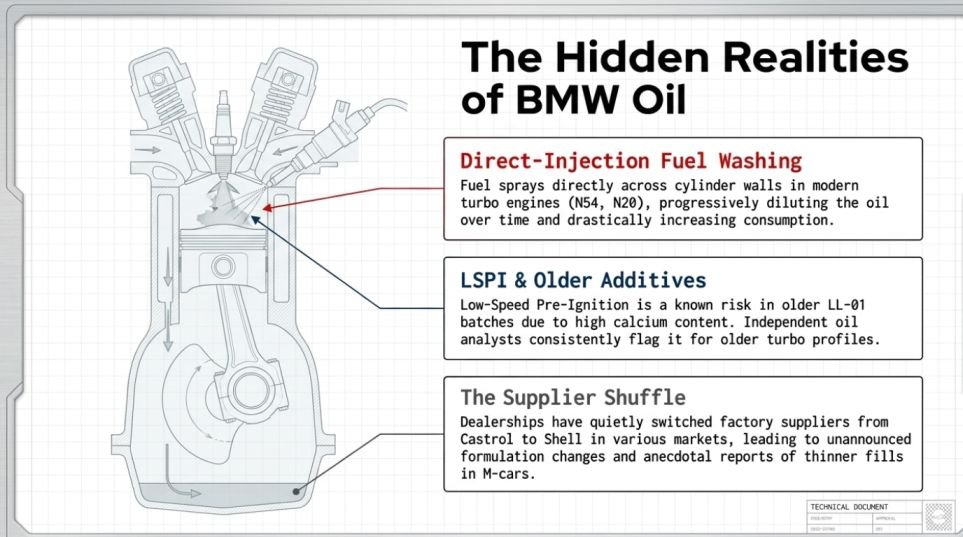
Oil consumption in direct-injection engines. This is the complaint that comes up most across forums like Bimmerfest and E46 Fanatics. Direct-injection turbo engines wash fuel across the cylinder walls during injection, diluting oil and increasing consumption over time. This isn’t unique to 5W-30 or to BMW specifically, but owners of N54, N20, and B-series engines report it consistently enough that many switch to a 40-weight oil for added film strength once consumption becomes noticeable.
LSPI concerns with older LL-01 formulas. Low-speed pre-ignition became a known issue across the turbo-engine industry starting around 2013, and oil analysis of older BMW LL-01 5W-30 batches shows high calcium content without the low-calcium formulations some other manufacturers adopted to address it. BMW hasn’t publicly treated calcium as a primary LSPI factor the way some competitors have, and there’s ongoing debate among oil analysts about how much this actually matters in practice.
Confusion after BMW’s supplier changes. BMW has shifted oil suppliers more than once, moving from Castrol to Shell for parts of its lineup in various markets. Owners who’ve serviced the same car at the same dealer for years sometimes notice a different-tasting formula (via oil analysis) or different bottle branding without clear explanation, which fuels understandable confusion about consistency.
Thin factory fill on M-cars after supplier switches. Several M5 and Z8 owners specifically reported the newer TwinPower Turbo oil feeling noticeably thinner than the Castrol TWS it replaced, with at least one report of engine ticking noise after a dealer service switched formulas, though this remains anecdotal rather than a documented mechanical link.
5W-30 vs 0W-40 vs 5W-40 for BMW — which viscosity wins
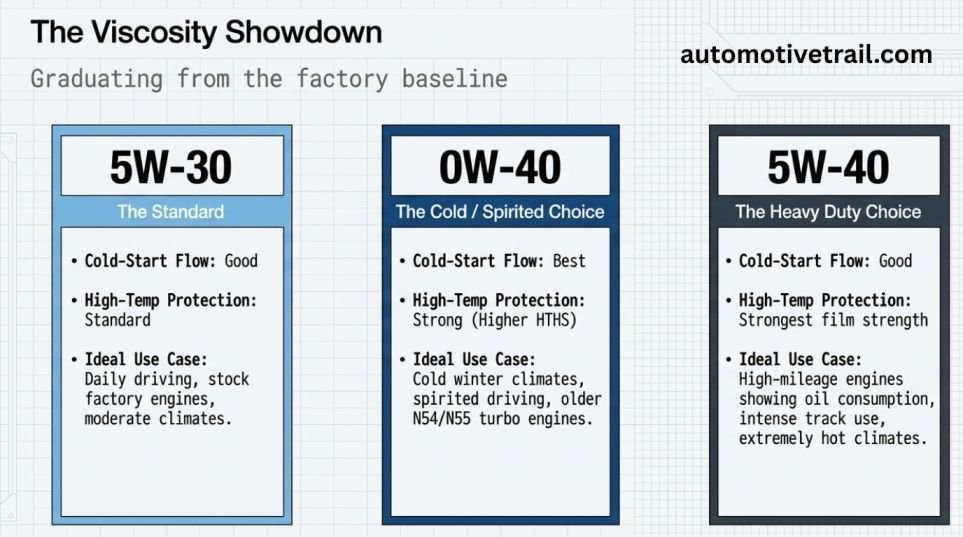
The debate never fully settles on forums, and for good reason: any oil carrying the correct BMW approval meets the engine’s minimum requirement regardless of viscosity grade within the approved range. Thicker oils like 5W-40 or 0W-40 offer more margin for engines already showing oil consumption or for owners doing track days, at a small cost to cold-start flow and marginal fuel economy. For a stock engine in normal daily use with no consumption issues, factory-spec 5W-30 remains the simplest, best-supported choice.
How to read your BMW’s oil cap and owner’s manual spec
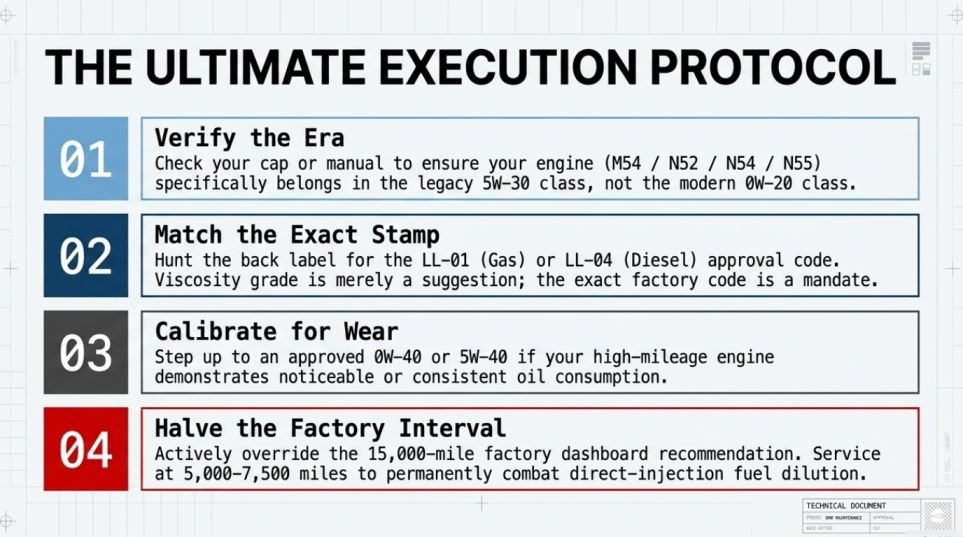
Most BMWs print the recommended oil grade directly on the oil filler cap, visible the moment you pop the hood. Look for a viscosity number (5W-30, 0W-20, etc.) alongside API and possibly ACEA ratings.
If the cap doesn’t list a clear grade, or you want to confirm against the factory spec, the owner’s manual lists the exact BMW Longlife approval code required, not just a viscosity. This matters because the same viscosity number can appear under multiple approval codes with different chemistry, and only the correct approval guarantees compatibility with your emissions hardware and warranty terms.
BMW also maintains an online oil specification lookup by chassis and engine code, which is the most reliable source if your cap is worn or your manual is missing.
Oil change intervals and what shortens them
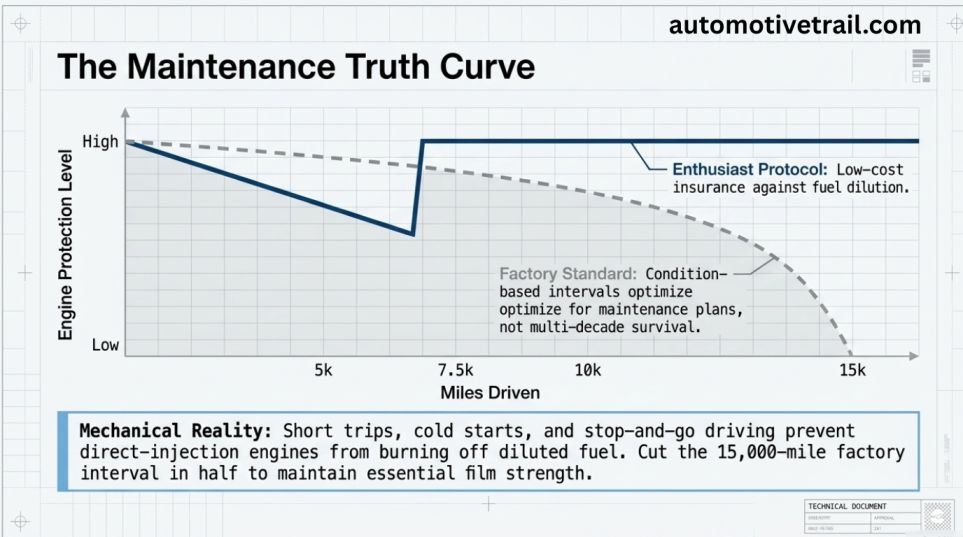
BMW’s condition-based service system typically targets 10,000 to 15,000 miles between changes on modern engines, based on driving style and oil condition sensors rather than a fixed mileage. Many independent mechanics and enthusiast forums recommend shortening that to 5,000-7,500 miles for turbocharged direct-injection engines, citing fuel dilution and LSPI risk as reasons the factory interval runs longer than ideal for long-term engine health.
Short trips, frequent cold starts, and stop-and-go driving all accelerate fuel dilution in direct-injection engines faster than highway driving does, since the engine rarely reaches full operating temperature long enough to burn off diluted fuel. If your BMW sees mostly short commutes, changing oil closer to the 5,000-7,500 mile mark rather than waiting for the full condition-based interval is a reasonable, low-cost insurance policy.
What to check before buying BMW 5W-30 oil
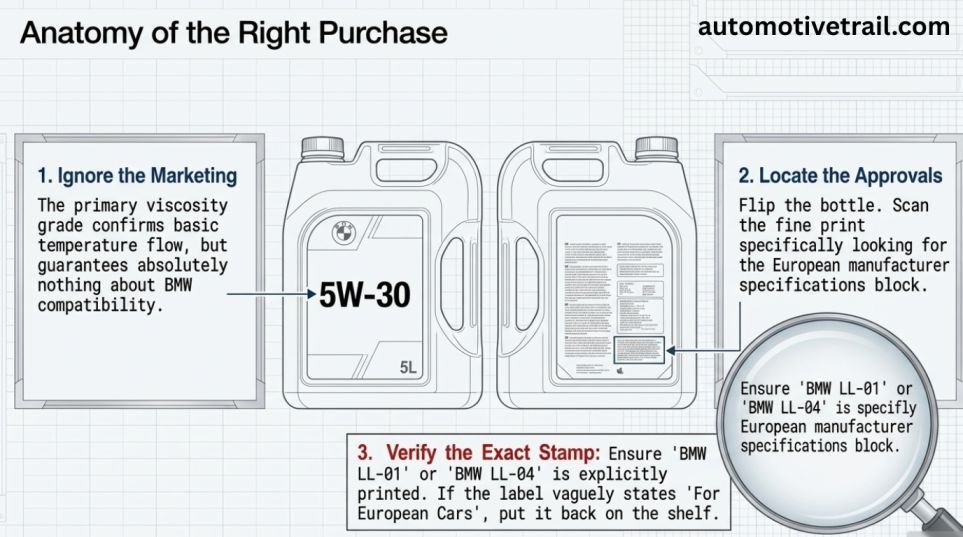
- Confirm the approval code on the bottle, not just the brand or grade. LL-01 for most gas engines, LL-04 for diesels and low-SAPS applications.
- Match the oil to your actual engine, using the cap or owner’s manual, since 5W-30 isn’t universal across the current BMW lineup.
- Buy from an authorized retailer if choosing genuine BMW-branded oil, since counterfeit dealer-branded product has circulated in some markets.
- Check the production date on dealer oil if possible; BMW has changed suppliers and formulations more than once, so older stock may not match current specs.
- Consider a 40-weight oil if your engine already shows noticeable oil consumption, since thicker oils offer more margin without violating BMW’s approved range.
- Verify container size and price per quart across brands; genuine BMW oil often costs 30-50% more per quart than an approved Castrol or Liqui Moly equivalent.
Price and where to buy in 2026
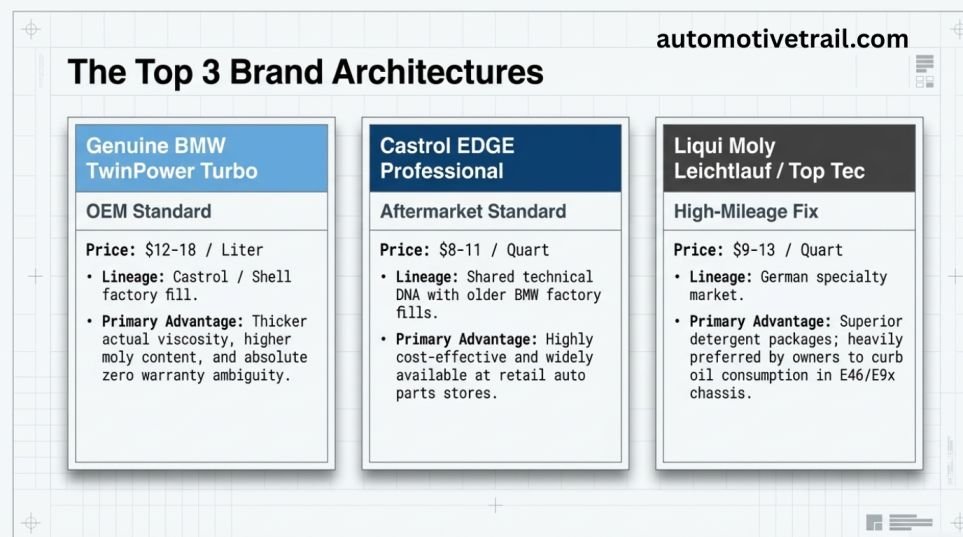
Genuine BMW TwinPower Turbo 5W-30 typically runs $12-18 per liter through dealer parts departments and authorized online retailers. Castrol EDGE 5W-30 (LL-01 or LL-04 depending on the line) runs roughly $8-11 per quart at auto parts retailers. Liqui Moly 5W-30 sits close to that range, usually $9-13 per quart, and is most reliably found through European-specialty auto parts sellers.
Bottom line — which BMW 5W-30 oil to buy
Start by confirming your engine actually calls for 5W-30. If it’s an M54, N52, N54, or N55 built before roughly 2015, it almost certainly does. If you want zero ambiguity around warranty compliance, genuine BMW TwinPower Turbo 5W-30 with LL-01 approval is the safest pick, at a real price premium. Castrol EDGE 5W-30 is the best-supported aftermarket alternative, carrying real technical lineage to BMW’s own factory-fill formulas at a lower cost. If your engine is older or already showing oil consumption, Liqui Moly’s stronger detergent package and the option to step up to a 40-weight grade both give you more margin. Whichever you choose, match the approval code to your car, not just the viscosity number on the front of the bottle.
FAQ
What does BMW LL-01 mean on an oil bottle? LL-01 is BMW’s Longlife-01 approval, the baseline specification for most gasoline engines built from 2001 onward without particulate filters. It’s separate from viscosity grade, so an oil can be 5W-30, 5W-40, or 10W-60 and still carry LL-01 approval.
Can I use 5W-30 in a newer BMW that specs 0W-20? It won’t damage the engine in the short term, but it isn’t what the engine was calibrated for and won’t deliver the fuel economy BMW engineered around the thinner factory fill. Stick with the spec listed on your oil cap or owner’s manual.
Is genuine BMW oil worth the extra cost over Castrol or Liqui Moly? For warranty or lease compliance, yes, since it removes any question about approved product use. For an out-of-warranty car, an LL-01 or LL-04 approved Castrol or Liqui Moly product meets the same technical requirement for meaningfully less money.
Why does my BMW burn oil between changes? Direct-injection turbo engines commonly show oil consumption due to fuel washing the cylinder walls during injection, which dilutes oil over time. This affects most modern turbo brands, not just BMW, and tends to worsen with mileage.
How often should I change 5W-30 oil in a turbocharged BMW? BMW’s condition-based system often stretches to 10,000-15,000 miles, but many mechanics and enthusiasts recommend 5,000-7,500 miles for turbo direct-injection engines to limit fuel dilution and LSPI risk, especially for short-trip driving.
Is LL-01 the same as LL-04? No. LL-01 is BMW’s gasoline-engine baseline spec, while LL-04 is a low-SAPS formula built for diesels with particulate filters. They can share a viscosity number like 5W-30 while using different additive chemistry, so the letter code matters more than the grade.

- Top 10 Ranking Tire Brand for Minivan: Reviewed 2026 - October 5, 2026
- Model Y Tesla Long Range Automatic Wagon Tyre Fitment And Ratings - October 3, 2026
- What Is The Benefit Of Larger Rear Tyres On A Zero-turn Mower - October 3, 2026