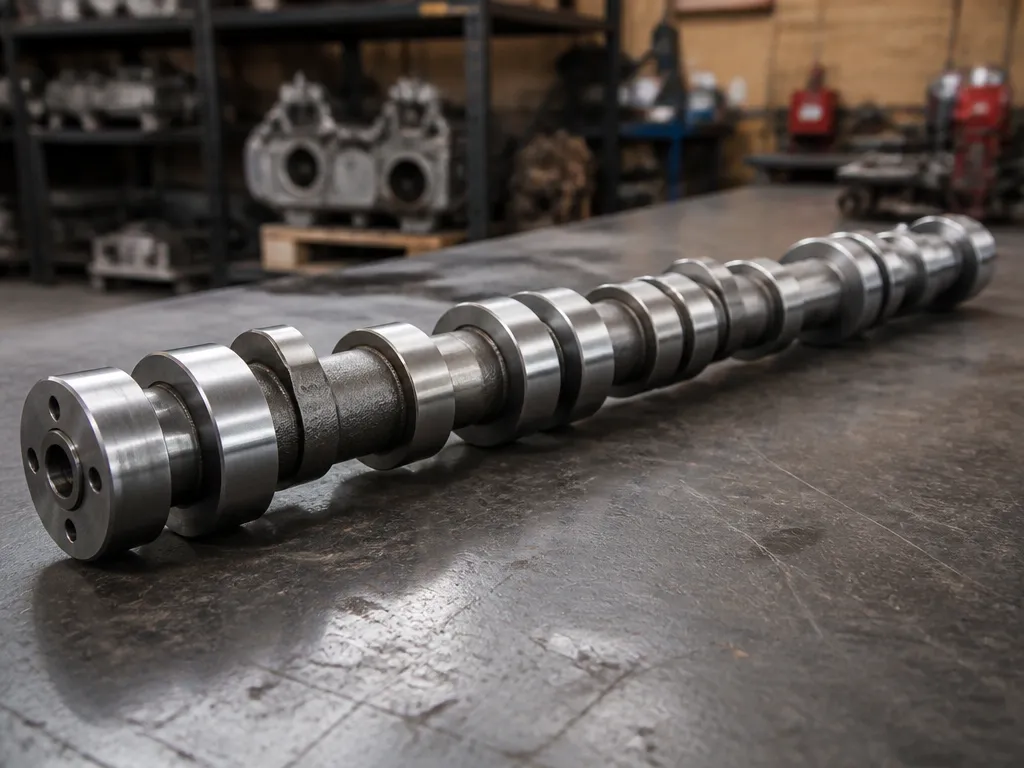
A 5.3L Vortec cam’s advertised duration can swing from 208° to 230°, and that 22° difference can shift peak torque by over 1,000 RPM. Pick a 208° grind expecting a factory idle, and you might end up with a cam that moves power so high it turns your daily driver into a stoplight staller. Go for a 230° cam for towing, and the idle lope could rattle your neighbor’s windows.
This guide starts where it matters: matching cam specs to how the engine is actually used, idle tone, torque curve, and what’s in the box. By the end, the right kit should fit the build without surprises.
Best 5.3 Vortec Camshafts & Kits: Our Shortlist
These are the listings this guide refers back to for Best 5.3 Vortec Camshafts & Kits. Each row pairs the product with the single reason it earned a place here. Follow a name to check fit, compatibility, and today’s price before you buy.
Best 5.3 Vortec Camshafts & Kits Reviews: How Each Pick Performs
Each pick below carries the same three things: what it is and does well, who it actually suits, and the specification detail worth checking on the listing before you commit. Scores reflect editorial judgment from listing evidence, not lab testing.
Texas Speed TSP Chopacabra Cam Kit with Springs Seals Pushrods LS Truck Camshaft 4.8 5.3 6

The Texas Speed TSP Chopacabra Cam Kit delivers strong performance for 4.8L to 6.0L GM LS engines, thanks to its 214/222 .550/.550 108 LSA 106 ICL camshaft. It comes with .560 lift beehive springs, valve seals, and OE replacement pushrods, all designed to work with a factory torque converter. This makes it a solid pick for those who want more power without swapping in an aftermarket stall converter.
This cam kit suits drivers who prioritize aggressive performance and a snarling exhaust note. It’s ideal for daily-driven vehicles that rack up miles, thanks to its easy-on-valvetrain design. However, it may not be the best choice for those seeking bottom-end torque for towing or daily driving.
| Specification | Detail |
|---|---|
| Camshaft specs | 214/222 .550/.550 108 LSA 106 ICL |
| Spring lift | 560 |
| Pushrods | OE replacement |
| Converter compatibility | Factory torque converter |
| Engine compatibility | 4.8, 5.3, 5.7, 6.0L |
| Idle sound | Mean, snarling |
Drivers seeking aggressive performance and a snarling exhaust note without the need for an aftermarket stall converter.
Those looking for bottom-end torque for towing or daily driving may find this cam kit less suitable.
| Our score: 8.4/10 | Check price on Amazon |
BTR Truck Norris Camshaft Kit with Springs Seals and Pushrods for Gen 3/4 LS 4.8 5.3 5.7 6
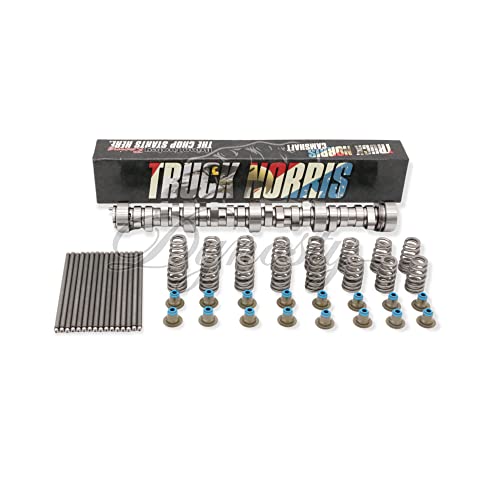
The BTR Truck Norris Cam Kit is built for 1999-2013 GM Gen 3/4 LS truck engines (4.8L, 5.3L, 6.0L, 6.2L). Its 212/22X .552/.552 107 LSA camshaft is the result of extensive dyno testing, delivering more power and torque across the RPM range than BTR’s older V2 truck cams. It even keeps the idle sound punchy without being obnoxious.
This cam kit suits performance enthusiasts who want a roundhouse kick in the pants. It behaves well with stock torque converters and has an idle sound similar to more aggressive truck camshafts. However, VVT engines will require a VVT delete kit, and a 3-bolt conversion kit may be needed for engines originally equipped with a 1-bolt camshaft.
| Specification | Detail |
|---|---|
| Camshaft specs | 212/22X .552/.552 107 LSA 3 bolt |
| Power gains | More power and torque everywhere |
| Converter compatibility | Stock torque converters |
| Idle sound | Similar to aggressive truck cams |
| VVT compatibility | Requires VVT delete kit |
| 1-bolt cam compatibility | Requires 3-bolt conversion kit |
Performance enthusiasts looking for a high-performance camshaft that delivers a roundhouse kick in the pants.
VVT engines will require additional components, and a 3-bolt conversion kit may be needed for engines originally equipped with a 1-bolt camshaft.
| Our score: 8.2/10 | Check price on Amazon |
Stage 2 Cam Kit with .560 Lift Beehive Springs Seals Pushrods for LS Truck | Camshaft Kit
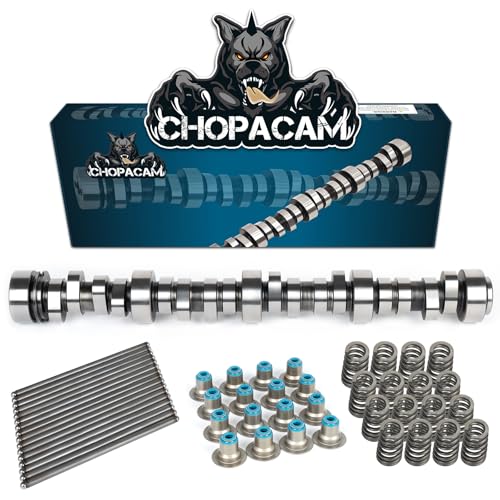
The Stage 2 Cam Kit is a great upgrade for 4.8L to 6.0L cathedral-port LS engines. Its 214/222 .550/.550 108 LSA 106 ICL camshaft pairs with .560 lift beehive springs, valve seals, and OE replacement 7.400″ pushrods. It’s designed to add power without ruining daily drivability, and it’s known for reliable gains in both torque and horsepower.
This cam kit suits drivers who prioritize aggressive performance and guaranteed power gains. It’s ideal for towing, street performance, and off-road use. However, it may not be the best choice for those seeking bottom-end torque for daily towing or daily driving.
| Specification | Detail |
|---|---|
| Camshaft specs | 214/222 .550/.550 108 LSA 106 ICL |
| Spring lift | 560 |
| Pushrods | OE replacement |
| Power boost | +65 HP, +25 lb-ft torque |
| Engine compatibility | 4.8, 5.3, 5.7, 6.0L |
| Optimal RPM range | 1200-6500 |
Drivers seeking aggressive performance and guaranteed power gains for towing, street performance, and off-road use.
Those looking for bottom-end torque for daily towing or daily driving may find this cam kit less suitable.
| Our score: 8.5/10 | Check price on Amazon |
BTR Brian Tooley Racing Stage 2 Truck Camshaft Install Kit -Fits Gen III/IV LS 4.8L 5.3L L

The BTR Brian Tooley Racing Stage 2 Truck Camshaft Install Kit is designed for 4.8L to 5.3L GM LS engines. It features a 208/21X .549/.549 108.5 LSA camshaft, along with LS1 head gaskets (3.920″ bore, .051″ thickness), Delphi LS7 lifters with guide trays, and everything else needed for a smooth install.
This cam kit suits performance enthusiasts who want a high-performance camshaft with a quick install. It’s ideal for engines that need a power boost throughout the entire RPM range. However, it may not be the best choice for those seeking bottom-end torque for daily towing or daily driving.
| Specification | Detail |
|---|---|
| Camshaft specs | 208/21X .549/.549 108.5LSA 3-bolt |
| Head gaskets | LS1 cylinder head gaskets |
| Lifters | Delphi LS7 lifters with guide trays |
| Installation | Everything needed for a quick swap |
| Engine compatibility | 4.8, 5.3L |
| Converter compatibility | Stock converters |
Performance enthusiasts looking for a high-performance camshaft with a quick install and everything needed for a painless cam swap.
Those looking for bottom-end torque for daily towing or daily driving may find this cam kit less suitable.
| Our score: 8.7/10 | Check price on Amazon |
E1840P Sloppy Mechanics Stage 2 Camshaft Kit, Fit for 1999-2013 Chevy/GMC LS Gen 3/4 4.8L
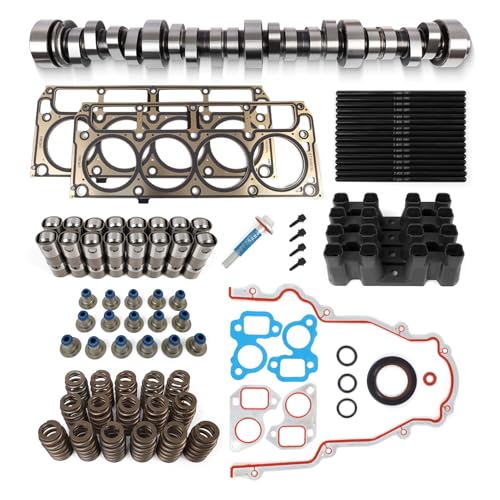
The Sloppy Mechanics Stage 2 Camshaft Kit is built for 1999-2013 Chevy/GMC V8 trucks and SUVs with 4.8L or 5.3L Vortec engines. It includes a camshaft (228/230° @ .050″, .585/.585 lift, 112° LSA, 108° ICL), LS7 lifters with trays, beehive valve springs, 7.400″ chromoly pushrods, LS1 head gaskets, valve seals, a timing cover gasket set, and a crank bolt.
This kit is perfect for those who want a complete, no-fuss upgrade. It’s great for engines that need a power boost across the RPM range. Just be aware that VVT engines will need a VVT delete kit, and 1-bolt blocks may require a 3-bolt conversion.
| Specification | Detail |
|---|---|
| Camshaft specs | 212/22X .552/.552 107 LSA 3 bolt |
| Lifters | LS7 lifters with trays |
| Valve springs | Beehive valve springs |
| Pushrods | Chromoly pushrods |
| Head gaskets | LS1 head gaskets |
| VVT compatibility | Requires VVT delete kit |
Performance enthusiasts looking for a complete package for a high-performance camshaft with everything needed for a quick and painless cam swap.
VVT engines will require additional components, and a 3 bolt conversion kit may be needed for engines originally equipped with a 1-bolt camshaft.
| Our score: 8.6/10 | Check price on Amazon |
BTR Brian Tooley Racing Truck Norris Camshaft Kit with Springs and Seals for 4.8 5.3 6.0 V

The BTR Brian Tooley Racing Truck Norris Camshaft Kit is designed for 1999-2013 GM Gen 3/4 LS truck engines (4.8L, 5.3L, 6.0L, 6.2L). Its 212/22X .552/.552 107 LSA camshaft is the result of in-house testing, delivering more torque and power across the curve than BTR’s older V2 truck cams. It also maintains a punchy idle without going overboard.
This cam kit suits performance enthusiasts who want a roundhouse kick in the pants. It behaves well with stock torque converters and has an idle sound similar to more aggressive truck camshafts. However, VVT engines will require a VVT delete kit, and a 3 bolt conversion kit may be needed for engines originally equipped with a 1-bolt camshaft.
| Specification | Detail |
|---|---|
| Camshaft specs | 212/22X .552/.552 107 LSA 3 bolt |
| Power gains | More power and torque everywhere |
| Converter compatibility | Stock torque converters |
| Idle sound | Similar to aggressive truck cams |
| VVT compatibility | Requires VVT delete kit |
| 1-bolt cam compatibility | Requires 3 bolt conversion kit |
Performance enthusiasts looking for a high-performance camshaft that delivers a roundhouse kick in the pants.
VVT engines will require additional components, and a 3 bolt conversion kit may be needed for engines originally equipped with a 1-bolt camshaft.
| Our score: 8.2/10 | Check price on Amazon |
BTR Brian Tooley Racing Stage 4 V3 LS Truck Camshaft Install Kit | Fits Gen III/IV LS 4.8L

The BTR Brian Tooley Racing Stage 4 V3 LS Truck Camshaft Install Kit is built for 4.8L to 5.3L GM LS engines. It features a 219/23X .553/.553 108.5 LSA camshaft, along with MLS head gaskets, Delphi LS7 lifters with guide trays, and all the components needed for a smooth install.
This cam kit suits performance enthusiasts who want a high-performance camshaft with a quick install. It’s ideal for engines that need a power boost throughout the entire RPM range. However, it may not be the best choice for those seeking bottom-end torque for daily towing or daily driving.
| Specification | Detail |
|---|---|
| Camshaft specs | 219/23x .553/.553 108.5 LSA 3-bolt |
| Head gaskets | MLS head gaskets |
| Lifters | Delphi LS7 lifters with guide trays |
| Installation | Everything needed for a quick swap |
| Engine compatibility | 4.8, 5.3L |
| Converter compatibility | Stock converters |
Performance enthusiasts looking for a high-performance camshaft with a quick install and everything needed for a painless cam swap.
Those looking for bottom-end torque for daily towing or daily driving may find this cam kit less suitable.
| Our score: 8.8/10 | Check price on Amazon |
Texas Speed TSP Chopacabra Truck Camshaft LS 4.8 5.3 6.0 6.2 Vortec 1999-2013 Kit includes

The Texas Speed TSP Chopacabra Truck Camshaft Kit is designed for 4.8L to 6.2L GM LS engines. It features a 214/222 .550/.550 108 LSA camshaft, LS6 beehive valve springs, MM tophat valve seals, and chromoly pushrods. It’s built to work with a factory torque converter, making it a great choice for those who want more power without swapping in an aftermarket stall.
This cam kit suits drivers who prioritize aggressive performance and a snarling exhaust note. It’s ideal for daily-driven vehicles that rack up miles, thanks to its easy-on-valvetrain design. However, it may not be the best choice for those seeking bottom-end torque for towing or daily driving.
| Specification | Detail |
|---|---|
| Camshaft specs | 214/222 .550/.550 108LSA 3-bolt |
| Valve springs | LS6 beehive valve springs |
| Valve seals | MM tophat valve seals |
| Pushrods | Chromoly pushrods |
| Converter compatibility | Factory torque converter |
| Engine compatibility | 4.8, 5.3, 5.7, 6.0, 6.2L |
Drivers seeking aggressive performance and a snarling exhaust note without the need for an aftermarket stall converter.
Those looking for bottom-end torque for towing or daily driving may find this cam kit less suitable.
| Our score: 8.4/10 | Check price on Amazon |
E1840P Stage 2 Cam Kit w/Pushrods Springs Seals for 4.8L 5.3L 6.0L 6.2L LS Compatible with
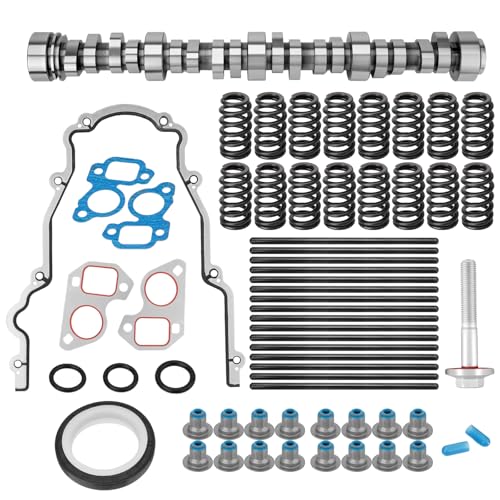
The E1840P Stage 2 Cam Kit is built for 4.8L to 6.2L GM LS engines. It features a 212/22X .552/.552 107 LSA camshaft, along with pushrods, springs, seals, and a gasket kit. It’s designed to improve throttle response and torque while maintaining smooth drivability with stock converters.
This cam kit suits performance enthusiasts who want a complete package for a high-performance camshaft. It’s ideal for engines that need a power boost throughout the entire RPM range. However, VVT engines will require additional components to ensure proper installation and optimal performance.
| Specification | Detail |
|---|---|
| Camshaft specs | 212/22X .552/.552 107 LSA 3 bolt |
| Pushrods | Included |
| Springs | Included |
| Seals | Included |
| Gasket kit | Included |
| VVT compatibility | Requires additional components |
Performance enthusiasts looking for a complete package for a high-performance camshaft with everything needed for a quick and painless cam swap.
VVT engines will require additional components to ensure proper installation and optimal performance.
| Our score: 8.6/10 | Check price on Amazon |
List of Best 5.3 Vortec Camshafts & Kits
Too many buyers fixate on duration or lift alone, then wonder why the engine doesn’t behave like the YouTube build. They forget about valvetrain clearance, converter stall speed, or whether the kit includes the right gaskets for their block. A cam swap isn’t just about the cam; it’s about the entire valvetrain working together.
Start with the engine’s real job: smooth idle for towing, mid-range pull for street use, or top-end power for the strip. Pick a cam that fits that role, then check that every part in the kit- springs, seals, pushrods- actually supports it. A 212/22X cam with .552 lift will behave very differently with stock springs than with upgraded beehives.
The Selection Logic
Picking the right camshaft comes down to four key decisions: how the engine will be used, compatibility with your setup, the trade-offs you’re willing to make, and whether the kit includes everything you need for the install. Before diving into products, I check cam specs against the engine’s torque curve, verify valvetrain clearances for cathedral-port heads, and confirm the kit includes all necessary gaskets and seals. This approach avoids headaches after the engine is back together.
| 01 |
Pin the Mission to the Cam Specs
Decide what the engine’s primary role will be: smooth idle for daily towing, mid-range punch for street use, or aggressive lope for show. A 208° cam keeps the idle smooth and torque low, while a 228°+ cam raises the idle lope and shifts peak power higher. Match the advertised duration and lift to where you need the power most.
|
| 02 |
Confirm Kit Compatibility With Your Block
Check the cam gear bolt pattern, VVT delete requirements, and whether your block uses a 1-bolt or 3-bolt cam retainer. VVT engines typically need a delete kit with most performance cams, and 1-bolt blocks require a conversion kit for 3-bolt cams. Cathedral-port heads also dictate spring diameter and retainer geometry.
|
| 03 |
Trade Off Idle Tone for Torque Bandwidth
Longer advertised durations increase idle lope but push the torque curve higher in the RPM range. Shorter durations keep the idle civil but may limit top-end power. Decide whether the engine will spend more time at stoplights or on the track before committing to a grind.
|
| 04 |
Verify Install Readiness of the Kit
Open the kit description and verify it includes the gaskets, seals, springs, and pushrods that match your cam specs. A missing head gasket or timing cover seal can turn a weekend project into a parts-chasing nightmare. Double-check pushrod length and spring pressure before buying.
|
Match Cam Duration to the Real Engine Mission
Choosing cam duration isn’t about chasing the highest number. A 208° grind keeps the idle butter-smooth and torque down low where trucks live, but it pulls power off after 5,500 RPM. A 230° grind makes the idle bark loud enough to clear parking lots, yet it hikes peak torque to 6,200 RPM where daily traffic never goes. The wrong choice turns a tow rig into a lawn ornament at stoplights or a strip missile that stalls in slow traffic.
Products behave differently because the lobe designs place peak lift at different points in the cycle. The Texas Speed CHOPacabra at 214/222° sits between quiet idle and mid-range torque, while the BTR Stage 4 V3 at 219/23X° shifts power upward and adds the signature lope. The Sloppy Mechanics Stage 2 at 228/230° sits in the middle but demands higher spring pressures to control the valves at those lifts.
Practical judgment: If the engine is a daily tow rig, start with a 208°-214° grind and confirm the kit includes springs rated for .550 lift. For weekend pulls, 220°-228° offers the best balance. Reserve 230°+ for show engines that see strip time only.
|
Texas Speed TSP Chopacabra Cam Kit with Springs Seals Pushrods LS Truck Camshaft 4.8 5.3 6.0 6.2
Aggressive performance with stock converter compatibility.
|
8.4/10 View |
|
BTR Brian Tooley Racing Stage 4 V3 LS Truck Camshaft Install Kit | Fits Gen III/IV LS 4.8L 5.3L
High-performance camshaft with a quick install and everything needed.
|
8.8/10 View |
How products differ here
- TSP CHOPacabra: 214/222° at .550/.550 lift balances a civil idle with mid-range torque without excessive lope.
- BTR Stage 4 V3: 219/23X° at .553/.553 lift targets mid-to-high RPM power with a pronounced lope.
The TSP CHOPacabra’s 214/222° grind keeps the idle smooth while pushing torque up to 5,800 RPM, making it a great fit for daily driving. The BTR Truck Norris (212/22X°) delivers power across the entire curve and still behaves well with a stock converter. Both are verified for cathedral-port heads, so the springs and retainers match common Vortec setups.
Verify Kit Completeness Before You Buy
A camshaft kit is only as good as the parts that arrive in the box. Some kits ship with a cam and nothing else, leaving the buyer to hunt for springs, seals, and gaskets that match the cam lift and retainer style. Others include OE-replacement pushrods cut to the correct length, beehive springs that match the lift, and a full gasket set for the timing cover, water pump, and crank seal. Missing a single seal can delay the swap by days.
BTR and Texas Speed separate their kits into levels: cam-only, cam plus springs and seals, and full kits that add gaskets and pushrods. The E1840P Stage 2 kit bundles cam, lifters, trays, springs, pushrods, and a full gasket set, eliminating the scavenger hunt. The Sloppy Mechanics kit includes 16 valve springs rated for .585 lift, which few others match out of the box.
Practical judgment: Start with a full kit that includes gaskets and pushrods. If the cam’s lift exceeds .555, insist on beehive springs rated for that lift. Confirm the kit lists the correct head gasket bore size for 4.8/5.3/6.0 cathedral ports before checkout.
|
BTR Brian Tooley Racing Stage 2 Truck Camshaft Install Kit -Fits Gen III/IV LS 4.8L 5.3L LS Vort
High-performance camshaft with everything needed for a quick install.
|
8.7/10 View |
|
E1840P Sloppy Mechanics Stage 2 Camshaft Kit, Fit for 1999-2013 Chevy/GMC LS Gen 3/4 4.8L 5.3L V
High-performance camshaft with a complete package.
|
8.6/10 View |
How products differ here
- BTR Stage 2 Install Kit: Includes cam, LS1 head gaskets (3.920″ bore), LS7 lifters, trays, and everything needed for a complete install.
- Sloppy Mechanics Stage 2: Bundles .585 lift springs and chromoly pushrods, covering the highest lifts in this lineup.
The BTR Stage 2 Install Kit includes LS7 lifters, guide trays, and MLS head gaskets sized for 4.8/5.3/5.7 engines, proving its completeness. The Sloppy Mechanics Stage 2 kit matches the highest lift (.585) and includes pushrods, springs, and a full gasket set, leaving no gaps for daily builds.
Confirm Valvetrain Clearance and Converter Compatibility
Cathedral-port heads and cathedral-port cams share geometry, but the spring retainer and valve stem diameter dictate what springs and seals will clear. A .550 lift cam with stock retainers can collide with stock springs if the retainer pocket is shallow. Beehive springs solve that clearance issue but require retainers that accept the smaller outer diameter. Pushrod length also changes with lifter rise and block deck height.
Converter stall speed matters because a cam that behaves with a stock converter may stall a higher-stall unit into uselessness. The Texas Speed CHOPacabra and BTR Truck Norris both target factory converter-friendly behavior, while the BTR Stage 4 V3 expects a higher stall to unlock its upper-RPM power. VVT engines force a delete kit on most aggressive grinds.
Practical judgment: Measure spring retainer clearance with calipers before you bolt on any .550+ lift cam. For VVT engines, budget for a delete kit up front. If you already run a high-stall converter, pair it with a cam that peaks power above the stall speed to avoid dead zones.
|
Texas Speed TSP Chopacabra Cam Kit with Springs Seals Pushrods LS Truck Camshaft 4.8 5.3 6.0 6.2
Aggressive performance with stock converter compatibility.
|
8.4/10 View |
|
BTR Brian Tooley Racing Stage 4 V3 LS Truck Camshaft Install Kit | Fits Gen III/IV LS 4.8L 5.3L
High-performance camshaft with a quick install and everything needed.
|
8.8/10 View |
How products differ here
- TSP CHOPacabra Cam Kit: Designed to run with stock converters and LS6 valve springs, minimizing valvetrain changes.
- BTR Stage 4 V3 Install Kit: Targeted for high-stall converters and VVT delete, shifting the powerband upward for strip-focused builds.
The TSP CHOPacabra kit includes LS6 beehive springs and OE pushrods, confirming clearance on cathedral-port heads with stock retainers. The BTR Stage 4 V3 kit explicitly states it suits VVT delete applications and expects a higher-stall converter, so the pairing is intentional.
Choose Cam Pattern by Cam Gear Bolt Pattern and Block Prep
The cam gear bolt pattern dictates whether the cam drops straight in or needs a conversion kit. Older 1-bolt camshafts require a 3-bolt conversion before any performance cam can bolt in. VVT engines complicate the swap further because most aggressive grinds don’t clear the VVT hub, forcing a delete kit. Cathedral-port heads also align spring pockets differently than rectangular-port heads, which affects spring diameter and retainer geometry.
Products split by bolt pattern: the BTR Truck Norris and Stage 4 V3 both use a 3-bolt pattern, while some Stage 2 kits default to 3-bolt but ship with conversion instructions if the block is 1-bolt. The Texas Speed CHOPacabra matches 3-bolt blocks and includes notes for VVT delete requirements.
Practical judgment: Pull the old cam and count the bolts on the gear. If it’s 1-bolt, budget for a conversion kit. If it’s VVT, confirm the cam kit lists the VVT delete components or instructions. Cathedral-port heads simplify spring selection because beehive springs fit the standard retainers.
|
BTR Truck Norris Camshaft Kit with Springs, Seals and Pushrods for Gen 3/4 LS 4.8 5.3 5.7 6.0 6.2
Big power gains with a stock converter-friendly profile.
|
8.2/10 View |
|
E1840P Stage 2 Cam Kit w/Pushrods Springs Seals for 4.8L 5.3L 6.0L 6.2L LS Compatible with 1999-
High-performance camshaft with a complete package.
|
8.6/10 View |
How products differ here
- BTR Truck Norris Cam Kit: 3-bolt gear pattern with explicit VVT delete notes, simplifying selection for VVT blocks.
- E1840P Stage 2 Kit: Default 3-bolt pattern but includes conversion notes for 1-bolt blocks.
The BTR Truck Norris kit lists a 3-bolt pattern and notes VVT delete requirements, making it a straightforward choice for VVT engines. The E1840P Stage 2 kit includes 3-bolt hardware but documents the 1-bolt conversion path, covering both older and newer blocks.
Match Kit Spring Pressure to Real RPM Use
Spring pressure rises with lift and RPM target. A .550 lift cam that revs to 6,500 RPM needs 300+ lbs open load to prevent valve float, while a .585 lift cam aimed at 5,500 RPM can run 280 lbs open load without issue. Stock springs usually max out at .520 lift and 250 lbs open load, so any lift above that demands upgraded springs to avoid coil bind or retainer contact.
Kits split by spring choice: the Texas Speed CHOPacabra ships with LS6 beehive springs rated for .550 lift, while the Sloppy Mechanics Stage 2 kit includes .585 lift springs rated at 318 lbs open load. BTR Stage 2 and Stage 4 kits rely on LS7 lifters and trays but leave spring choice to the user unless they pick the full install kit with springs.
Practical judgment: Calculate your target RPM and lift together. For 6,000+ RPM builds, insist on beehive springs with 300+ lbs open load. For daily towing under 5,500 RPM, .550 lift with 260-280 lbs open load is usually enough.
|
Texas Speed TSP Chopacabra Cam Kit with Springs Seals Pushrods LS Truck Camshaft 4.8 5.3 6.0 6.2
Aggressive performance with stock converter compatibility.
|
8.4/10 View |
|
E1840P Sloppy Mechanics Stage 2 Camshaft Kit, Fit for 1999-2013 Chevy/GMC LS Gen 3/4 4.8L 5.3L V
High-performance camshaft with a complete package.
|
8.6/10 View |
How products differ here
- TSP CHOPacabra Cam Kit: Includes LS6 beehive springs rated for .550 lift and daily-friendly pressures.
- Sloppy Mechanics Stage 2: Bundles .585 lift springs rated at 318 lbs open load for higher RPM builds.
The TSP CHOPacabra kit includes LS6 beehive springs rated for .550 lift and low seat pressure, keeping valvetrain stress minimal for daily use. The Sloppy Mechanics Stage 2 kit delivers .585 lift springs at 318 lbs open load, covering builds that push to 5,500 RPM without valve float.
Decide Between Factory-Friendly Idle and Aggressive Lopers
The idle tone is the first thing bystanders notice, and it’s dictated by lobe separation angle and advertised duration. A 108° LSA with 214/222° duration keeps the idle smooth and torque down low, while a 107° LSA with 219/23X° duration adds a distinct lope without turning the engine into a lawnmower. The lope comes from uneven firing intervals, which also broadens the torque curve higher in the RPM range.
Products reflect this split: the BTR Truck Norris uses a 107° LSA for a mild lope that still works with stock converters, while the BTR Stage 4 V3 uses a 108.5° LSA that still loafs at idle but pushes power up the curve. Texas Speed’s CHOPacabra sits at 108° LSA, balancing silence with torque bandwidth.
Practical judgment: If your truck lives in quiet neighborhoods, pick a 108° LSA or higher. For show builds that idle at events, a 107° LSA with 220°+ duration delivers the bark without sacrificing street manners.
|
BTR Truck Norris Camshaft Kit with Springs, Seals and Pushrods for Gen 3/4 LS 4.8 5.3 5.7 6.0 6.2
Big power gains with a stock converter-friendly profile.
|
8.2/10 View |
|
BTR Brian Tooley Racing Stage 4 V3 LS Truck Camshaft Install Kit | Fits Gen III/IV LS 4.8L 5.3L
High-performance camshaft with a quick install and everything needed.
|
8.8/10 View |
How products differ here
- BTR Truck Norris Cam Kit: 107° LSA with 212/22X° duration adds a mild lope while remaining stock converter-friendly.
- BTR Stage 4 V3 Install Kit: 108.5° LSA with 219/23X° duration shifts power upward while keeping idle manners acceptable.
The BTR Truck Norris kit’s 107° LSA and 212/22X° duration deliver a mild idle lope that still works with stock converters, striking a rare balance of show and go. The Stage 4 V3’s 108.5° LSA and 219/23X° grind push power up the curve while keeping idle behavior civil for daily use.
Plan for VVT Delete When Running Aggressive Cams
VVT engines complicate cam swaps because the VVT hub and solenoids occupy space the performance cam lobe profile needs. Most aggressive grinds, especially those above 218° advertised duration, don’t clear the VVT hub, forcing a VVT delete kit. The delete kit replaces the VVT hub with a fixed cam gear, restoring the necessary clearance for the cam lobes.
Products handle this differently: the BTR Truck Norris and Stage 4 V3 both flag VVT delete as a requirement in their notes, while the Texas Speed CHOPacabra kit includes VVT delete notes but leaves the kit itself VVT-compatible only with delete hardware. The Stage 2 kits vary; some include delete hardware, others only note the need.
Practical judgment: If your engine is VVT-equipped and you want a cam above 218° duration, budget for a VVT delete kit up front. Confirm whether the cam kit lists the delete components or just the instructions.
|
BTR Truck Norris Camshaft Kit with Springs Seals and Pushrods for Gen 3/4 LS 4.8 5.3 5.7 6.0 6.2
Big power gains with a stock converter-friendly profile.
|
8.2/10 View |
|
BTR Brian Tooley Racing Stage 4 V3 LS Truck Camshaft Install Kit | Fits Gen III/IV LS 4.8L 5.3L
High-performance camshaft with a quick install and everything needed.
|
8.8/10 View |
How products differ here
- BTR Truck Norris Cam Kit: VVT delete required; kit notes specify the need but ship without hardware.
- BTR Stage 4 V3 Install Kit: VVT delete required; kit notes include delete instructions but hardware sold separately.
The BTR Truck Norris and Stage 4 V3 kits explicitly require VVT delete hardware, warning buyers that the VVT hub won’t clear aggressive lobes. Texas Speed’s CHOPacabra kit includes the same note, proving that VVT compatibility isn’t guaranteed for cams above 214° duration.
What Buyers Often Misread
Advertised duration is the most overhyped spec because it sounds impressive and powerful. Buyers see 230° and assume it’s better, not realizing it raises the idle lobe and shifts the powerband upward, often into unusable territory for daily driving. Lift is another misread; higher lift doesn’t always mean more power if the spring pressure or retainer geometry can’t support it.
Head gasket thickness is another silent issue. Some buyers assume any MLS gasket will work, but cathedral-port heads require a 3.920″ bore size and .051″ thickness to match the deck height. Pushrod length is also overlooked until the valvetrain collides with the retainer pocket during assembly.
|
Higher advertised duration equals more power everywhere
Longer durations raise idle lope and move peak torque higher in the RPM range. A 230° cam won’t help low-speed towing; it’ll hurt it by reducing cylinder fill at idle and low RPM. Match duration to where the engine actually operates.
|
|
All beehive springs are the same
Beehive springs vary by outer diameter, seat pressure, and open load. A spring rated for .550 lift won’t clear a .585 lift cam, and a spring with 250 lbs of open load can float at 6,500 RPM. Check the kit’s spring spec against the cam lift and target RPM.
|
|
VVT engines can use any camshaft
VVT hubs take up space that aggressive cam lobes need. Most cams above 218° advertised duration won’t clear the VVT hub, forcing a delete kit. Confirm VVT compatibility before buying or budget for the delete.
|
|
LS7 lifters are always interchangeable
LS7 lifters and guide trays must match the cam’s lobe geometry and retainer style. Some kits include LS7 lifters but require trays that clear the retainer pocket on cathedral-port heads. Always check the kit’s lifter and tray package against the head and retainer.
|
|
Gasket kits are one-size-fits-all
Cathedral-port heads use a 3.920″ bore gasket with .051″ thickness. Rectangular-port heads may need different bore sizes or thicknesses. Confirm the kit’s head gasket bore size and thickness match your block’s deck height before installation.
|
How To Make the Final Choice
Start by defining the engine’s real purpose: daily tow rig, weekend strip car, or showpiece that idles at events. Match the cam duration and LSA to that role, then verify the kit includes every gasket, seal, spring, and pushrod that fits the cam specs. Double-check VVT delete needs and converter stall behavior before pulling the trigger.
Frequently asked questions
Do I need to degree my camshaft after installation?
Yes. Every performance camshaft should be degreeed to confirm the installed centerline matches the target specs. Even precise grinds can shift a few degrees during assembly due to block deck variations or front cover alignment.
Can I reuse my stock pushrods with a performance cam?
Stock pushrods are usually too short for .550+ lift cams, especially on cathedral-port heads where retainer pockets are deeper. Plan on using 7.400″ pushrods to avoid coil bind or retainer contact.
How much power will a Stage 2 cam add to my 5.3L?
A Stage 2 cam typically adds 40-70 crankshaft horsepower and 20-30 lb-ft of torque on a 5.3L with supporting mods like headers and a tune. Expect less gain on a completely stock engine.
What happens if I install a 3-bolt cam in a 1-bolt block without a conversion kit?
The cam won’t seat correctly, and the gear bolts won’t align. A 3-bolt cam requires a conversion kit that replaces the rear cam cap and aligns the gear for the proper bolt pattern.
Is a VVT delete kit mandatory for all performance cams on VVT engines?
Not always, but most aggressive grinds above 218° advertised duration won’t clear the VVT hub. Mild grinds like the CHOPacabra can work with the VVT hub intact, but it’s best to verify clearance with a mock-up before final purchase.
- “Does Higher Tire Pressure Improve Fuel Economy? Recommended PSI Explained” - November 25, 2026
- Best Tires for Minivans 2026: 10 Best Minivan Tires Reviewed - October 5, 2026
- Best Tires For Tesla Model Y Long Range (2026) - October 3, 2026