
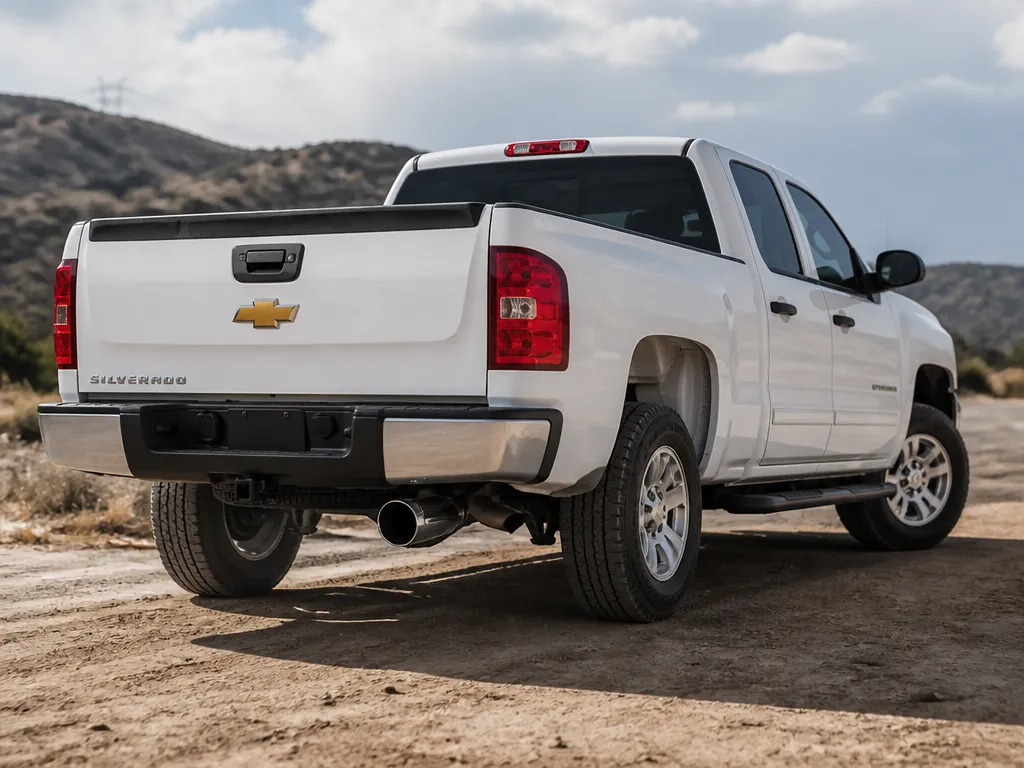
Your 2013 Chevy Silverado 5.3 is already a solid truck, but the second you hear the exhaust at idle and around 1,500 to 2,500 rpm, you know the “right” sound is subjective. Are you chasing a deeper tone, trying to cut drone, or fixing a rattly setup? This guide will narrow it down to muffler and system choices that actually fit.
For a good-sounding 2013 Silverado 5.3, start with the right scope: most people want axle-back for a bolt-on tone change, cat-back if you want more flow, and a full system only when you’re replacing more than mufflers. You’ll also get drone expectations and what to buy to keep resonance under control.
What Is A Good-Sounding Exhaust System For A 2013 Chevy Silverado 5.3?

A “good-sounding” exhaust on a 2013 Silverado 5.3 usually means a deeper idle, clean low-speed tone, and controlled highway volume without an annoying cabin buzz. For most owners, the sweet spot is a cat-back system with a resonator where it can break up drone, or a muffler that is designed to sound full without getting raspy at 1,500 to 2,500 rpm.
On a 2013 5.3, the exhaust note you hear is driven by three things: exhaust flow path (axle-back, cat-back, or full system), muffler/resonator design, and tip location (which changes how much sound reflects into the cab). If you want “near-stock” but better, you need to avoid overly aggressive straight-through mufflers and pick an option with at least one good chamber/resonator style component.
How To Define “Good” For This Truck
Pick a target sound profile first, because the best choice for “quiet and smooth” is different from “loud and deep.” The 5.3 tends to sound most noticeable under light throttle and during steady cruising, where exhaust resonance builds.
System Types That Match Common Goals
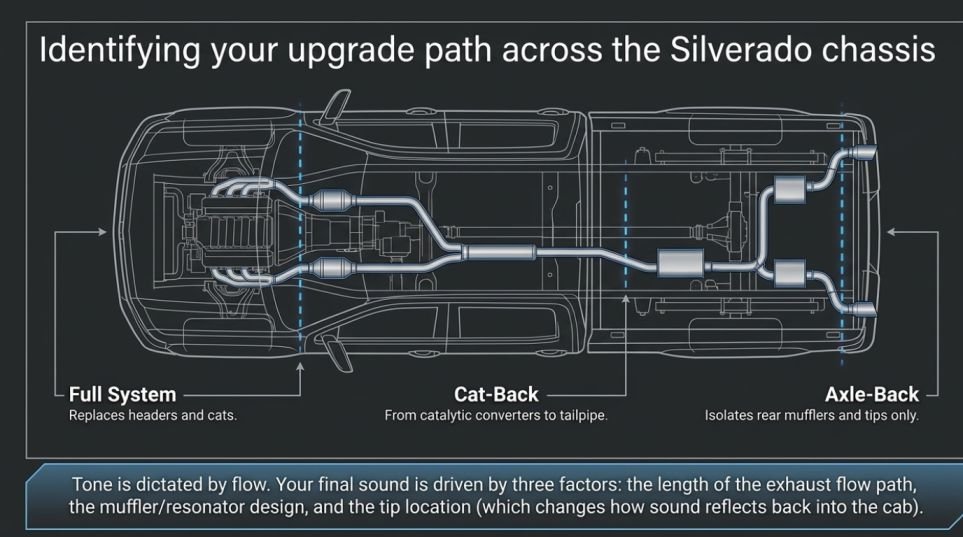
Below is the practical way to choose between axle-back and cat-back for a Silverado like yours. Cat-back systems keep the factory front layout and let you tune tone where it matters most.
| What you install | Typical sound change | Drone risk | Owner vibe |
|---|---|---|---|
| Axle-back | Mostly muffler/tailpipe tone | Medium | Budget, mild upgrade |
| Cat-back | Clearer tone shaping through muffler/resonator | Lower to medium | Best balance of “sounds good” and daily drivability |
| Full system | Biggest change in character | Medium to high | More custom, more tuning needed for no drone |
“If you hate drone more than you love volume, plan on a resonator in the system and be careful with straight-through mufflers. The truck cab amplifies resonance more than most people expect.”
When you’re comparing brands and models, also check whether they are offered for your cab style (regular, double, or crew) and bed length, since hangers and tailpipe routing affect where the sound lands. For most owners aiming for a “good-sounding” daily setup, a cat-back designed for the 2013 Silverado 5.3 with a resonator option is the most reliable starting point.
How It Works
Exhaust sound comes from how engine pulses travel through pipes, resonators, and mufflers, then exit through the tailpipes. On a 2013 Silverado 5.3, the loudness and “tone” mostly change when you alter backpressure slightly and, more importantly, the resonator and muffler chamber design. Pipe diameter, bend count, and the presence or absence of a resonator decide whether you hear a smooth low note or a raspy rasp.
The 5.3L V-8 fires with a steady rhythm, and the exhaust system turns that pressure wave into audible frequencies. Straight-through mufflers tend to sound louder and more “metallic,” while chambered mufflers and multi-step resonators tame higher frequencies and usually reduce the sharp “drone” band around steady highway RPM. System choice also changes how much sound reflects back inside the muffler, which is why two setups with the same tip style can still sound very different.
What Changes The Tone On The Silverado
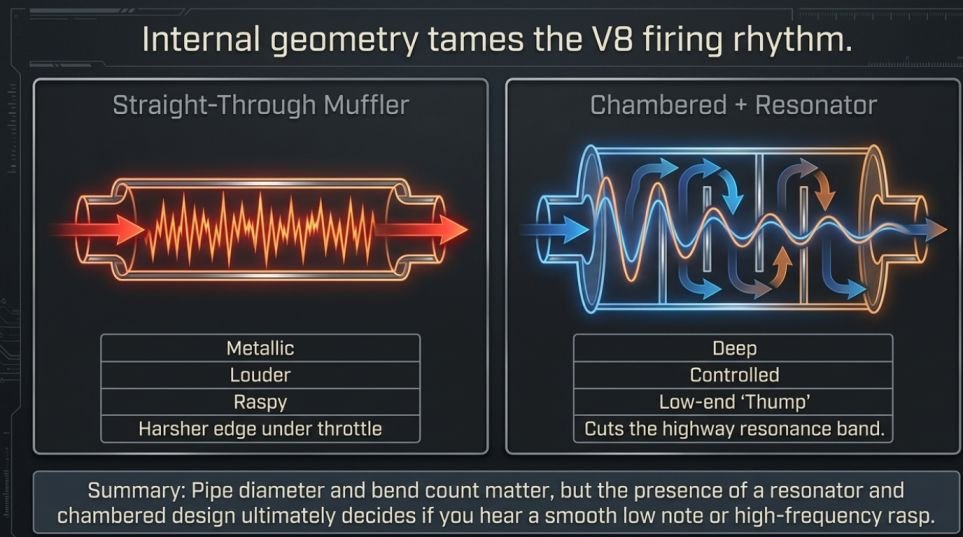
For fit and sound on this truck family, the biggest differentiator is how complete the system is. An axle-back swap only changes the mufflers and tips, so the idle and low-speed character can stay close to stock, while highway volume often changes more. A cat-back replaces the pipes after the catalytic converters, which lets you tune the midrange and improves consistency because pipe length and muffler inlet geometry change the wave timing.
“Drone” is usually a resonance created when exhaust pulses line up with a cavity in the system and the truck’s cabin. Resonators located mid-system or at the muffler inlet can knock down that frequency, while straight pipe sections can amplify it. For a lot of Silverado owners, the difference between a quiet ride and an annoying cabin boom comes down to whether the mid-pipe has a resonator, and how the muffler splits exhaust flow through its internals.
| Exhaust type | Sound expectation | Drone risk |
|---|---|---|
| Axle-back (mild) | Stock-like idle, slightly louder at low speeds, modest highway change | Low to medium |
| Cat-back (performance chamber) | Deeper tone, stronger “pull” under light throttle, clearer idle note | Medium |
| Cat-back (straight-through) | Harsher edge, louder throttle, more noticeable high-frequency rasp | Medium to high |
Insider tip: If your goal is “good sound” without cabin boom, prioritize systems that include a resonator and avoid pure straight-pipe paths through the midsection.
Fitment And Engine Behavior You’ll Feel In Sound
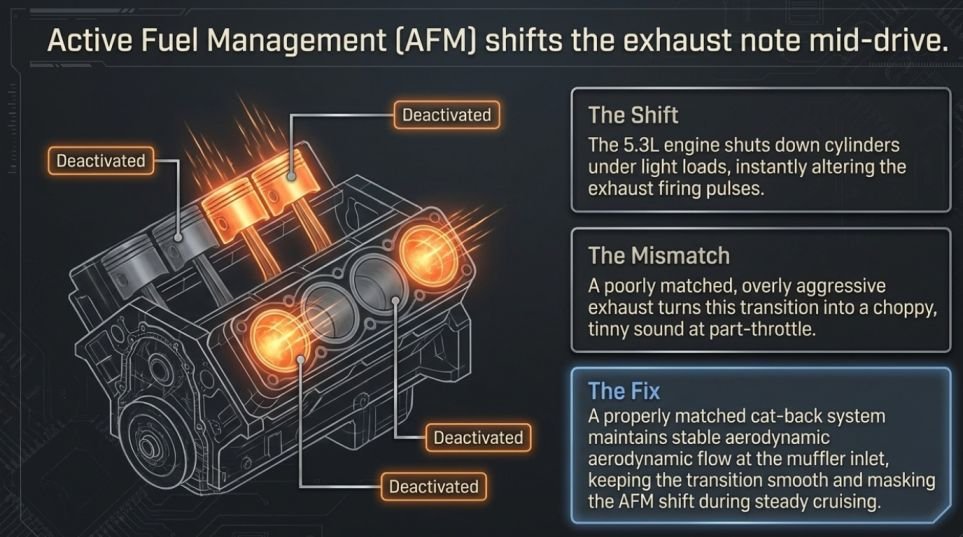
The 5.3 can run Active Fuel Management (AFM) modes on some trims, so exhaust tone can shift when cylinders shut off and the firing pulses change. A properly matched system keeps that change smooth instead of choppy by maintaining stable flow at the muffler inlet. Exhaust leaks at flanges and clamps also create a crackly, tinny sound and can make drone worse, even when the muffler is “the right” design.
Legal compliance depends on your local rules and whether the system is labeled for emissions legality. Many owners look for CARB or EPA-related markings (when applicable) to avoid problems during inspections. Regardless of legality, the correct catalytic equipment placement matters, because removing or altering emissions components changes both tone and drivability.
Key Benefits
A good-sounding exhaust on a 2013 Silverado 5.3 gives you a richer tone with controlled volume, so it sounds strong at idle and low speed without turning the highway into a drone-fest. The right setup also keeps the exhaust note “clean,” meaning less boom around town and fewer rasp harmonics at cruise.
Pick the right system type, and you get different benefits depending on your goal. Axle-back setups are usually the quickest way to change the sound character, cat-back systems add deeper flow through the rest of the exhaust, and full systems are the most complete for tone shaping and minimizing bottlenecks.
Sound You Can Live With (Tone, Volume, And Drone Control)
The main advantage of a well-matched cat-back or axle-back is consistency. Quality mufflers and properly sized resonators reduce the harsh mid-range rasp that tends to show up on the 5.3 when the pipes and muffler internals are mismatched.
For daily driving, the sweet spot is usually a setup that emphasizes low-end “thump” at idle and keeps the note smooth at 65 to 75 mph. For trucks used for towing, the advantage shifts toward volume discipline, because excessive loudness tends to grow fast once exhaust backpressure changes under load.
Fitment And Drivability Benefits
Good sound is mostly packaging and flow. Mandrel-bent tubing, correct hangers, and dependable clamp or flange interfaces reduce exhaust leaks, and leaks are a common reason a system sounds louder than expected or develops intermittent rattles.
For the 2013 Silverado 5.3, many owners want it to play nice with stock manifolds and active fuel management. Cat-back systems that are intended for the model year typically keep exhaust routing tidy and avoid clearance issues near the spare tire area and rear axle components.
| Exhaust setup | Sound benefit | Typical trade-off |
|---|---|---|
| Axle-back | Noticeable tone change at idle and cruise | Less control over resonance tied to upstream flow |
| Cat-back | Deeper, smoother note with better drone management | More cost and more work than axle-back |
| Full system | Most complete tone shaping across the range | Highest cost, most parts to fit correctly |
“If it sounds perfect at idle but annoying on the highway, it usually has the right ‘volume’ but the wrong resonator or pipe geometry for the drone frequency your truck generates.”
Durability is another real benefit. Systems made with thicker tubing and quality muffler construction tend to keep the note consistent longer, while thin-walled designs can change sound over time as internal baffles fatigue or resonator cores age.
Legal compliance is a practical advantage too. Choosing a brand with CARB or GESI listings where available (or explicitly marked legal for your area) helps you avoid inspection trouble and keeps the truck’s emissions setup compliant.
Step-by-step Guide
Start with the exhaust “system type” that matches how you want it to sound on a 2013 Silverado 5.3. Axle-back changes tone and volume the most with the least fuss, while cat-back and full systems affect the low-frequency rasp and drone because they change more of the airflow path. Pick the category first, then choose muffler style and resonance strategy.
| Goal | Best starting system type | Typical sound character | Drone likelihood |
|---|---|---|---|
| Near-stock calm, “good” tone | Axle-back or resonator-equipped cat-back | Deep with controlled rasp, less boom | Low to medium |
| Deep idle, noticeable low-speed growl | Cat-back with chambered muffler | Throatier note, stronger presence | Medium |
| Loud, free-flow feel | Cat-back with straight-through style | Clearer, louder tone, more rasp | Medium to high |
Insider mechanic tip: If you plan long highway trips, prioritize a cat-back with resonators over a simple axle-back. The muffler tone you like at idle is often different from what you live with at steady speed.
Common Mistakes To Avoid
Choosing an exhaust setup based only on idle sound videos usually leads to drone and surprise rasp at highway speeds. For a 2013 Silverado 5.3, the muffler and resonator design decide low-speed boom and cruising pitch, not just the “loudness” factor at startup.
Sound Issues You Can Avoid Before You Buy
Many owners end up unhappy because they chase a deep tone, then get a constant 1,800 to 2,500 rpm drone. That drone is harder to mask with a cab that already has decent sound deadening, so you hear it more than you expect. Another common miss is a raspy top-end growl, which comes from straight-through flow paths without the right chambering for small changes in exhaust note.
For example, two cat-back systems can both advertise “deep and aggressive,” yet one still booms when you lug the truck in the same RPM band. Before you commit, match the type of sound you want to how you actually drive: town cruising, towing, or steady highway runs.
Fitment And Compatibility Mistakes That Cause Headaches
Incorrect fitment is the fastest way to turn a good-sounding idea into a rattling mess. Axle-back and cat-back systems are usually close, but exhaust hangers, pipe bend radius, and tip angle can differ by cab length and bed setup (and some kits are not universal across all Silverado configurations).
Even when the system bolts up, it can still be noisy if the installer forces clearances. Heat shields and wiring looms need real room, especially near the transmission crossmember and underbody.
| Common mistake | What you’ll notice | How to prevent it |
|---|---|---|
| Wrong level of replacement (axle-back vs cat-back) | Unexpected tone change, weak improvement | Match the kit type to the sound goal you’re chasing |
| Ignoring hanger positions | Rattle on rough pavement | Use the vehicle-specific kit and verify hanger alignment |
| Tip angle looks right, clearance is wrong | Exhaust contact after heat cycles | Confirm heat shield spacing and wire clearance |
Legal And Emissions Compliance Mistakes
Buying parts that are loud in the brochure but unclear on emissions status is a gamble, especially if your area inspects or checks readiness. Some systems can be advertised as street legal, yet not cover every state or every exhaust configuration on every trim.
Rule of thumb: if the listing does not clearly say the system is approved for your region or for your emissions equipment, treat it as “may fail inspection” until you confirm.
AFM (active fuel management) and catalytic converter health also matter to sound character. A tired exhaust system with borderline cats or leaks can make any muffler louder and rougher than it should be, so you end up blaming the new exhaust when the root cause is upstream.
Tips For Success
Fitment and sound quality matter more than flashy marketing on a 2013 Silverado 5.3. Pick a cat-back or axle-back system that keeps the factory pipe routing and uses real crossover/resonator tuning, because that is where most drone issues are won or lost.
Match The Sound To Where You Drive
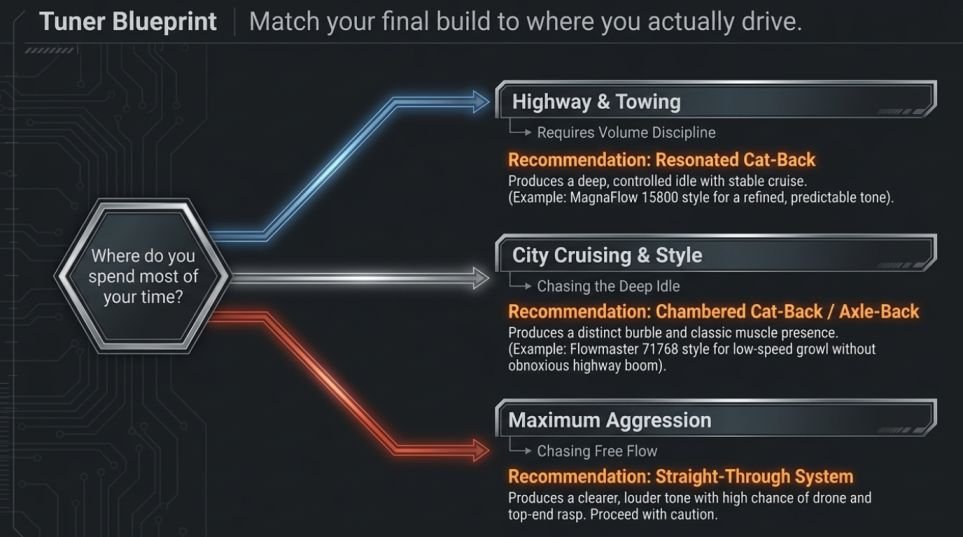
Decide what you want to hear at idle, at low speed, and on the highway, because one “good-sounding” setup can be amazing in the driveway and annoying at 65 mph. Most owners who like a deep tone end up preferring a system with a resonator (or a well-designed muffler) over straight-thru loud setups, since resonance is what turns “cool” into “drone.”
Use this quick guide to avoid buyer’s remorse:
| System type | Typical sound change | Drone risk | Best for |
|---|---|---|---|
| Axle-back | Mostly muffler/tailpipe tone | Lower to moderate | Owners who want style without highway fatigue |
| Cat-back | Noticeable tone change from front of mufflers back | Moderate (depends on resonator) | Owners chasing a deeper, fuller sound |
| Full system (front to rear) | Largest potential change | Higher variance | Owners who want a matched exhaust plan |
Lock In Fitment The First Time
Aftermarket exhausts for the 2013 Silverado 5.3 can vary by cab/bed configuration and by whether the truck has stock dual-exhaust routing or specific factory muffler inlet/outlet sizes. Before ordering, confirm your exhaust type (single vs dual outlet style), wheelbase, and whether your truck is emissions-equipped in a way that affects available components.
For a truck, “drone-free” is usually about resonator placement and muffler internal design. A louder system can still be pleasant if it cancels the low-frequency boom that builds around highway RPM.
Stay Legal And Avoid Emissions Headaches
Choose a setup that is marked legal where you live (for example, CARB or similar regional approvals). If your area requires emissions compliance, avoid systems that replace catalytic components unless they are explicitly approved for your configuration, since that is where people get stuck with failed inspections or check-engine lights.
Also plan for AFM-equipped trucks: some owners notice sound changes with cylinder deactivation because the exhaust note shifts under light loads. A system that sounds great at WOT can still feel “weird” at part throttle, so it’s worth paying attention to how it behaves during steady driving, not just hard acceleration.
Real Examples
For a 2013 Silverado 5.3, the “good-sounding” sweet spot most owners end up with is a cat-back system with an H-pipe and a middle resonator, because it keeps low-speed boom under control while still giving a deeper idle and cruising tone. Practical examples below are grouped by the sound goal, with what you usually get (and what to watch for) on real trucks.
For example, a Flowmaster 71768 (40 Series cat-back) setup is a common pick when you want a noticeable deep burble at idle and throttle, with less highway drone than straight-through muffler designs. Owners typically describe the sound as “muscle car” without being obnoxious all day, but exact loudness varies by cab configuration and whether the truck is stock-straight-piped downstream of the resonator.
For instance, a MagnaFlow 15800 (direct-fit cat-back with stainless mufflers) is a frequent choice for a cleaner, more “refined” tone. MagnaFlow-style setups usually sound deeper than stock, but they tend to feel more predictable at steady highway RPM compared with loud chambered mufflers.
| Goal | Common System Type | Sound Character (Typical) | Main Trade-off |
|---|---|---|---|
| Quiet, near-stock | Axle-back or mild cat-back | Low growl, minimal rasp | Less “presence” under throttle |
| Deep + controlled | Cat-back with resonator + H-pipe | Throaty idle, stable cruise | Not the loudest option |
| Louder, more aggressive | Chambered muffler cat-back | Distinct burble, louder tip-in | Higher chance of drone |
“Matching sound expectation matters. A muffler that sounds great at idle can get annoying at 1,800 to 2,200 RPM, so plan your choice around the RPM where you cruise most.”
Quick Summary
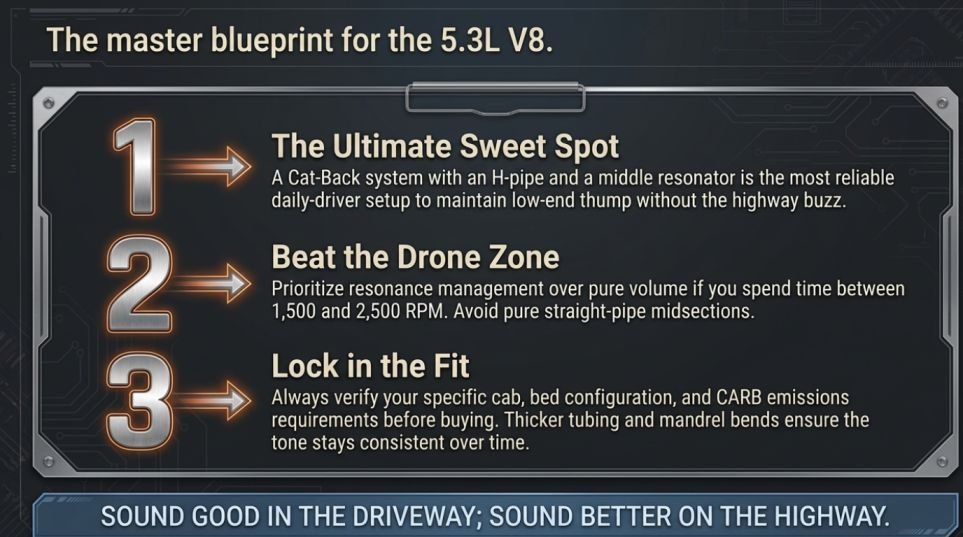
A good-sounding setup on a 2013 Chevy Silverado 5.3 is usually about getting a deeper idle and low-speed tone while keeping highway volume from turning into an annoying cabin buzz, especially around steady 1,500 to 2,500 rpm. The article points you toward an axle-back or cat-back for a bolt-on tone change, and it notes that a full system makes sense mostly when you are already replacing more than just mufflers. It also calls out that stainless construction helps with long-term rust resistance.
| Goal | Best fit from the article | What to watch |
|---|---|---|
| Near-stock, quieter daily drivability | Cat-back with a resonator | Drone risk is highest near 1,500 to 2,500 rpm |
| Deeper classic tone | Muffler plus resonator combo | Aggressive straight-through mufflers can increase boom |
| More bolt-on sound change | Axle-back | May not shape the tone as effectively through the whole system |
Frequently Asked Questions
What Exhaust Type Sounds Best On A 2013 Chevy Silverado 5.3, Muffler Only Or Full Cat-back?
If you want a noticeable sound change without touching the front of the truck, a cat-back exhaust (from the catalytic converter back) is usually the sweet spot. A muffler-only swap can sound better, but it often stays closer to stock because the rest of the exhaust path remains the same.
Which Muffler Style Gives A “Deep” Sound On A 2013 Silverado 5.3 Without Getting Too Loud?
For a deeper tone that is not obnoxious at highway speeds, look for a system advertised as resonated or tuned (often with a resonator plus a muffler). Straight-through mufflers can sound great, but they tend to get loud and may drone depending on how your truck’s resonator setup is handled.
Will A Louder 2013 Silverado 5.3 Exhaust Cause Drone, And How Can I Minimize It?
Drone usually comes from the exhaust resonance in a certain RPM and speed range, so you want proper baffling and at least one resonator if you are trying to keep it livable. If you hate drone, avoid setups that are described as “straight pipe” or “no-resonator” and prioritize a tuned cat-back designed for your body style and cab configuration.
How Much Should I Budget To Buy A Good-sounding 2013 Chevy Silverado 5.3 Exhaust System?
Prices vary a lot by brand and materials, so think of it as a rough range only: expect under about $500 for basic parts, and more for higher-end stainless systems and full cat-backs. Installation can add cost, so if you plan to have it welded or installed professionally, plan an extra labor charge on top of the parts.
Can I Install An Exhaust For A 2013 Silverado 5.3 Myself, Or Should I Have A Shop Do It?
If you have jack stands, basic hand tools, and at least some experience with rusty exhaust hardware, a cat-back can be a DIY job. If your truck has seized clamps, corroded hangers, or you need exhaust welding, paying a shop is often cheaper than fighting it, especially since poor alignment can cause leaks and annoying noise.

- 2017 Dodge Grand Caravan Transmission Fluid Capacity: Dodge Grand Caravan Transmission - September 27, 2026
- How Many Gallons Of Transmission Fluid Does A 2017 Gmc Yukon 5.3 Slt Xl Hold: How Many - September 26, 2026
- 17 Gmc Yukon Transmission Fluid Capacity V8 (8l90) Quarts/liters - September 26, 2026