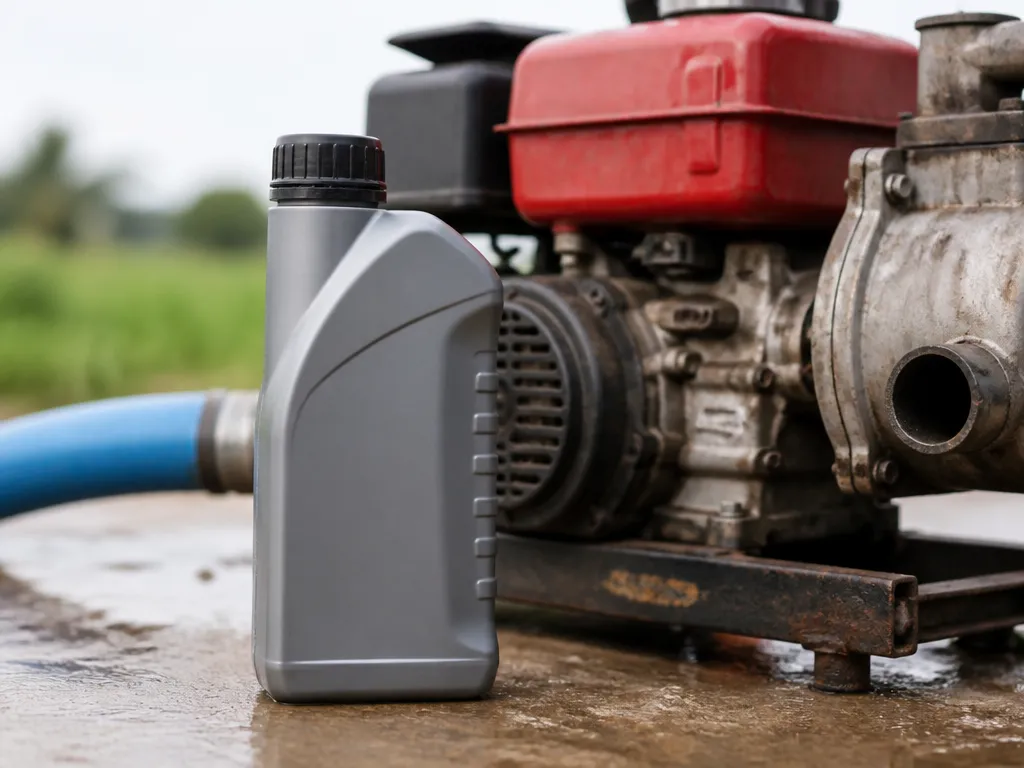
You are likely looking at a small diesel transfer pump and wondering if it needs a drop of oil to keep the gears turning smoothly. It is a common point of confusion because some pumps rely entirely on the diesel fuel itself for lubrication, while others use a dedicated gearbox that needs specific oil to prevent premature failure. Adding the wrong fluid can ruin your pump or contaminate your fuel supply.
Small diesel transfer pumps rarely require external oiling because most models use the diesel fuel passing through the pump to lubricate internal components. If your pump has a separate oil fill plug or a visible gearbox, you must use the specific ISO viscosity grade or gear oil recommended by the manufacturer to avoid permanent damage.
What Type Of Oil Does A Small Diesel Pump Actually Need?
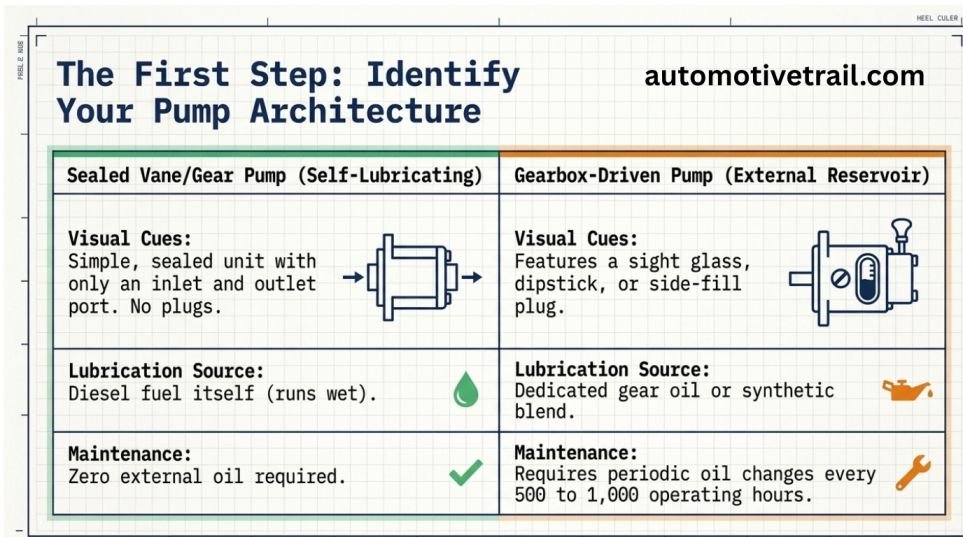
Most small diesel fuel pumps rely entirely on the diesel fuel itself for internal lubrication of the rotors, vanes, and seals. These units are designed to run wet, meaning the viscosity of the fuel provides the necessary film strength to prevent metal-on-metal contact during operation.
Adding external oil to the fuel path of a self-lubricating pump will cause immediate contamination and likely damage your engine’s fuel injectors or high-pressure pump. You must never introduce motor oil, hydraulic fluid, or ATF into the fuel stream of a standard vane or gear-type transfer pump.
Distinguishing Between Pump Types
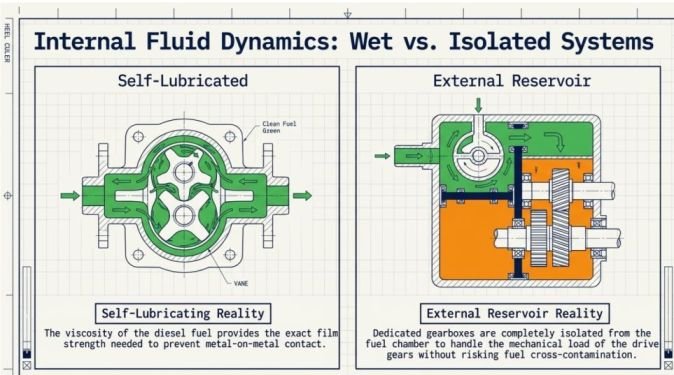
External gear-driven units or specialized multi-stage pumps often feature a separate gearbox or oil reservoir that requires dedicated lubrication. These reservoirs are completely isolated from the fuel chamber to prevent cross-contamination, and they use specific gear oils or synthetic lubricants to handle the mechanical load of the drive gears.
Mechanic’s Tip: If your pump has a sight glass, a fill plug, or a dipstick located on the side of the housing, it has an external reservoir. If the pump is a simple, sealed unit with only an inlet and outlet port, it is self-lubricated by the diesel fuel passing through it.
| Pump Feature | Lubrication Source | Maintenance Requirement |
|---|---|---|
| Sealed Vane/Gear Pump | Diesel Fuel | None (Fuel-lubricated) |
| Gearbox-Driven Pump | External Reservoir | Periodic oil changes |
For units with external reservoirs, you must follow the manufacturer’s specified viscosity, which is usually a high-quality gear oil like 80W-90 or a specific synthetic blend. Using the wrong weight in these gearboxes leads to premature bearing failure or heat buildup. Always check the data plate on the pump housing before adding any fluid to a secondary reservoir.
Visual Inspection Of Your Pump Type
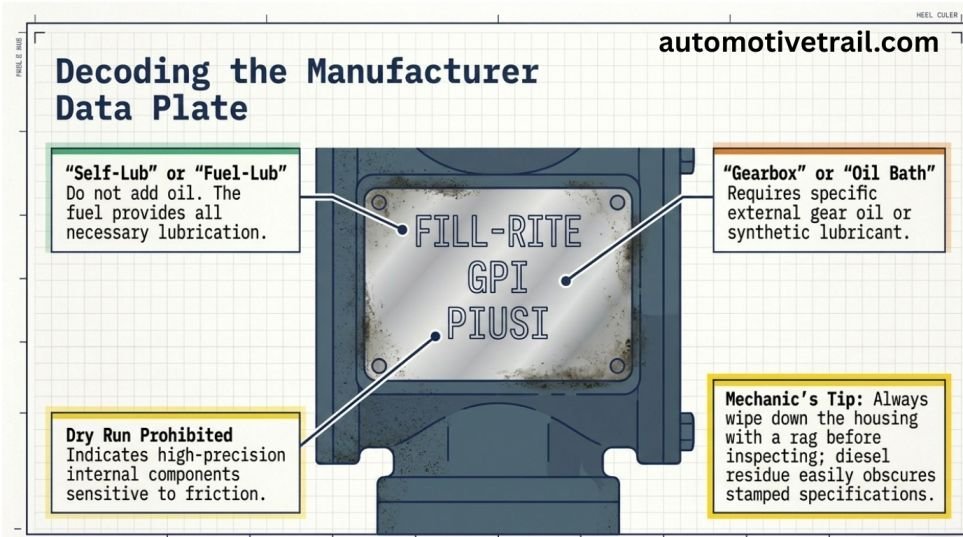
Identifying your specific pump model begins with locating the manufacturer data plate, which is usually riveted to the side or top of the pump housing. This plate provides the serial number, model designation, and technical specifications that dictate whether the unit is a self-lubricating model or one requiring an external reservoir.
Locating Ports And Data Plates
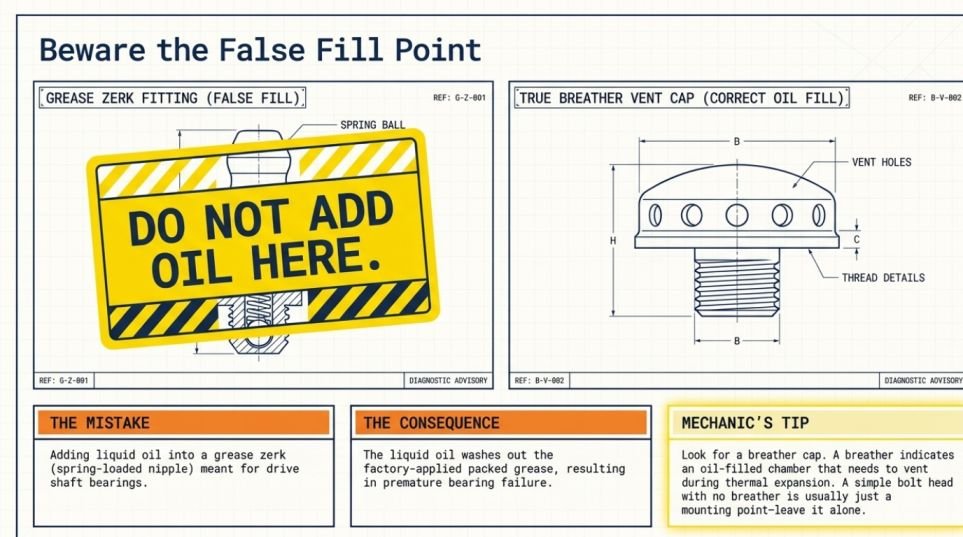
Most small diesel transfer pumps rely on the fuel itself to lubricate internal vanes or gears, meaning they have no oil fill or drain plugs. If you see a secondary port labeled “Oil” or a small sight glass, you are likely dealing with a pump that features a separate gear reduction box or a mechanical seal chamber that requires periodic maintenance.
Mechanic’s Tip: If you find a plug that looks like it belongs to a reservoir, check the surrounding area for a breather or vent cap. A breather indicates an oil-filled chamber that needs to breathe during thermal expansion. If the port is simply a bolt head without a breather, it is often just a mounting point or an internal access port that should never be opened.
Data plates often use abbreviated codes to identify the pump type. Look for these common indicators on the label:
| Indicator | Common Meaning |
|---|---|
| “Self-Lub” or “Fuel-Lub” | No external oil needed; fuel provides lubrication. |
| “Gearbox” or “Oil Bath” | Requires specific gear oil or synthetic lubricant. |
| “Dry Run Prohibited” | High-precision internal components that may require specific additives. |
Carefully clean the surface of the pump housing with a rag before searching for these markings, as diesel residue and road grime can easily obscure the stamped information. Once you clear the grime, look for the manufacturer name, such as Fill-Rite, GPI, or Piusi. These brands typically stamp the model number directly into the metal casing if the data plate is missing or painted over.
Conduct a final scan for any visible grease zerks or oil injection points. If you see a small nipple with a spring-loaded ball, that is a grease fitting for the drive shaft bearings, not an oil fill point. Adding liquid oil to a grease-packed bearing will wash out the factory-applied grease and lead to premature failure.
Risks Of Cross-contamination With Diesel Fuel
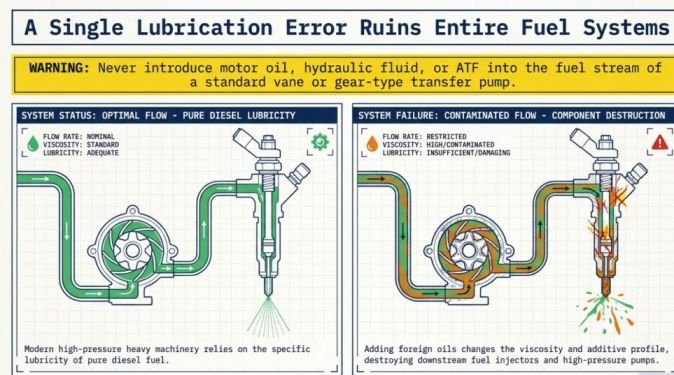
Introducing motor oil into the internal supply lines of a diesel transfer pump triggers immediate downstream failures. Diesel fuel systems operate with tight tolerances, and foreign lubricants disrupt the chemical balance required for proper combustion and lubrication.
For instance, modern high-pressure systems rely on the specific lubricity of diesel fuel itself. Adding motor oil changes the viscosity and additive profile, which leads to premature wear on internal pump components and injectors.
Operational Failures Caused By Contamination
Mechanic Tip: Never use motor oil to prime or lubricate the internal gears of a pump that moves diesel. If the pump requires lubrication, it must be contained in a separate, sealed gearbox that prevents any migration into the fuel stream.
In practice, the presence of motor oil in your fuel supply acts like a contaminant that ruins the fuel quality. Once the fuel is contaminated, you must drain the entire storage tank and replace all downstream filters to prevent permanent damage to the engine fuel system.
Recommended Lubricants For External Pump Gearboxes
External gearboxes on small diesel transfer pumps require specific gear oils to manage high pressure and heavy metal-to-metal contact. These units rely on a dedicated lubrication reservoir separate from the fuel path to prevent engine or fuel system contamination. Using the wrong fluid can lead to rapid gear teeth wear or seal failure.
Iso Viscosity Grades And Oil Selection
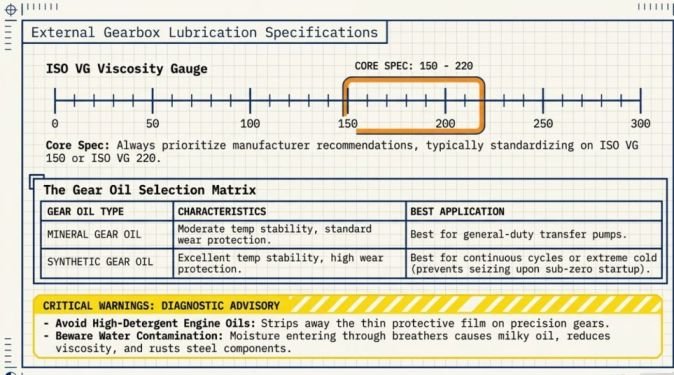
ISO Viscosity Grades (VG) dictate the thickness of the oil at specific temperatures, which is a critical factor for pump longevity. Most small gear-driven pumps operate most efficiently with ISO VG 150 or ISO VG 220 oils. Choosing a grade that is too thin results in insufficient film strength, while a grade that is too thick increases internal friction and heat.
Mineral gear oils are the standard choice for most budget-friendly or general-purpose diesel pumps. These oils provide reliable protection and are easy to source. However, they can break down faster under heavy thermal loads compared to synthetic alternatives.
Synthetic gear oils offer superior performance in high-stress environments. They maintain a consistent viscosity across a wider temperature range and resist oxidation better than mineral oils. For pumps used in extreme cold or continuous high-duty cycles, a synthetic lubricant is a worthwhile investment to extend service intervals.
Gear oil selection should always prioritize the manufacturer’s specified viscosity to prevent catastrophic gearbox seizure.
Lubricant Comparison Table
| Lubricant Type | Temperature Stability | Wear Protection | Typical Application |
|---|---|---|---|
| Mineral Gear Oil | Moderate | Standard | General duty transfer pumps |
| Synthetic Gear Oil | Excellent | High | Continuous or extreme climate use |
| Multi-grade Gear Oil | Variable | Moderate | Seasonal or fluctuating use |
For instance, if you are running a pump in a sub-zero environment, a mineral oil might become too thick to flow properly. In this scenario, switching to a synthetic ISO VG 150 would ensure the gears receive lubrication immediately upon startup.
Common Maintenance Mistakes To Avoid
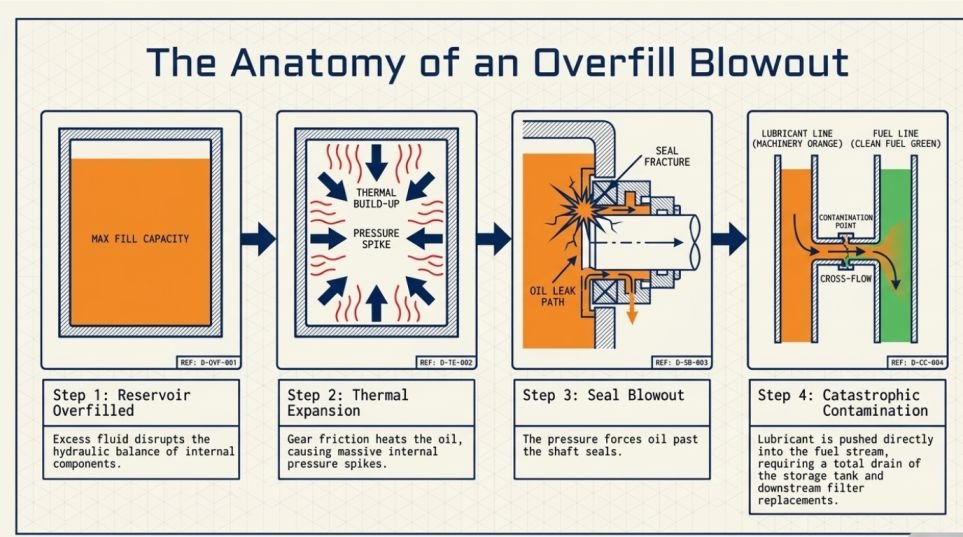
Overfilling the lubrication reservoir in a gear or vane pump creates excessive internal pressure that can blow out shaft seals. This pressure forces oil past the seals and directly into the fuel stream, leading to catastrophic contamination of your diesel supply. Proper fluid levels are critical because even a small amount of excess oil can disrupt the hydraulic balance of the internal components.
Lubricant Contamination And Additive Errors
Using incorrect additives or high-detergent engine oils in a small pump often leads to premature component wear. Most small diesel transfer pumps rely on stable, non-detergent oils or the fuel itself for lubrication. High-detergent oils can strip away the thin protective film required on precision gears or vanes, causing metal-on-metal contact.
Mixing incompatible lubricants can cause chemical reactions that result in sludge buildup. Always check the manufacturer’s manual to confirm if the pump requires a dedicated gear oil or if it is designed for fuel-lubricated operation.
Incorrect additives can also cause issues with the fuel being moved. For instance, adding oil with high concentrations of dispersants can cause the diesel to become cloudy or form deposits in downstream filters. This mistake often goes unnoticed until the fuel system begins to clog or the pump loses prime.
| Mistake Type | Immediate Consequence | Long-term Damage |
|---|---|---|
| Overfilling Reservoir | Seal failure and leakage | Fuel system contamination |
| High-Detergent Oil | Loss of protective film | Scored gears or vanes |
| Wrong Additives | Chemical sludge formation | Clogged fuel injectors |
Improper Fluid Management
Neglecting to check for water contamination in the oil reservoir is another frequent error. Small pumps often operate in environments where moisture can enter through breathers or faulty seals. Water in the lubricant reduces its viscosity and can cause internal corrosion on steel components.
In practice, a pump that sounds louder or vibrates more than usual often indicates that the lubrication is compromised. If you notice a milky appearance in the oil or a change in the color of the diesel being pumped, stop operation immediately to inspect the seals and reservoir.
Safety Protocols For Handling Diesel Equipment
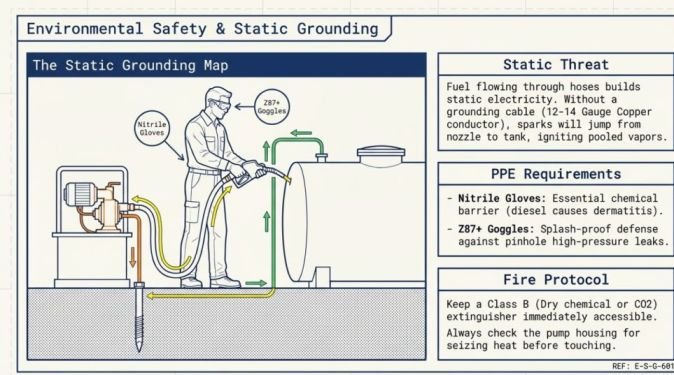
Diesel fuel has a higher flash point than gasoline, but it still presents a significant fire risk when exposed to heat or static sparks. Proper grounding is required for all transfer equipment to prevent accidental ignition.
Managing Static Discharge And Fire Hazards
Static electricity builds up as fuel flows through the pump and hoses. This charge can jump as a spark from the nozzle to the tank. You must use a grounding cable to bond the pump to the storage tank. This path allows electricity to flow safely to the earth.
Keep a Class B fire extinguisher within reach of the work area. Ensure the workspace has active ventilation to stop fuel vapors from pooling on the floor. These vapors are heavier than air and can travel to a distant ignition source.
For instance, pumping fuel into a plastic tank without a ground wire can create a spark that ignites the fuel mist. This often happens in dry winter conditions where static builds faster.
Personal Protective Equipment For Fuel Handling
Diesel fuel is a skin irritant and can cause dermatitis. Nitrile gloves provide a chemical barrier that latex cannot match. Safety glasses protect your eyes from high-pressure splashes. Wear closed-toe boots made of oil-resistant rubber to prevent slips and skin absorption.
Clean any spills immediately using absorbent pads. Avoid using rags that can create static or leave lint in the fuel system. Wash your hands with a mild degreaser after every session to remove residual hydrocarbons.
For example, a pinhole leak in a high-pressure line can spray fuel directly into the eyes. This can cause permanent corneal damage if you are not wearing goggles.
| Item | Specification | Notes |
|---|---|---|
| Fire Extinguisher | Class B | Dry chemical or CO2 |
| Gloves | Nitrile | Chemical resistant |
| Eye Protection | Z87+ Rated | Splash-proof goggles |
| Grounding Wire | 12-14 Gauge | Copper conductor |
Always check the pump housing for heat buildup before touching the unit. A seizing pump can reach temperatures high enough to cause burns or ignite leaking fuel.
Frequently Asked Questions
Can I Use Standard Motor Oil In My Small Diesel Fuel Injection Pump?
Most small diesel injection pumps are lubricated by the diesel fuel itself, so adding external motor oil is generally not required or recommended. Always check your service manual to see if your specific pump has a dedicated oil reservoir that requires periodic changes.
How Often Should I Change The Oil In A Diesel Injection Pump That Has A Dedicated Reservoir?
If your specific pump model features a separate oil bath, you should typically change the fluid every 500 to 1,000 operating hours. Failing to maintain this interval can lead to internal gear wear and premature pump failure.
Is It Safe To Add Two-stroke Oil To My Diesel Fuel To Help Lubricate The Pump?
Many mechanics recommend adding a small amount of ashless two-stroke oil to your fuel tank to improve lubricity, especially if you are running modern ultra-low sulfur diesel. Aim for a ratio of roughly one ounce per gallon of fuel to provide extra protection for the internal plungers and delivery valves.
What Are The Symptoms That My Diesel Pump Needs More Lubrication?
You might notice hard starting, erratic idling, or a noticeable drop in power as the internal components begin to wear down. If you hear a grinding or whining noise coming directly from the pump housing, the internal bearings are likely already failing.
What Is The Biggest Mistake People Make When Lubricating A Diesel Pump?
The most common mistake is using heavy gear oil or grease instead of the manufacturer-specified light lubricant or fuel additive. Using a product that is too thick will restrict movement and cause the pump to overheat or seize during operation.

- 2017 Dodge Grand Caravan Transmission Fluid Capacity: Dodge Grand Caravan Transmission - September 27, 2026
- How Many Gallons Of Transmission Fluid Does A 2017 Gmc Yukon 5.3 Slt Xl Hold: How Many - September 26, 2026
- 17 Gmc Yukon Transmission Fluid Capacity V8 (8l90) Quarts/liters - September 26, 2026