Pouring the wrong oil into your 3.0L Duramax LM2 or LZ0 engine is a quick way to compromise your emissions system or void your factory warranty. These engines are sophisticated pieces of engineering that demand specific chemical additives to keep the diesel particulate filter from clogging prematurely. Getting the oil change right the first time is the only way to ensure your truck stays on the road without triggering a check engine light.
0W-20 viscosity oil with the dexosD specification is the mandatory requirement for all 3.0L Duramax diesel engines. You must use an oil that carries the official dexosD license to protect your emissions hardware. Total oil capacity for both the LM2 and LZ0 variants is 7 quarts (6.6 liters), including the oil filter.
0 Duramax Oil Type And Specifications
The 3.0L Duramax LM2 and LZ0 engines require oil meeting the dexosD specification. This standard is mandatory for protecting the emissions system and the diesel particulate filter (DPF).
The DexosD Standard
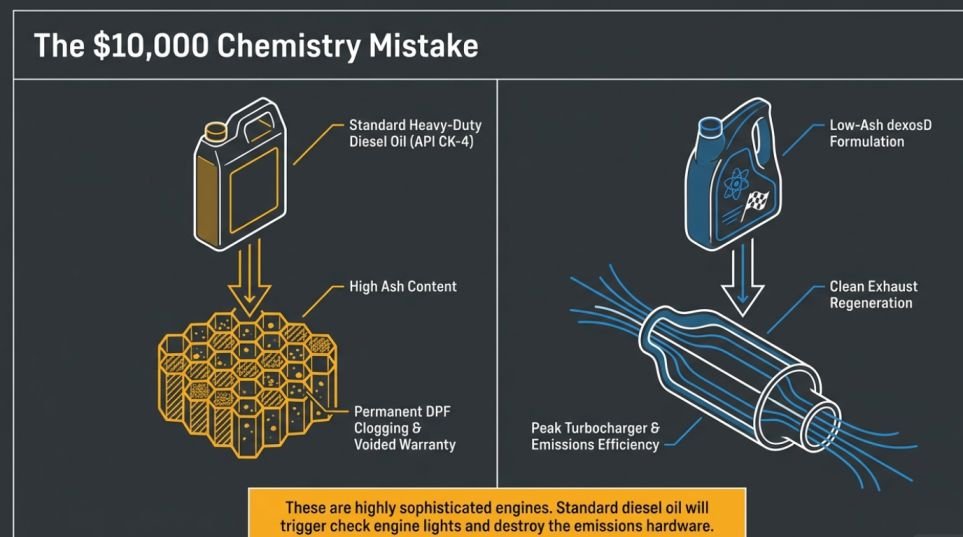
GM developed the dexosD specification specifically for the 3.0L diesel engines. Standard diesel oils often contain phosphorus or sulfur levels that are too high for these specific engines. These elements contaminate the DPF and lead to frequent regeneration cycles.
Using a non-dexosD oil can lead to premature DPF failure. This mistake will likely void your powertrain warranty if a failure occurs. Always look for the official dexosD logo on the container before purchasing.
| Specification | Engine Application | DPF Compatible |
|---|---|---|
| dexosD | 3.0L Duramax (LM2/LZ0) | Yes |
| dexos1 | GM Gasoline Engines | No |
| API CK-4 | General Heavy Duty Diesel | Varies by Brand |
Full Synthetic Necessity
Full synthetic oil is the only acceptable choice for these engines. Synthetic lubricants handle the high heat and pressure of a turbocharged diesel better than conventional oils. They resist thermal breakdown and maintain viscosity under heavy towing loads.
These oils also provide better cold-start protection in winter conditions. This ensures the turbocharger receives lubrication immediately upon ignition.
For example, using a conventional oil would lead to rapid sludge buildup. This would cause increased wear on the turbocharger bearings and result in expensive repairs.
“Don’t trust a salesperson who tells you any diesel oil will work. If the bottle does not explicitly say dexosD, keep it on the shelf.”
Oil Capacity And Viscosity Requirements
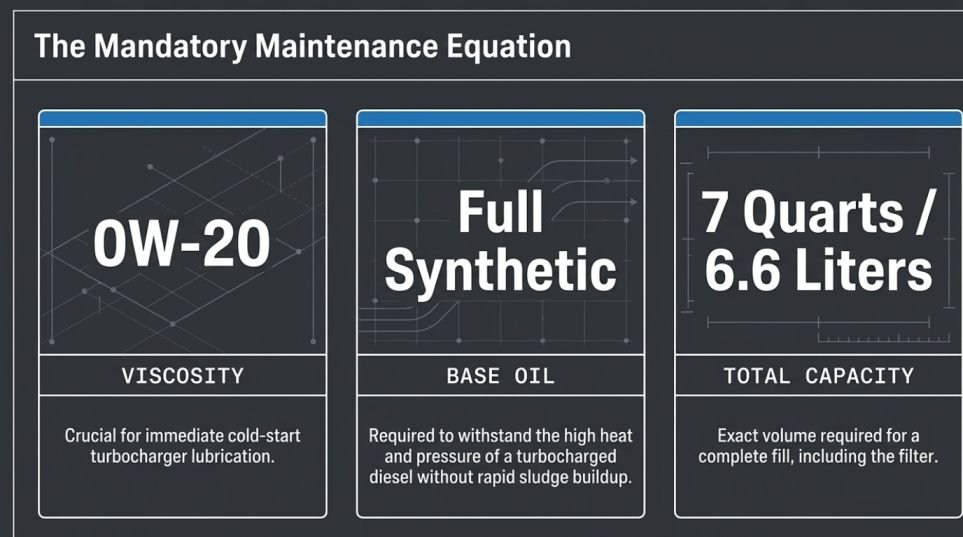
The 3.0 L Duramax engine holds 7 quarts of oil when the filter is replaced. This figure matches the factory service specification for a standard oil change.
Total Oil Capacity
All 3.0 Duramax models, from the first‑generation LM2 to the latest LZ0, share the same 7‑quart volume. The capacity includes the oil filter, which typically holds about 0.5 quart of fluid.
When topping off after a drain, check the dipstick after the engine has run a few minutes and the oil has settled. Adding oil beyond the 7‑quart mark can cause foaming and reduced lubrication.
Viscosity And Api Requirements
GM mandates a full‑synthetic oil meeting the dexosD specification with a 0W-20 viscosity. Using an oil outside this specification may increase wear during cold starts or reduce protection under high‑load conditions.
| Brand | Viscosity | API Spec | Best Use | Approx. Cost (per quart) |
|---|---|---|---|---|
| ACDelco | 0W-20 | dexosD | OEM Standard | $9‑$12 |
| Mobil 1 ESP | 0W-20 | dexosD | High performance | $10‑$13 |
| Amsoil Signature | 0W-20 | dexosD | Premium protection | $13‑$16 |
Pro tip: Warm the oil to about 60 °C before filling; warm oil flows more easily, reducing the risk of air pockets and giving a more accurate dipstick reading.
Lm2 Vs. Lz0 Oil System Differences
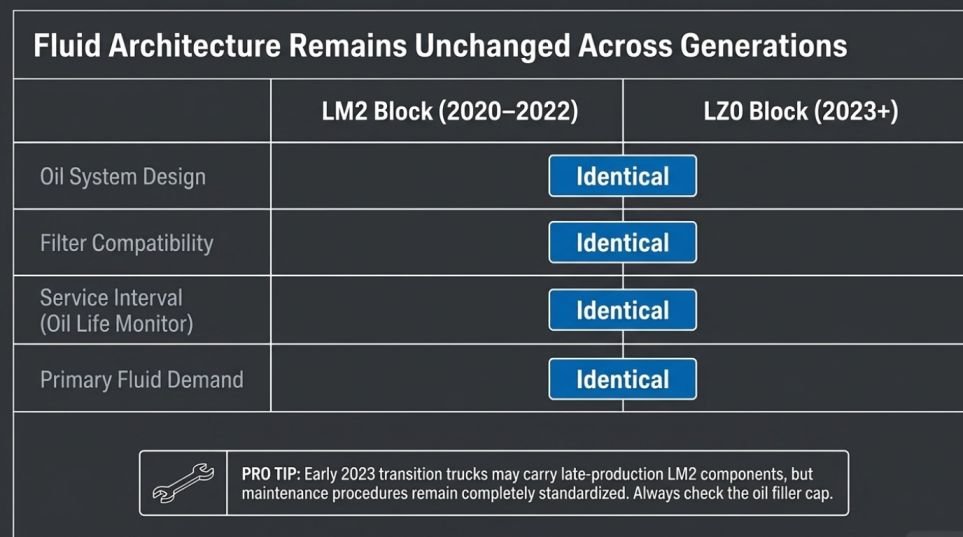
The LM2 and LZ0 Duramax engines share an identical lubrication system architecture, meaning their oil requirements remain consistent across model years. Both platforms rely on a high-pressure oil pump and a dual-stage filtration system designed to support the specific demands of a 3.0L inline-six diesel.
Engineering changes between the 2020-2022 LM2 and the 2023+ LZ0 focus primarily on internal components like pistons and fuel injectors rather than oiling circuits. Consequently, the oil capacity, filter housing design, and fluid specifications remain standardized. You can use the same maintenance procedures for both engines without worrying about system-specific variations.
Maintenance Consistency
Consistency in your maintenance routine is the most effective way to ensure longevity for either engine version. Because the internal oil passages and cooling jets function the same way, the manufacturer mandates identical service intervals and fluid standards.
Pro Tip: Always verify your specific build date if you are buying an early 2023 model, as some transition trucks may carry late-production LM2 components. Regardless of the engine variant, the oil filler cap explicitly states the required viscosity for your specific block.
| Feature | LM2 (2020-2022) | LZ0 (2023+) |
|---|---|---|
| Oil System Design | Identical | Identical |
| Filter Compatibility | Universal | Universal |
| Service Interval | Oil Life Monitor | Oil Life Monitor |
| Primary Fluid Demand | DexosD Required | DexosD Required |
In practice, the most common error technicians see involves owners attempting to substitute generic diesel oils that lack the mandatory DexosD certification. Both engines utilize sensitive emissions equipment that requires specific low-ash oil formulations to prevent premature DPF clogging.
Why DexosD Is Mandatory For Emissions
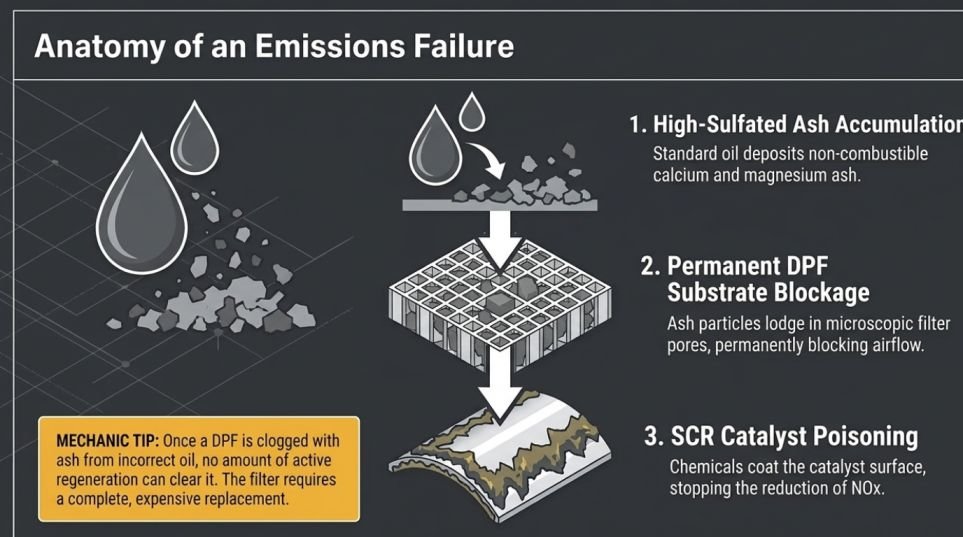
High-sulfated ash content in standard diesel oils creates permanent blockages within the Diesel Particulate Filter (DPF). These lubricants must meet the specific chemical requirements of DexosD to ensure the after-treatment system can regenerate without premature failure.
Protecting The Emissions Hardware
The DPF traps soot particles from the exhaust stream, which the truck then burns off during active regeneration cycles. If an oil contains high levels of additives like calcium or magnesium, these leave behind non-combustible ash residue. This ash builds up in the microscopic pores of the DPF substrate and restricts exhaust flow permanently.
Mechanic Tip: Once a DPF is clogged with ash from the wrong oil, no amount of regeneration or cleaning can restore it. The filter often requires a complete, expensive replacement.
The Selective Catalytic Reduction (SCR) system also relies on specific oil chemistry to maintain efficiency. Contaminants from improper oils can poison the catalyst surface, preventing the proper reduction of nitrogen oxides (NOx) into harmless nitrogen and water.
Oil Chemistry Impact Table
| Component | Risk of Incorrect Oil | Result |
|---|---|---|
| DPF Substrate | High Ash Accumulation | Permanent Blockage |
| SCR Catalyst | Chemical Poisoning | Emissions System Faults |
| Exhaust Backpressure | Increased Restriction | Reduced Fuel Economy |
Recommended Oil Filters And Parts
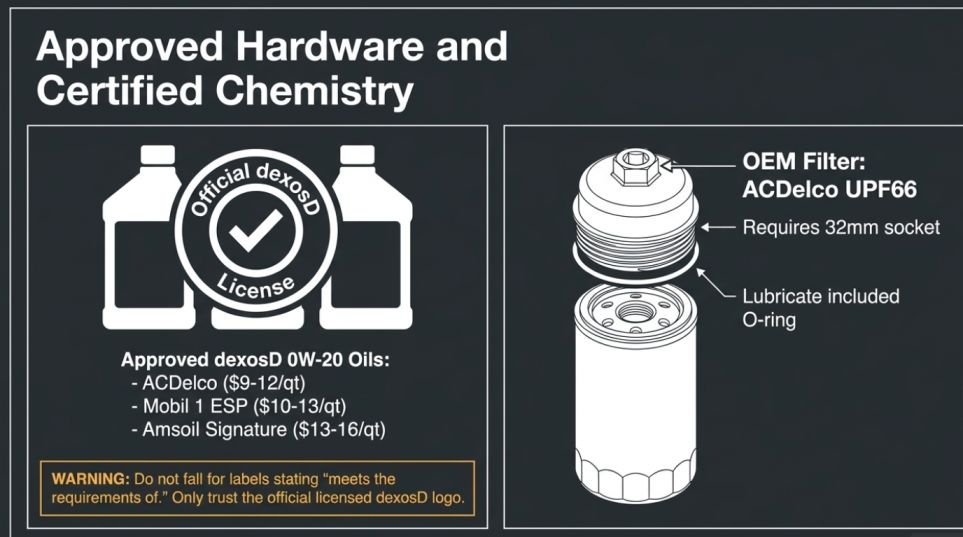
The LM2 and LZ0 3.0L Duramax engines require a filter that meets strict flow and filtration efficiency standards to protect the variable oil pump and turbocharger bearings. Using the ACDelco UPF66 remains the safest choice for maintaining your factory warranty.
OEM and Aftermarket Options
General Motors specifies the ACDelco UPF66 filter as the standard replacement for the 3.0L Duramax inline-six. This filter uses a high-efficiency synthetic media blend designed to capture fine particulates without restricting oil flow during cold starts.
| Filter Brand | Part Number | Key Characteristic |
|---|---|---|
| ACDelco | UPF66 | OEM Factory Specification |
Installation requires a specific 32mm socket for the oil filter housing cap. Never over-tighten the plastic housing, as the threads are prone to stripping or cracking under excessive torque. Always replace the O-ring seal included with your new filter, and lubricate it with fresh oil before installation to ensure a proper seat and to prevent leaks.
Top-tier DexosD Compliant Oil Options
General Motors requires oils meeting the dexosD specification for the 3.0L Duramax engine to ensure proper lubrication of the turbocharger and emission control systems. Using an oil that lacks this specific certification can lead to premature diesel particulate filter (DPF) clogging or potential warranty denials.
Manufacturer And Aftermarket Selections
ACDelco dexosD 0W-20 serves as the baseline product designed specifically for these engines. It provides the exact additive package required by the engineering team to manage soot loading and heat dissipation within the block.
| Product Name | Viscosity | Primary Benefit |
|---|---|---|
| ACDelco dexosD | 0W-20 | Guaranteed warranty compliance |
Mechanic Tip: Always check the back of the bottle for the actual dexosD logo. A label stating “meets the requirements of” is not the same as a licensed dexosD product. Stick to the official list to protect your fuel injectors and exhaust after-treatment hardware.
Quick Summary
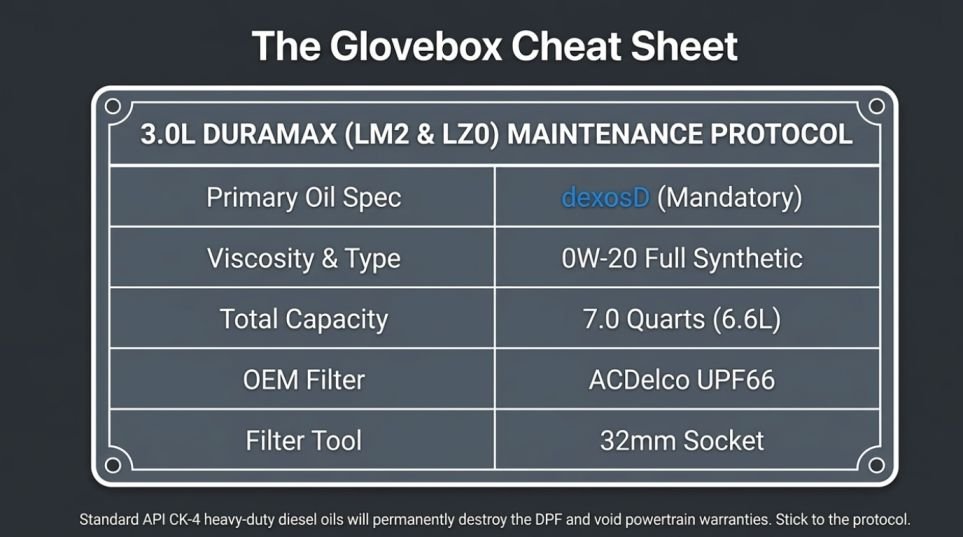
Maintaining the 3.0L Duramax LM2 and LZ0 engines requires strict adherence to the dexosD oil specification to protect the emissions system and diesel particulate filter. Using oil that lacks this specific license can cause premature filter clogging and may void your powertrain warranty. Owners must use full synthetic 0W-20 oil to handle the high heat and pressure generated by the turbocharged diesel platform. Both engine variants require exactly 7 quarts of oil, including the filter, for a complete service. Always use an OEM AC Delco oil filter to ensure proper pressure and filtration.
| Requirement | Specification |
|---|---|
| Total Oil Capacity | 7 Quarts |
| Primary Spec | dexosD |
| Oil Type | Full Synthetic 0W-20 |
| Filter Type | OEM AC Delco |
Frequently Asked Questions
What Is The Correct Oil Viscosity For A 3.0 Duramax Engine?
General Motors specifies 0W-20 DexosD as the required oil viscosity for the 3.0L Duramax inline-six engine. Using the wrong viscosity can negatively impact your emissions system and potentially void your powertrain warranty.
Can I Use Standard Diesel Oil Instead of DexosD in My 3.0 Duramax?
No, you should not use standard diesel oils that do not meet the DexosD specification because this engine requires a specific low-ash formulation to protect the diesel particulate filter. Always verify that the bottle explicitly states it is licensed for the GM DexosD requirement.
How Much Oil Does A 3.0 Duramax Hold During An Oil Change?
The 3.0L Duramax engine requires 7 quarts of oil, including the filter change. Always check your dipstick after filling to ensure the level falls within the safe operating range in the crosshatched area.
Does The 3.0 Duramax Require A Specific Oil Filter Type?
Yes, you must use a filter designed for this engine to ensure proper flow and filtration for the variable oil pump system. Using an OEM ACDelco filter is the safest way to guarantee compatibility with the engine bypass specifications.
How Often Should I Change The Oil In My 3.0 Duramax?
You should follow the GM Oil Life Monitoring System, which typically triggers a change interval based on your driving habits. If you frequently tow heavy loads or drive in dusty conditions, you should consider changing it more often to keep the engine internals clean.

- 2017 Dodge Grand Caravan Transmission Fluid Capacity: Dodge Grand Caravan Transmission - September 27, 2026
- How Many Gallons Of Transmission Fluid Does A 2017 Gmc Yukon 5.3 Slt Xl Hold: How Many - September 26, 2026
- 17 Gmc Yukon Transmission Fluid Capacity V8 (8l90) Quarts/liters - September 26, 2026