
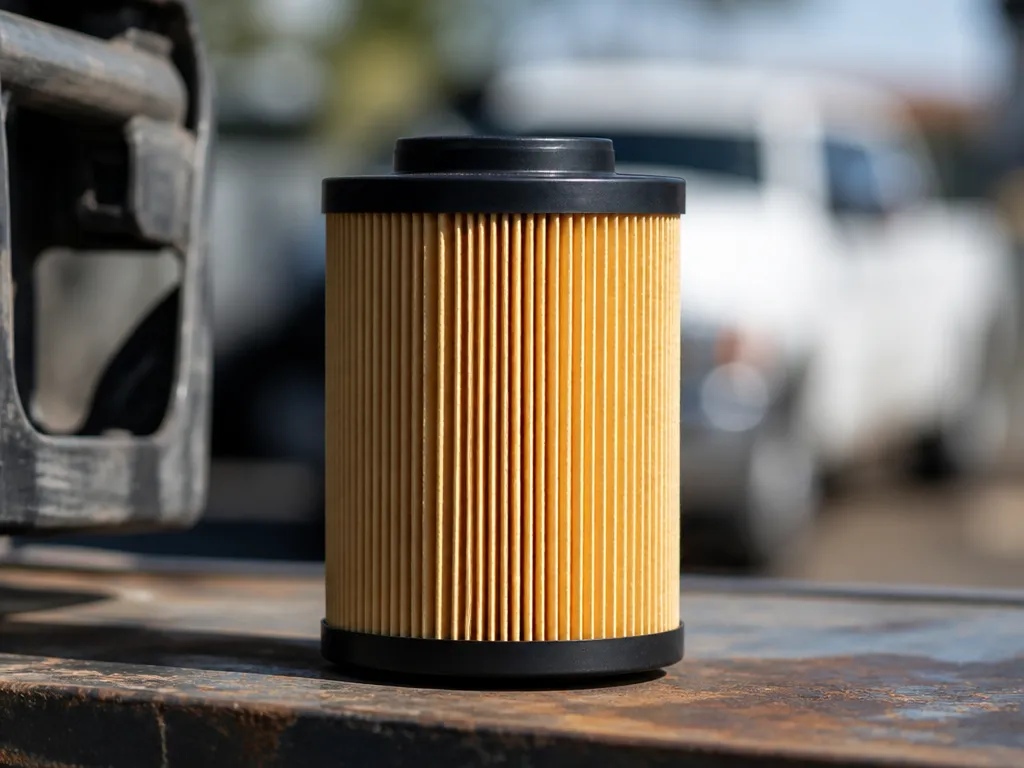
You probably noticed that heavy-duty engine manufacturers often spec Baldwin filters for their extended drain intervals and harsh operating environments. When you manage a fleet or push a diesel engine to its limits, you need to know if the internal media actually traps the contaminants that ruin rod bearings. Understanding the difference between nominal ratings and absolute efficiency is the only way to separate marketing claims from real engine protection.
Baldwin automotive oil filter efficiency is defined by their use of high-capacity synthetic and cellulose-blended media, often achieving 98.7 percent efficiency at specific micron levels. These filters prioritize durability through thick steel canisters, heavy-duty baseplates, and reinforced center tubes that resist collapse during cold-start pressure spikes.
Baldwin Automotive Oil Filter Efficiency And Performance Standards
Baldwin filters prioritize structural integrity and contaminant holding capacity to meet the rigorous demands of heavy-duty fleet operations. These filters emphasize long-term component protection over the high-flow, lower-retention designs common in light-duty passenger car applications.
Engineering Focus on Heavy-Duty Applications
Heavy-duty engines operate under sustained loads that create significant pressure differentials across the filter media. Baldwin engineers mitigate this by using reinforced center tubes and heavy-gauge steel canisters that resist fatigue from constant oil pressure fluctuations.
For instance, their design often incorporates a thicker base plate to ensure a reliable seal under high-vibration environments. This construction prevents common failure points like gasket blowouts or housing distortion during cold-start cycles or extreme thermal expansion.
Balancing Flow Against Filtration Capacity
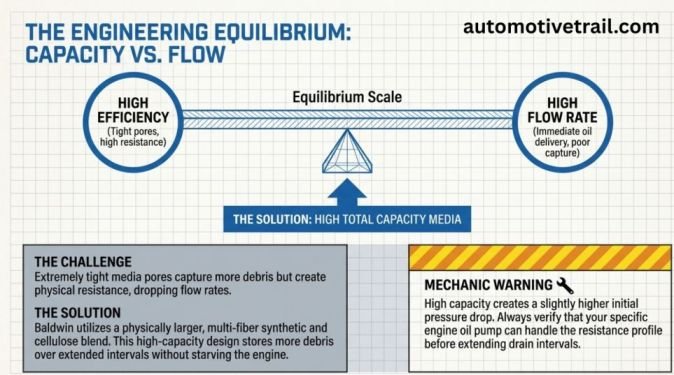
Filtration efficiency requires a delicate balance between the ability to capture fine particles and the need for unrestricted oil flow. Baldwin typically opts for a higher total capacity, which allows the filter to trap more debris over a longer service life without triggering the internal bypass valve.
Mechanic Tip: When choosing a filter, remember that a higher capacity filter often has a slightly higher initial pressure drop. Always verify that your specific engine oil pump can handle the resistance profile of the filter before extending your oil change intervals.
| Design Priority | Performance Impact |
|---|---|
| High Capacity | Longer service life, increased debris storage. |
| Structural Rigidity | Resistance to pressure spikes, reduced fatigue. |
| Flow Restriction | Minimized bypass usage, consistent lubrication. |
Fleet operators rely on these standards to reduce maintenance downtime by pushing service intervals beyond standard OEM recommendations. The trade-off is often a physically larger filter unit, which may not fit in the cramped engine bays of modern compact passenger vehicles.
Beta Ratios And Absolute Micron Ratings
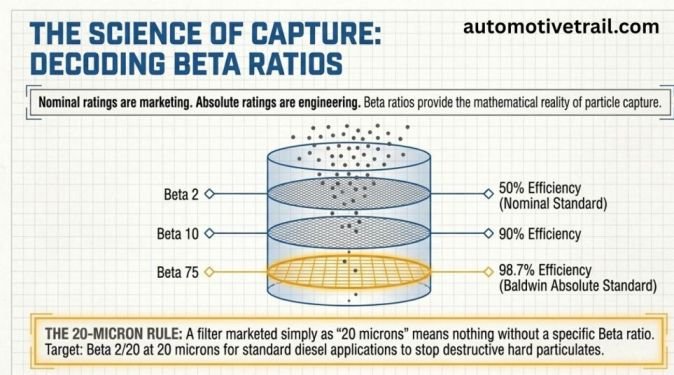
Filter efficiency depends on the relationship between particle size and the percentage of contaminants captured during a single pass through the media. A beta ratio represents the number of particles of a specific size upstream of the filter divided by the number of particles downstream, providing a clear mathematical indicator of performance.
Decoding Efficiency Metrics
Nominal ratings typically indicate a filter captures 50 percent to 90 percent of particles at a stated size. Absolute ratings, by contrast, signify that the filter captures 98.7 percent or more of particles at a specific micron level. Baldwin filters prioritize absolute efficiency to ensure that hard particulates, which cause the most significant internal engine wear, do not reach sensitive bearing surfaces or valve train components.
The following table illustrates how beta ratios correlate to percentage efficiency:
| Beta Ratio | Efficiency Percentage |
|---|---|
| Beta 2 | 50% |
| Beta 10 | 90% |
| Beta 75 | 98.7% |
| Beta 100 | 99% |
Long-term Wear Protection
Engine longevity relies on removing particles in the 10 to 20 micron range, as these are the most damaging to tight-clearance engine parts. Baldwin designs their media to maintain a high beta ratio throughout the service life of the filter, preventing the degradation of filtration quality as the element collects debris.
Pro Tip: Always look for a manufacturer’s specified beta ratio at a specific micron level rather than relying on a general micron rating. A filter marketed simply as 20 microns tells you nothing about its ability to stop smaller, more destructive particles.
Fleet managers and heavy-duty operators benefit from these metrics by extending drain intervals without increasing the risk of premature component failure. Consistent, high-efficiency filtration prevents the accumulation of soot and metal fines, keeping oil additive packages cleaner for longer periods during heavy operational cycles.
Construction Features For Durability
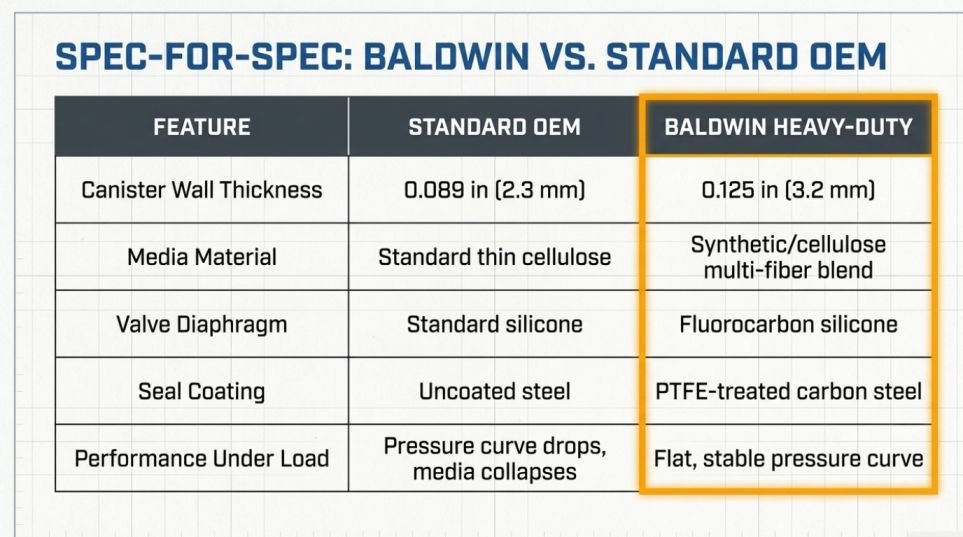
Baldwin oil filters employ a reinforced canister wall that is roughly 40 percent thicker than the average passenger‑car filter, giving the element resistance to deformation under high‑pressure diesel or heavy‑duty gasoline applications. The extra mass also reduces vibration‑induced fatigue, extending service life in fleet environments.
Heavy‑duty Canister Construction
The canister is forged from high‑tensile steel and then coated with a corrosion‑resistant epoxy finish. This combination prevents rust in humid climates and maintains structural integrity during temperature swings from -30 °C to +120 °C.
Anti‑drain Back Valve Design And Materials
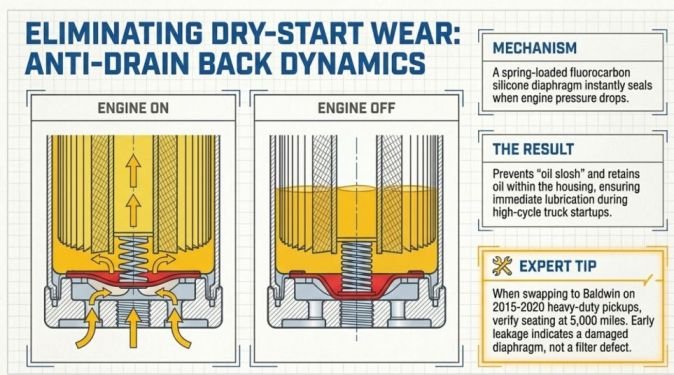
The anti‑drain back valve uses a spring‑loaded silicone diaphragm that seals tightly when engine pressure drops, preventing oil from draining out of the filter housing. This design eliminates the “oil slosh” problem that can cause dry‑start wear in high‑cycle trucks.
| Feature | Baldwin | Typical OEM |
|---|---|---|
| Canister wall thickness | 0.125 in (3.2 mm) | 0.089 in (2.3 mm) |
| Valve diaphragm material | Fluorocarbon silicone | Standard silicone |
| Seal coating | PTFE‑treated carbon steel | Uncoated steel |
Expert tip: When swapping to Baldwin filters on a fleet of 2015‑2020 heavy‑duty pickups, schedule the first change at 5,000 mi to verify the anti‑drain back valve seats correctly; any early leakage often indicates a damaged diaphragm rather than a filter defect.
Overall, the reinforced canister and robust anti‑drain back valve give Baldwin filters a durability edge that translates into fewer premature changes and lower risk of engine wear during shutdown cycles. For operators who log 20,000 mi per year, the added upfront cost can be offset by the extended service interval and reduced oil consumption.
Performance Comparison Against OEM Standards
Baldwin filters utilize heavy-duty cellulose and synthetic blend media designed to exceed the particle capture rates of standard factory filters. These units often prioritize high-capacity contaminant holding, which maintains consistent oil flow as the filter nears its service limit.
Media Composition And Efficiency
Factory-spec filters often use thinner paper media to minimize initial restriction, which can sacrifice long-term capture efficiency. Baldwin opts for a more robust multi-fiber construction that improves the Beta ratio. A higher Beta ratio indicates that the filter captures a larger percentage of particles at a specific micron size, providing better protection for tight-tolerance engine components like hydraulic valve lifters or turbocharger bearings.
| Feature | Standard OEM Filter | Baldwin Heavy-Duty Filter |
|---|---|---|
| Media Material | Standard Cellulose | Synthetic Blend/Glass Enhanced |
| Efficiency Focus | Initial Flow | Particle Capture/Capacity |
| Burst Strength | Baseline | High Pressure Rated |
| Service Interval | Standard | Extended |
Pressure Drop Characteristics
Pressure drop is the difference in oil pressure before and after the fluid passes through the filter media. A filter with high restriction forces the engine to work harder, potentially triggering the bypass valve prematurely. Baldwin designs their media to maintain a stable pressure differential even when the filter accumulates significant debris.
Pro Tip: If your oil pressure gauge shows a noticeable dip during high-load operation, a restrictive or clogged filter is often the culprit. Baldwin filters frequently show a flatter pressure curve under load compared to OEM units that rely on thinner media which collapses under stress.
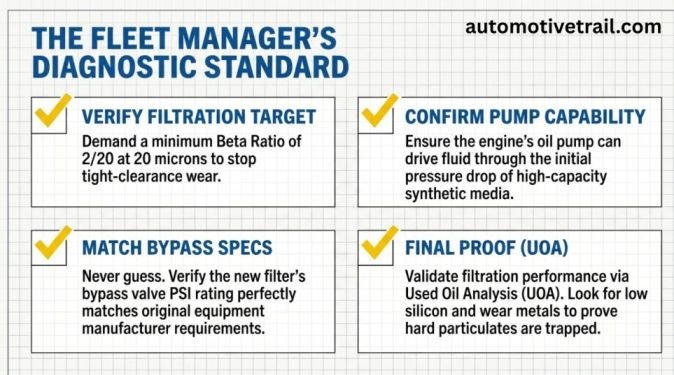
Fleet managers should note that while Baldwin filters often provide superior protection, they may present a slightly higher cold-start restriction than specific OEM filters designed for ultra-low viscosity oils. Always verify that the filter bypass valve PSI rating matches your engine manufacturer’s requirements. Using a filter with an incorrect bypass setting can starve the engine of oil during cold startups or high-RPM events.
Selecting The Right Filter For Your Engine
Engine longevity requires matching filter media density to the specific bypass valve settings of your equipment. Cummins and Caterpillar engines often demand high-efficiency synthetic media to capture soot particles before they reach critical journal bearings.
Matching Heavy-duty Specifications
Heavy-duty diesel engines operate under high oil pressure and extreme thermal cycling. Baldwin filters for these platforms typically feature reinforced center tubes and heavy-gauge steel canisters to prevent collapse during cold starts when oil viscosity is at its peak.
Efficiency Versus Flow Rate
High efficiency ratings reduce the flow rate because the tighter media pores create more physical resistance. You must prioritize efficiency if you operate in dusty environments or perform extended oil change intervals, as the goal is to keep the oil clean over thousands of miles.
Flow rate becomes the priority in high-performance engines that require immediate oil delivery to turbochargers. If you choose a filter with an excessively fine micron rating for a high-flow application, the oil pump may struggle to maintain pressure, leading to cavitation.
Fleet operators should maintain a strict balance by selecting filters that offer a beta ratio of 2/20 at 20 microns for standard diesel applications. This provides enough flow to protect the oil pump while capturing the abrasive debris that causes premature wear on cylinder liners and crankshafts.
Common Maintenance Pitfalls To Avoid
Improper installation and neglected service intervals neutralize the high filtration efficiency of premium components. Most premature failures result from human error during the spin-on process or pushing media capacity beyond its structural limits.
Installation Best Practices
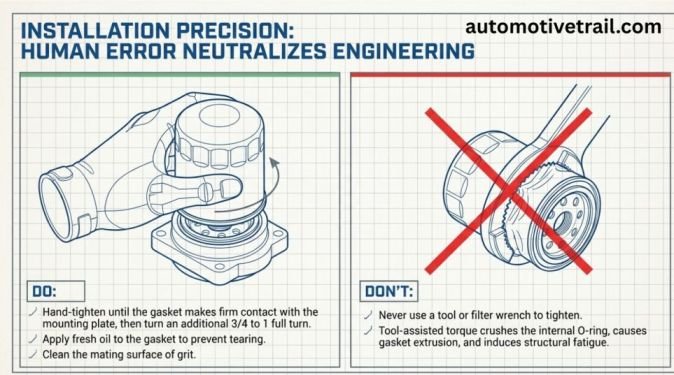
Tightening a filter housing requires precision to prevent gasket leaks or structural fatigue. Always hand-tighten the unit until the gasket makes firm contact with the engine mounting plate. Follow that contact with an additional three-quarters to one full turn, unless the manufacturer specifies a different torque value.
Pro Tip: Never use a filter wrench to tighten a new filter. Tool-assisted tightening often leads to over-torquing, which can crush the internal O-ring or make future removal nearly impossible without damaging the housing.
Cleanliness during the swap prevents catastrophic debris ingestion. Wipe the engine block mating surface with a lint-free rag to remove old gasket fragments or grit. Apply a light film of fresh engine oil to the new filter gasket to ensure a smooth seal and prevent the rubber from binding or tearing during installation.
Managing Drain Intervals
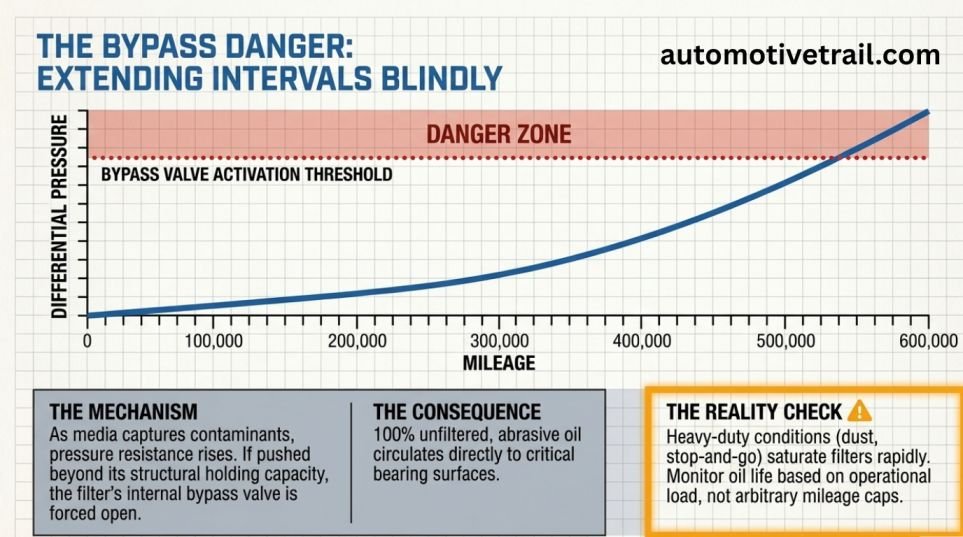
Extended drain intervals place significant stress on the filtration media, regardless of the filter’s initial efficiency rating. As the media captures contaminants, the differential pressure across the element rises, eventually forcing the bypass valve to open if the filter reaches its holding capacity.
| Risk Factor | Consequence |
|---|---|
| Over-torquing | Gasket extrusion or housing fatigue |
| Dry Gasket | Incomplete seal or difficult removal |
| Excessive Mileage | Bypass valve activation, circulating unfiltered oil |
Monitor your oil life based on operating conditions rather than arbitrary mileage caps. Heavy-duty equipment or vehicles operating in dusty, stop-and-go environments reach capacity much faster than those used in highway service. If the bypass valve remains open due to a saturated filter, the engine loses the protection provided by the high-efficiency media, allowing abrasive particles to circulate through critical bearing surfaces.
Quick Summary
Baldwin filters are engineered for heavy-duty applications that require extended service intervals and superior protection against harsh operating environments. These units utilize a synthetic and cellulose blended media construction, which is designed to resist pleat collapse under high flow conditions. To ensure structural integrity, Baldwin incorporates reinforced center tubes and thick steel canisters that withstand significant pressure spikes during cold starts. By prioritizing these mechanical standards, the filters effectively trap abrasive contaminants that would otherwise compromise critical engine components like rod bearings during long periods of operation.
The efficiency of these filters is defined by an absolute rating system, often achieving 98.7 percent particle capture at specific micron levels. This performance metric is superior to nominal ratings, which are less precise and often allow too many fine particulates to circulate. Baldwin also uses silicone anti-drain back valves to maintain flexibility during extreme temperature shifts. Because efficiency ratings vary significantly between passenger and industrial product lines, you must verify the specific part number data sheet. The most important takeaway is to confirm that your oil pump can handle the initial pressure drop of these high-capacity units.
| Feature | Baldwin Specification |
|---|---|
| Efficiency Rating | 98.7 percent (at specific micron levels) |
| Media Type | Synthetic and cellulose blend |
| Valve Material | Silicone (anti-drain back) |
| Construction | Spiral-wound center tube and steel canister |
Frequently Asked Questions
How Does Baldwin Filter Efficiency Compare To Standard Passenger Car Filters?
Baldwin filters are designed with a heavy-duty focus, often using cellulose or synthetic blends that achieve high efficiency at specific micron levels for most standard applications. While they prioritize durability and flow under pressure, you should always check the specific micron rating for your exact part number to ensure it meets your engine manufacturer’s requirements.
Are Baldwin Automotive Oil Filters Better For Extended Drain Intervals?
Yes, these filters are built with robust media that maintains structural integrity over longer periods, making them a solid choice if you follow an extended oil change schedule. You can trust their heavy-duty steel canisters and reinforced center tubes to withstand the pressure cycles that occur during extended mileage intervals.
What Is The Difference Between Nominal And Absolute Efficiency In Baldwin Filters?
Nominal efficiency refers to the percentage of particles of a specific size a filter captures under controlled conditions, whereas absolute efficiency represents a 98.7 percent or higher capture rate of a specific particle size. Most automotive aftermarket filters, including Baldwin, provide specific beta ratios, so look for that data if you need precise filtration metrics for your application.
Can I Use A Baldwin Heavy Duty Filter On A Stock Daily Driver?
You certainly can, as many Baldwin filters are cross-referenced to fit standard passenger vehicles while providing extra protection against bypass. Just ensure the bypass valve setting matches your original equipment manufacturer specifications to prevent oil starvation during cold starts or high RPM operation.
How Do I Know If My Baldwin Oil Filter Is Actually Cleaning The Oil Effectively?
The only way to confirm true performance is through a used oil analysis, which measures particulate matter and wear metals in your oil sample. You should look for a low silicon and metal count in your lab report to verify that your filter is effectively trapping contaminants before they reach your engine bearings.

- 2017 Dodge Grand Caravan Transmission Fluid Capacity: Dodge Grand Caravan Transmission - September 27, 2026
- How Many Gallons Of Transmission Fluid Does A 2017 Gmc Yukon 5.3 Slt Xl Hold: How Many - September 26, 2026
- 17 Gmc Yukon Transmission Fluid Capacity V8 (8l90) Quarts/liters - September 26, 2026